- info@mnagrp.com
- House 06, Road 12, Sector 09, Uttara, Dhaka - 1230

Trusted medical wear manufacturer in Bangladesh supplying high-quality hospital uniforms, scrubs, and healthcare garments for global buyers.
A medical wear manufacturer in Bangladesh operates under a different set of expectations than most garment categories. Appearance still matters, but only after hygiene, comfort, and repeat-use performance are addressed.
Medical garments—scrubs, patient gowns, lab coats—are worn for extended periods, often under demanding conditions. That alone changes how production is approached. Fabrics must remain breathable while also withstanding frequent washing, sometimes at higher temperatures. Over time, even small weaknesses in stitching or material quality tend to become visible.
At M&A Sourcing Limited, medical wear production is handled with attention to these practical demands. Seam strength, fabric stability, and color retention are monitored early, since these elements affect both durability and user comfort. A garment that feels acceptable in initial sampling may behave differently after multiple wash cycles, which is why material selection becomes a key decision point.
In some export markets, buyers may reference standards or testing frameworks related to textile safety, such as those associated with OEKO-TEX, particularly for garments worn close to the skin. These references do not define every production step, but they often shape expectations around fabric processing.
Production is coordinated through factories familiar with uniform and healthcare apparel, where consistency across batches is essential. Even then, variation is part of real manufacturing. What tends to matter more is how tightly that variation is managed.
Bangladesh has developed significant capacity in uniform and workwear production, including medical garments. Still, outcomes tend to reflect process control and material selection more than location alone.
Describing a supplier as the best custom medical wear manufacturer in Bangladesh can be useful for marketing, though in practice it often depends on how well the manufacturer handles consistency under repeated use.
Custom medical wear is not simply about branding or design. It involves balancing comfort, hygiene requirements, and durability. A scrub set, for instance, may appear straightforward, yet fabric choice can affect breathability, while stitching quality influences how the garment holds up after frequent washing.
At M&A Sourcing Limited, custom development is approached with these constraints in mind. Designs are reviewed not only for appearance but for how they will perform over time. Some adjustments are minor—pocket placement, seam reinforcement. Others are more structural, particularly when fabric behavior does not align with initial expectations.
Customization typically includes fabric sourcing, color matching, logo application, and labeling. These elements interact more than it might seem. A change in fabric weight, for example, can influence drape, comfort, and even stitching requirements.
Factories involved in production are selected based on their familiarity with uniform and healthcare garments. Even so, it would be unrealistic to assume complete uniformity across large orders. The goal is to maintain consistency within acceptable limits rather than eliminate variation entirely.
For buyers working with compliance-focused sourcing systems, references such as WRAP or guidance from International Labour Organization may influence supplier evaluation, particularly for long-term supply programs.
In most cases, sampling remains the most reliable checkpoint. It provides insight into fabric feel, construction quality, and overall durability before scaling into bulk production.
M&A Sourcing Limited is a medical wear manufacturer in Bangladesh supplying custom healthcare apparel for hospitals, clinics, medical organizations, distributors, wholesalers, healthcare brands, and international buyers. We provide sourcing and manufacturing support for medical scrubs, doctor coats, lab coats, nurse uniforms, medical gowns, surgical gowns, healthcare uniforms, surgical caps, medical aprons, and other healthcare apparel.
Our medical wear manufacturing service is designed for buyers who need consistent product quality, practical garment construction, customized designs, suitable fabrics, reliable production planning, and export-ready support.
From product development and sample approval to bulk production, quality inspection, packing, and shipment coordination, we work according to the buyer’s requirements and approved specifications.
Medical apparel needs to be practical, comfortable, durable, and suitable for its intended working environment. A healthcare uniform may need frequent washing, repeated use, easy movement, functional pockets, suitable fabric weight, and professional presentation.
For this reason, medical wear manufacturing requires more than simply producing a garment from a basic pattern. Fabric selection, measurements, stitching, finishing, color, trims, branding, labeling, and packaging all need to be considered during product development.
M&A Sourcing Limited works with buyers to convert their product concepts, specifications, reference samples, technical information, or design requirements into production-ready garments.
We can support buyers looking for OEM and private-label medical apparel manufacturing in Bangladesh.
OEM production can be developed according to the buyer’s own specifications, including:
For private-label healthcare brands, we can support customized garments carrying the buyer’s own branding and product specifications.
Depending on the order requirements, customization can include woven labels, printed labels, care labels, hangtags, embroidery, logo printing, packaging, and other branding elements.
Our medical wear sourcing and manufacturing range can include several categories of healthcare apparel.
Medical scrubs are widely used by healthcare professionals because they are designed for practical daily work.
We can develop customized scrub tops and scrub pants according to the buyer’s preferred:
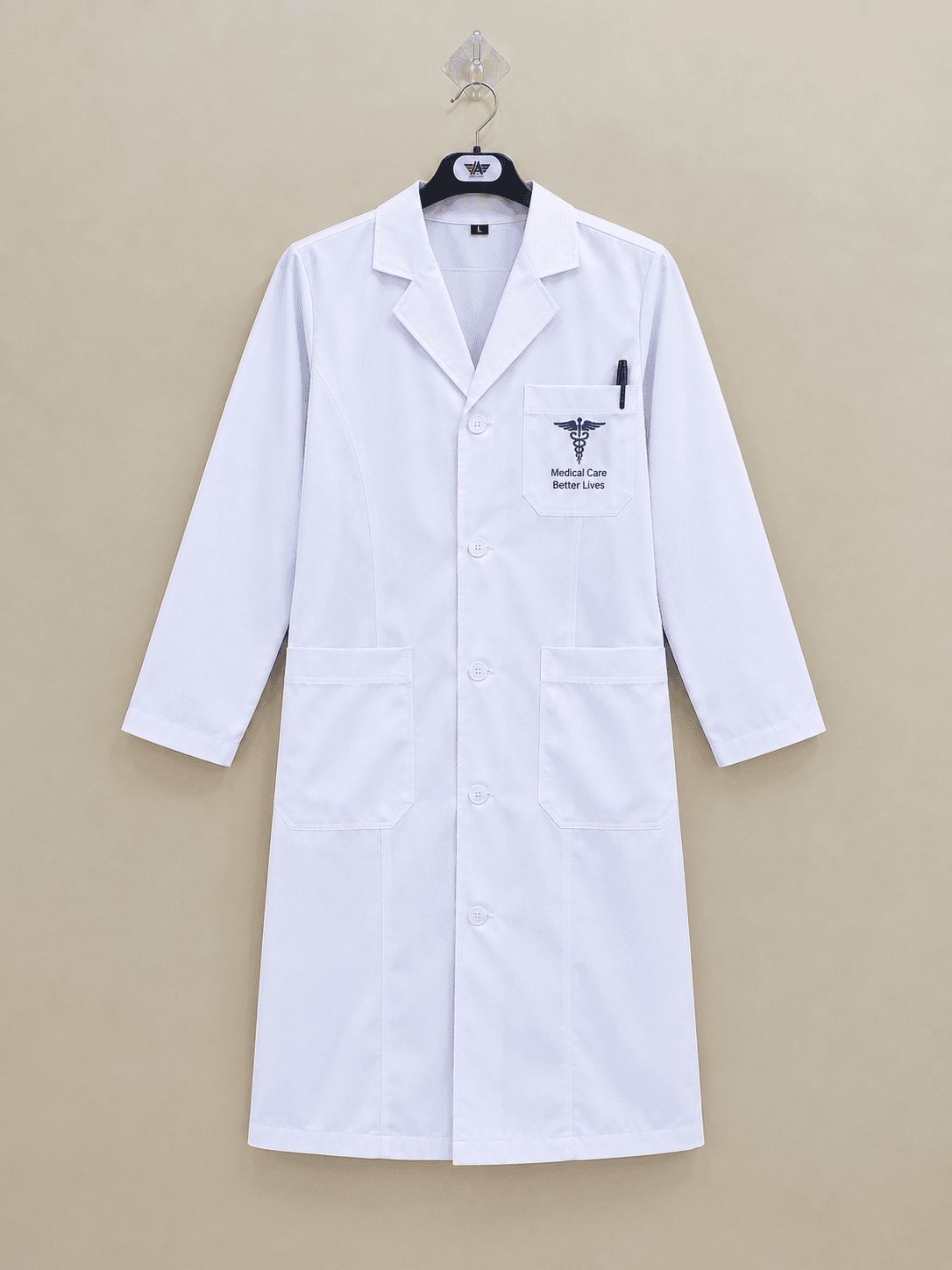
Doctor coats and medical coats can be developed in different lengths, fabric options, pocket configurations, collar styles, and branding specifications.
A buyer can provide an existing sample, technical specification, drawing, or reference image for product development.
Lab coats can be developed for laboratories, healthcare facilities, research environments, educational institutions, and other professional applications.
Important product details may include fabric weight, coat length, sleeve construction, pocket placement, button or snap closure, collar design, and embroidery or logo requirements.
Nurse uniforms can be developed as coordinated tops and bottoms or complete uniform sets.
Product development can include customized colors, piping, pocket layouts, fit, embroidery, fabric selection, and size grading.
Medical gowns are available in different construction requirements depending on their intended application.
Before production, buyers should clearly specify the required garment type, fabric, construction, intended use, and any applicable destination-market requirements.
Surgical gowns may have requirements that differ from ordinary healthcare uniforms. Buyers should identify the intended use and applicable technical or regulatory requirements before placing production orders.
Where a product is subject to medical-device or protective-product regulations, compliance requirements should be confirmed for the target market and product category.
Healthcare uniforms can be customized for hospitals, clinics, diagnostic centers, pharmacies, laboratories, nursing facilities, and other healthcare organizations.
Uniform programs may include coordinated tops, trousers, jackets, coats, caps, aprons, and other garments.
Surgical and healthcare caps can be developed in different fabrics, colors, shapes, and sizing configurations according to buyer requirements.
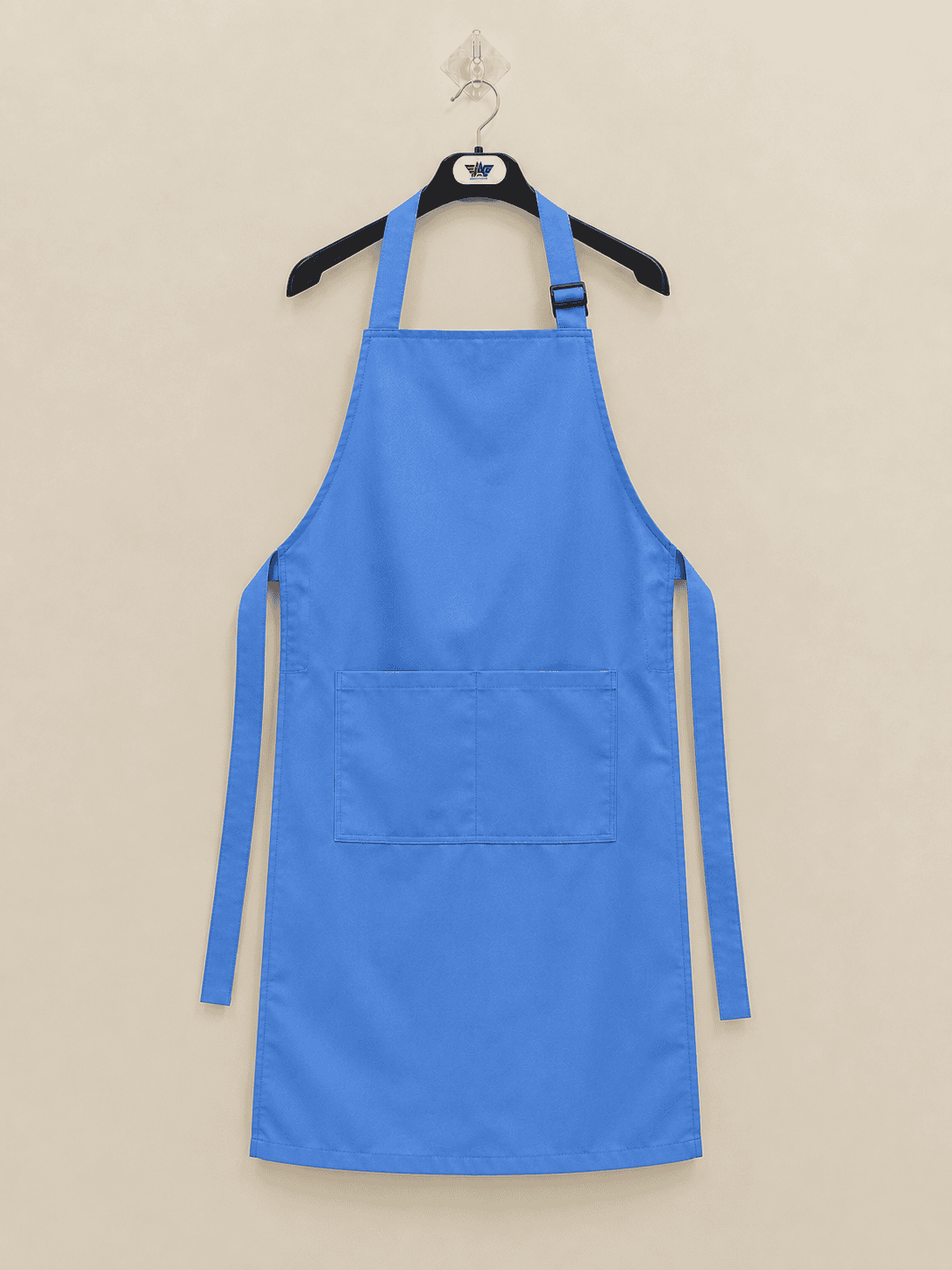
Medical aprons can be manufactured for healthcare, laboratory, cleaning, pharmaceutical, educational, and other professional environments depending on the required application.
Bangladesh has an established apparel manufacturing and export sector, giving international buyers access to a broad garment production ecosystem.
For medical apparel buyers, the advantage is not simply the ability to manufacture garments. A suitable sourcing partner can coordinate fabric sourcing, trims, sampling, production, inspection, packing, and shipment through an organized supply process.
Bangladesh has a large and established ready-made garment industry serving international markets.
This manufacturing environment provides access to textile and apparel suppliers, production facilities, accessories, printing, embroidery, washing, finishing, inspection, and logistics services.
For buyers developing medical apparel collections, this broader supply chain can make product sourcing more practical.
Medical wear can range from basic uniforms to highly customized garments.
A buyer may need:
A sourcing company can help manage these requirements from product development through production.
Production cost depends on many variables rather than the country of manufacture alone.
The final price of medical apparel can be affected by:
For this reason, buyers should compare quotations based on complete product specifications rather than comparing only the unit price.
M&A Sourcing Limited provides sourcing and manufacturing support for buyers looking to develop healthcare apparel from Bangladesh.
Our approach focuses on understanding the buyer’s product requirements before production begins.
We begin by reviewing the buyer’s requirements and identifying the technical details needed for development.
These may include:
Product development is an important stage of medical wear manufacturing.
A buyer may provide:
The product can then be developed for sample review before bulk production.
The buyer can review important details such as:
Any required changes can be identified before bulk production.
After reviewing the product requirements, costing can be prepared according to the selected specifications.
The quotation may depend on:
Accurate specifications allow buyers to receive a more realistic quotation.
After sample approval and order confirmation, production planning can begin.
A typical workflow may include:
Quality control is an important part of medical apparel manufacturing.
Inspection requirements may vary depending on the product and buyer’s quality standards.
Measurements can be checked against the approved size specification.
Typical checkpoints may include:
Fabric may be checked for:
Garment construction can be reviewed for:
Customized medical apparel may include embroidery, printing, labels, or other branding.
These elements should be checked against the approved artwork and specifications.
Final inspection helps identify visible defects and specification issues before shipment.
The inspection process should follow the buyer’s approved quality requirements.
Fabric selection can significantly affect the comfort, durability, appearance, and performance of healthcare apparel.
There is no single fabric that is suitable for every medical garment.
Cotton can be selected when buyers prioritize natural fiber characteristics and comfortable wear.
Cotton-based fabrics may be suitable for certain uniforms, depending on the intended application and required performance.
Polyester fabrics can provide durability and dimensional stability and are commonly used in workwear and uniform applications.
The appropriate construction depends on the garment’s intended use.
Blended fabrics can combine characteristics of different fibers.
For healthcare uniforms, buyers may select blended fabrics where they want a balance between comfort, durability, appearance retention, and maintenance requirements.
The correct fabric should be selected based on the garment’s purpose.
For example:
For regulated medical products, fabric selection should follow the applicable product requirements rather than relying only on general apparel specifications.
Compliance requirements depend on the product, destination country, intended use, and applicable regulations.
A standard healthcare uniform is not necessarily regulated in the same way as a surgical gown, protective garment, or medical device.
Before production, buyers should determine whether their product is:
The required testing and documentation can differ significantly between these categories.
Medical apparel intended for different countries may be subject to different requirements.
Buyers should confirm applicable regulations with their compliance team, importer, testing laboratory, or relevant authority.
Factory-level certifications and compliance documentation should always be verified for the specific production facility used for an order.
M&A Sourcing Limited can work according to buyer-specified compliance and documentation requirements where applicable.
A structured manufacturing process helps reduce errors between product development and final delivery.
The buyer provides product information and commercial requirements.
The product specifications are reviewed to identify fabric, construction, sizing, branding, and production requirements.
Suitable fabric, thread, buttons, zippers, labels, packaging materials, and other components can be sourced according to the approved specification.
A development sample is prepared for buyer review.
The buyer reviews the sample and provides comments or approval.
The final product specification is used to confirm costing.
After order confirmation and material approval, bulk manufacturing begins.
Production output is checked according to the agreed quality requirements.
Garments are folded, packed, labeled, and cartonized according to buyer instructions.
The finished order is prepared for shipment according to the agreed commercial and logistics arrangements.
Minimum order quantity depends on the product and production requirements.
There is no universal MOQ for every medical apparel product.
MOQ may be influenced by:
Custom products may require higher quantities where special fabric, color, trims, or customized packaging must be sourced.
Buyers should provide complete specifications when asking for MOQ information.
Lead time varies according to product complexity, order quantity, fabric availability, sampling requirements, and production planning.
Sample development may take different amounts of time depending on whether the required fabric and trims are readily available.
Bulk production depends on:
For this reason, buyers should confirm the production schedule before placing an order.
A professional medical wear quotation should be based on complete product specifications.
For a more accurate quotation, buyers should provide:
Two garments may look similar but have significantly different production costs because of differences in fabric quality, construction, branding, packaging, and inspection requirements.
A complete specification provides a better basis for quotation comparison.
International buyers often need more than manufacturing.
They may require assistance with:
M&A Sourcing Limited can coordinate these stages according to the buyer’s requirements and agreed commercial terms.
Our sourcing approach can be suitable for:
Hospitals and healthcare organizations may require multiple garment types rather than a single product.
A complete uniform program may include:
Healthcare organizations may require consistent branding across multiple products.
Branding can include:
A consistent specification helps maintain a unified professional appearance.
Distributors and wholesalers may require products that can be supplied repeatedly in different sizes, colors, and quantities.
Wholesale orders may include multiple styles and size ratios.
Production planning should account for:
For repeat orders, maintaining approved specifications can help reduce unnecessary product variation.
The buyer can continue using an approved product specification, subject to material availability and agreed production conditions.
Healthcare clothing brands may need products that reflect their own brand identity.
Private-label medical apparel can include customized:
A healthcare brand may develop a collection consisting of:
A coordinated product range can be developed using consistent branding and product specifications.
Responsible sourcing involves understanding where products are manufactured and how production requirements are managed.
Buyers should know:
Responsible sourcing should consider product quality, worker safety, factory conditions, environmental practices, and compliance requirements where applicable.
Buyers should request relevant documentation and verify factory-specific information before placing significant orders.
Choosing a supplier based only on the lowest price can create problems later.
Without clear specifications, the manufacturer may need to make assumptions.
This can result in differences in:
Bulk production should not normally begin before the buyer has approved the relevant production sample or specification.
A low quotation may reflect differences in fabric, construction, inspection, packaging, or service scope.
Medical products may have different requirements in different markets.
Buyers should identify regulatory and compliance requirements before production.
Before placing a large order, buyers should understand the manufacturer’s production arrangement and expected timeline.
Selecting a manufacturing partner requires more than checking a website or quotation.
Ask whether the supplier has experience with the specific type of medical apparel you need.
A sample provides practical information about:
Ask where production will take place and which facilities will be involved.
Understand how fabric, production, measurements, and finished garments will be inspected.
MOQ and lead time should be confirmed based on the actual product specification.
International buyers should clarify who will coordinate packing, documentation, shipment, and other export-related requirements.
M&A Sourcing Limited focuses on sourcing and manufacturing support for international apparel buyers.
We help buyers move from an initial product idea or specification toward a production-ready garment.
Medical apparel can be developed according to buyer requirements for design, fabric, color, measurements, branding, and packaging.
We can coordinate fabric, trims, accessories, production, quality control, and shipment-related requirements.
Quality checkpoints can be incorporated throughout the production process according to the buyer’s specifications.
Clear communication is important when producing customized apparel for an international market.
We aim to keep product specifications, approvals, production requirements, and delivery planning organized throughout the order process.
Buyers should understand the difference between a manufacturer-focused sourcing partner and a general trading supplier.
A manufacturing-focused sourcing partner may coordinate:
A trading supplier may source finished products from different suppliers depending on the order.
Neither model is automatically suitable for every buyer. The appropriate structure depends on the buyer’s product, quantity, quality requirements, communication needs, and supply-chain expectations.
Medical apparel buyers with recurring demand may benefit from maintaining consistent product specifications.
Important information should be recorded for repeat orders, including:
Repeat orders can be based on previously approved specifications, although fabric availability, production conditions, and market requirements should still be reviewed for each order.
Once a core medical apparel range is established, buyers may expand into additional products such as:
Before starting a manufacturing relationship, buyers can ask the following questions.
Confirm whether the supplier can produce according to your own design and specifications.
Ask how the sample-development and approval process works.
Confirm available fabric types, compositions, GSM options, and colors.
MOQ should be confirmed for the specific product rather than assumed to be the same for every garment.
Ask for an estimated timeline based on the actual quantity and specifications.
Ask about fabric inspection, inline checks, final inspection, measurement checks, and buyer-specific quality standards.
If branding is important, confirm the available options for labels, embroidery, printing, packaging, and other branding elements.
International buyers should confirm documentation and shipment coordination before placing an order.
International healthcare apparel buyers often need a sourcing partner that understands both garment manufacturing and buyer-specific requirements.
European buyers may have detailed requirements relating to product specifications, labeling, documentation, testing, and sustainability.
The exact requirements depend on the product and destination market.
UK buyers may have their own product, labeling, compliance, and import requirements.
These should be confirmed before production.
Buyers serving the United States and Canada may require specific product specifications, labeling, testing, packaging, and documentation.
Requirements vary according to the product and intended use.
Healthcare organizations, distributors, and uniform suppliers in the Middle East may require customized medical uniforms in specific colors, fabrics, and branding formats.
Medical apparel can be sourced for different international markets, subject to the buyer’s product specifications, commercial requirements, and applicable regulations.
Before shipment, buyers can review several important areas.
Check:
Check:
Check the finished garment against the approved measurement chart.
Check:
Check:
Buyers interested in sourcing medical apparel from Bangladesh can prepare the basic product information before requesting a quotation.
Please provide:
The more complete the specification, the easier it is to review the manufacturing requirements and prepare an appropriate quotation.
A medical wear manufacturer can produce healthcare apparel such as medical scrubs, doctor coats, lab coats, nurse uniforms, medical gowns, surgical gowns, healthcare uniforms, surgical caps, and medical aprons, depending on the manufacturer’s capabilities and buyer requirements.
Yes. M&A Sourcing Limited can support customized medical apparel based on buyer-provided designs, measurements, fabric requirements, colors, branding, and packaging specifications.
Yes. Private-label medical wear can be developed with customized branding, labels, embroidery, printing, packaging, and product specifications.
MOQ depends on the product, fabric, color, customization, quantity, and production requirements. Buyers should provide product details to receive a product-specific MOQ.
Production lead time varies according to product complexity, quantity, fabric availability, sampling, approvals, and packaging requirements. A confirmed timeline should be provided after reviewing the complete order specification.
Depending on the product and requirements, medical uniforms can be developed using cotton, polyester, cotton-polyester blends, and other suitable apparel fabrics.
Yes. Doctor coats and lab coats can be developed according to the buyer’s preferred design, fabric, measurements, pocket configuration, color, branding, and finishing requirements.
Yes. Customized medical scrubs can be developed in different colors, fabrics, fits, pocket configurations, and branding options.
Yes. Nurse uniforms can be developed as customized tops, trousers, sets, or other uniform configurations according to buyer specifications.
Surgical gowns can be sourced or manufactured according to the product specification and intended application. Buyers should identify applicable technical, testing, and regulatory requirements before production.
Quality inspection can be arranged according to the buyer’s agreed quality requirements, including measurements, fabric, construction, branding, finishing, and final inspection.
Yes. International buyers can source customized medical apparel from Bangladesh, subject to product requirements, commercial terms, import regulations, and applicable destination-market requirements.
Yes. Product development and sample coordination can be supported based on buyer-provided designs, technical specifications, measurements, reference samples, or product concepts.
Send the product type, quantity, fabric requirement, color, size range, design or reference image, branding details, packaging requirements, and destination country. This information helps establish the manufacturing requirements for quotation.
Choosing a medical wear manufacturer involves evaluating product capability, quality control, sourcing support, customization, production planning, communication, and export requirements.
Bangladesh provides an established apparel manufacturing environment for international buyers looking for customized healthcare clothing and uniforms.
M&A Sourcing Limited supports buyers with product development, medical apparel sourcing, sampling, costing, production coordination, quality control, packing, and export-related support.
Whether you require medical scrubs, doctor coats, lab coats, nurse uniforms, medical gowns, surgical gowns, healthcare uniforms, surgical caps, medical aprons, or other customized healthcare apparel, the manufacturing process should begin with clear specifications and an agreed product standard.
For buyers seeking a Medical Wear Manufacturer in Bangladesh, M&A Sourcing Limited can work according to your product requirements and help coordinate the sourcing and manufacturing process from sample development to final shipment.