- info@mnagrp.com
- House 06, Road 12, Sector 09, Uttara, Dhaka - 1230

Premium womenswear manufacturing in Bangladesh focused on refined detailing and consistent quality.
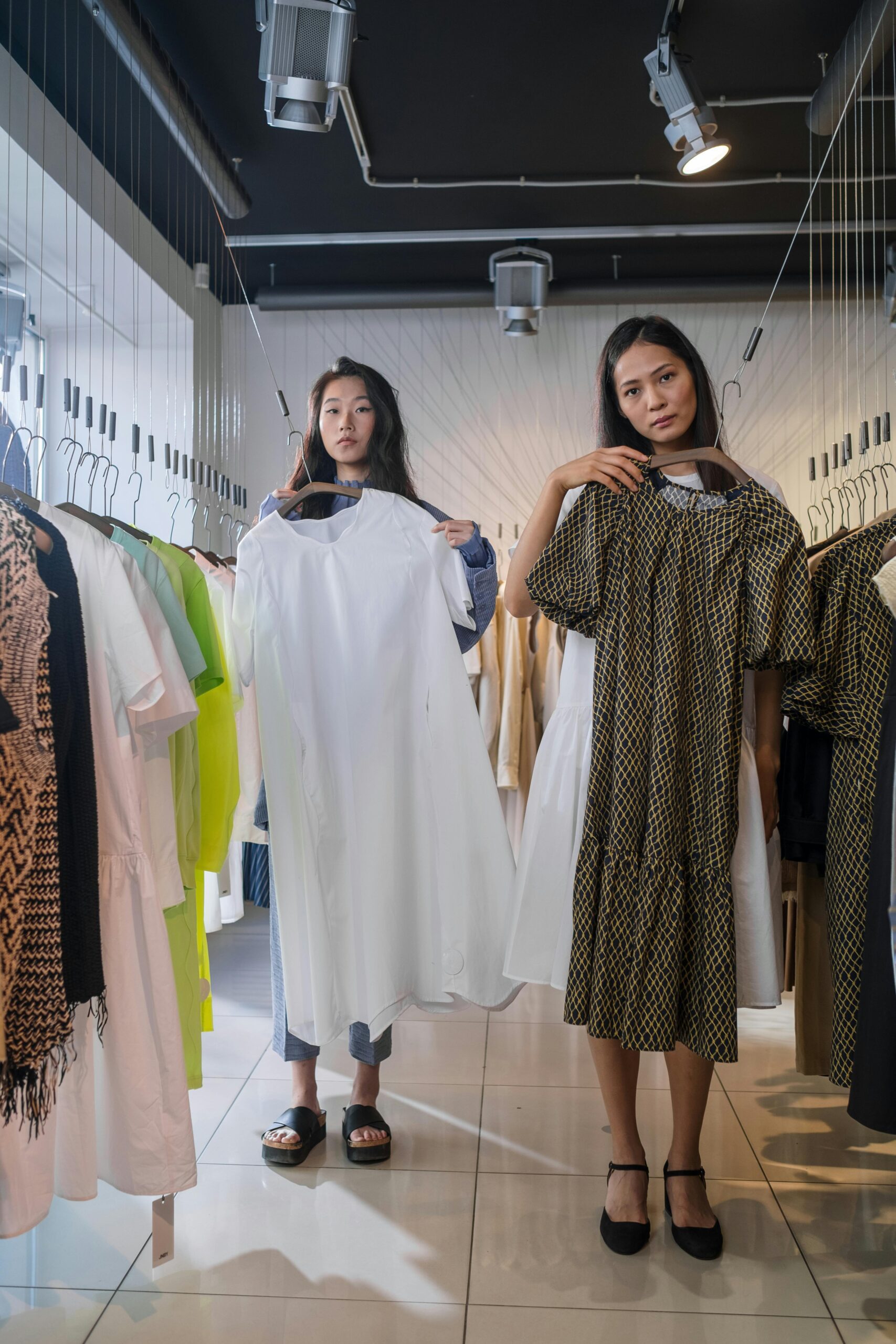
A womenswear manufacturer in Bangladesh is often working within one of the most detail-sensitive areas of apparel production. Womenswear changes constantly—through fabric trends, fit expectations, seasonal demand, and regional preferences—which means production rarely follows a fixed pattern for long. Because of this, an experienced womenswear manufacturer in Bangladesh must adapt quickly to shifting market demands while maintaining production consistency.
Unlike basic garments, womenswear tends to expose small inconsistencies quickly. A slight shift in drape can alter the silhouette. Minor grading differences between sizes may affect fit balance more noticeably than expected. Even fabric movement during stitching can change how the garment sits once worn. These are the kinds of challenges a professional womenswear manufacturer in Bangladesh must monitor carefully throughout production.
At M&A Sourcing Limited, as a womenswear manufacturer in Bangladesh, production is approached with attention to these variables rather than treating garments as standardized output. Lightweight woven fabrics, stretch materials, and soft knits all behave differently during cutting and sewing. Some require stability control, while others depend more on finishing quality and recovery after washing.
Fabric selection also tends to involve compromise. Softer materials may improve comfort and drape but require tighter production control. Structured fabrics provide shape yet can reduce flexibility in fit. A reliable womenswear manufacturer in Bangladesh needs to balance these factors based on the intended market and garment category.
For export-oriented orders, buyers sometimes evaluate materials through frameworks such as OEKO-TEX, particularly for garments worn close to the skin. These references may not dictate every production method, though they often influence how a womenswear manufacturer in Bangladesh approaches sourcing and fabric processing decisions.
Production is coordinated through factories experienced in fashion and knitwear manufacturing, where consistency across bulk orders is monitored carefully. Even then, complete uniformity is difficult to guarantee in large-scale apparel production. A dependable womenswear manufacturer in Bangladesh focuses instead on maintaining variation within controlled and acceptable limits.
Bangladesh continues to play a major role in global apparel manufacturing due to its extensive infrastructure and production capacity. Still, the final outcome often depends more on technical execution and process discipline than scale alone—something every established womenswear manufacturer in Bangladesh must consistently manage.
The phrase best custom womenswear manufacturer in Bangladesh may sound straightforward, though custom womenswear production is rarely simple in practice. Design concepts often evolve once fabric behavior, fit scaling, and construction realities enter the process.
Custom womenswear depends heavily on interpretation. A design sketch may communicate silhouette and styling clearly, yet translating that into repeatable bulk production requires adjustment. Fabrics drape differently than expected. Certain cuts work well in one size but require refinement across a broader range.
At M&A Sourcing Limited, custom womenswear development is approached as a collaborative production process rather than direct replication. Some designs move smoothly into manufacturing. Others reveal limitations only after sampling, particularly when soft fabrics, layered construction, or fitted silhouettes are involved.
Customization typically includes fabric sourcing, embroidery or printing, trims, labeling, and packaging. Yet these elements interact closely. A small change in fabric weight, for instance, may affect drape, stitching tension, and overall garment structure simultaneously.
Factories selected for production are experienced in handling fashion-focused garments where detail consistency matters. Even then, variation remains part of real manufacturing environments. The goal is not to eliminate variation entirely, but to keep it controlled across large production runs.
For buyers working with structured sourcing programs, references such as WRAP or labor guidance from International Labour Organization may influence supplier evaluation, particularly for long-term partnerships.
Sampling remains one of the most practical stages in custom womenswear manufacturing. It reveals how fabric, fit, and construction behave together before scaling into bulk production.