School Uniform Buying Guide: 7 Essential Steps for Better Orders
A school uniform buying guide should help a buyer move from a collection of garment ideas to clear, reviewable specifications. This practical guide covers fabrics, sizing, school logos, wash assessments, sample approvals and packing so schools, distributors and uniform brands can prepare a stronger enquiry.
Scope: buyer planning guidance from M&A Sourcing’s product context. Confirm every commercial and technical requirement for your order; this article does not claim independently audited capacity or certification.
Table of Contents
1. Build a clear school uniform buying brief
School uniform buying starts with a practical question: what does each student actually need to wear during a normal week? List classroom garments, sportswear and seasonal layers separately. A shirt, polo, trouser and sweater do not share the same fabric, fit or approval requirements. A clear item list makes supplier quotations easier to compare and prevents one attractive sample from standing in for an entire range.
Record the destination, school colour references, intended age or height groups, size quantities and required delivery window. Specify whether garments will be sold individually, supplied as sets or packed by student size. Separate confirmed requirements from options still awaiting a school committee decision. A supplier should know which details are approved before spending time on development.
For the available product direction, review our school uniform category. This guide supports that product page with buying and approval steps. For wider sourcing support, explore M&A Sourcing as a Workwear Manufacturer in Bangladesh. Product availability, minimum quantities, development costs and production timing require confirmation for the specific enquiry.
| Field | What the buyer should provide | Why it matters |
|---|---|---|
| Garment list | Separate style codes for shirts, polos, bottoms and layers | Avoids mixed specifications |
| Colour standard | Physical approved reference or agreed colour system | Creates a common approval target |
| Size breakdown | Quantities for each approved size | Supports material and packing plans |
| Branding | Artwork, placement and method | Allows accurate sampling |
| Delivery | Destination and required handover window | Clarifies the commercial brief |
2. Choose fabric by garment and wearing conditions
School uniform fabric should be evaluated as a complete specification. Fibre composition alone does not describe weight, structure, surface feel, opacity or behaviour after washing. Ask for the composition, construction, finished weight and usable width of each proposed fabric. Keep the approved swatch with the style record so later substitutions are visible.
Compare a woven shirt fabric with a woven shirt sample and a knitted polo fabric with a polo sample. Check a light-coloured fabric under normal lighting and over the intended underlayer. For bottoms, review sitting comfort, pocket support and the appearance of high-contact areas. Heavier is not automatically better: the appropriate choice depends on climate, garment construction and expected use.
A useful trial includes handling the sample after the intended care process, rather than judging only a freshly pressed garment. The fabric selection guide explains how to connect material decisions with the buyer’s actual requirements. If polos are part of the range, compare the tees and polos category alongside the main school uniform collection.
| Item | Review on the sample | Evidence to request |
|---|---|---|
| Woven shirt | Opacity, collar shape and comfort | Composition, construction and approved swatch |
| Knitted polo | Collar recovery, body shape and surface feel | Fabric specification and wash assessment |
| Trouser or skirt | Movement, waist comfort and seam appearance | Measurement sheet and construction details |
| Sweater or layer | Fit over the base garment and cuff recovery | Yarn or fabric details and care instructions |
3. Approve a size chart instead of relying on age labels
A school uniform labelled for one age group may fit differently from another supplier’s garment carrying the same label. Use an agreed measurement chart and a documented measuring method. Distinguish body measurements from finished garment measurements, and state whether a width is measured flat or as a full circumference.
For a top, consider chest width, body length, shoulder width, sleeve length and neck opening. For bottoms, review waist relaxed and extended where applicable, hip, inseam, rise and hem opening. Add diagrams to show precisely where measurements begin and end. Every value and tolerance should be approved for the actual style; the worksheet below intentionally avoids invented universal sizes.
Fit trials should include the intended underlayers and ordinary movements such as sitting, reaching and walking. For younger wearers, check whether closures can be used comfortably and whether labels or seams cause irritation. Discuss garment-specific safety requirements for the destination with a qualified compliance professional, especially when considering cords, detachable components or decorative trims.
Use our size chart planning guide to organise measurement records. Keep personally identifying student information out of general supplier worksheets; size totals and anonymised fit feedback are usually enough for product development.
| Measurement | Method to define | Buyer entry |
|---|---|---|
| Chest width | Flat garment, agreed position below armhole | Approved size value and tolerance |
| Body length | Agreed starting point to finished hem | Approved size value and tolerance |
| Sleeve length | State shoulder or centre-back starting point | Approved size value and tolerance |
| Waist | Relaxed and extended if elasticated | Approved size value and tolerance |
| Inseam | Crotch seam junction to finished hem | Approved size value and tolerance |
4. Review construction, colours and school branding
School uniform approval should include the inside of the garment. Inspect seam finishing, loose threads, label edges and the way pocket openings are reinforced. Operate buttons, zips or other closures repeatedly during the review. Evaluate the sample against the written specification and record any correction with a clear photograph and a measurable instruction.
Approve embroidery or printing on the actual proposed material. A logo that looks clean in a digital file may behave differently on a light woven shirt and a textured polo. Confirm the artwork version, finished dimensions, thread or print colours and placement measured from a fixed garment landmark. Review the reverse side for comfort where it can contact the wearer.
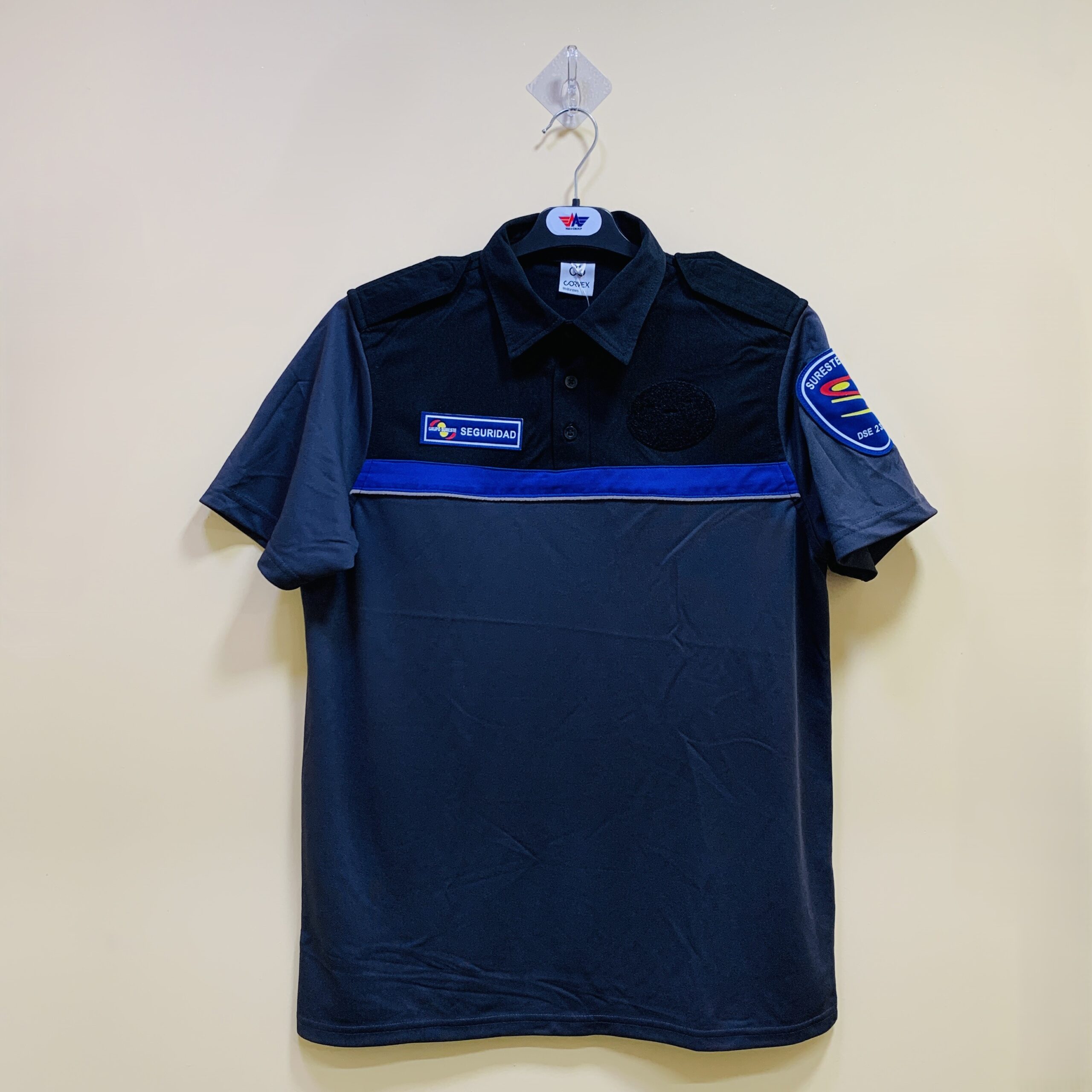
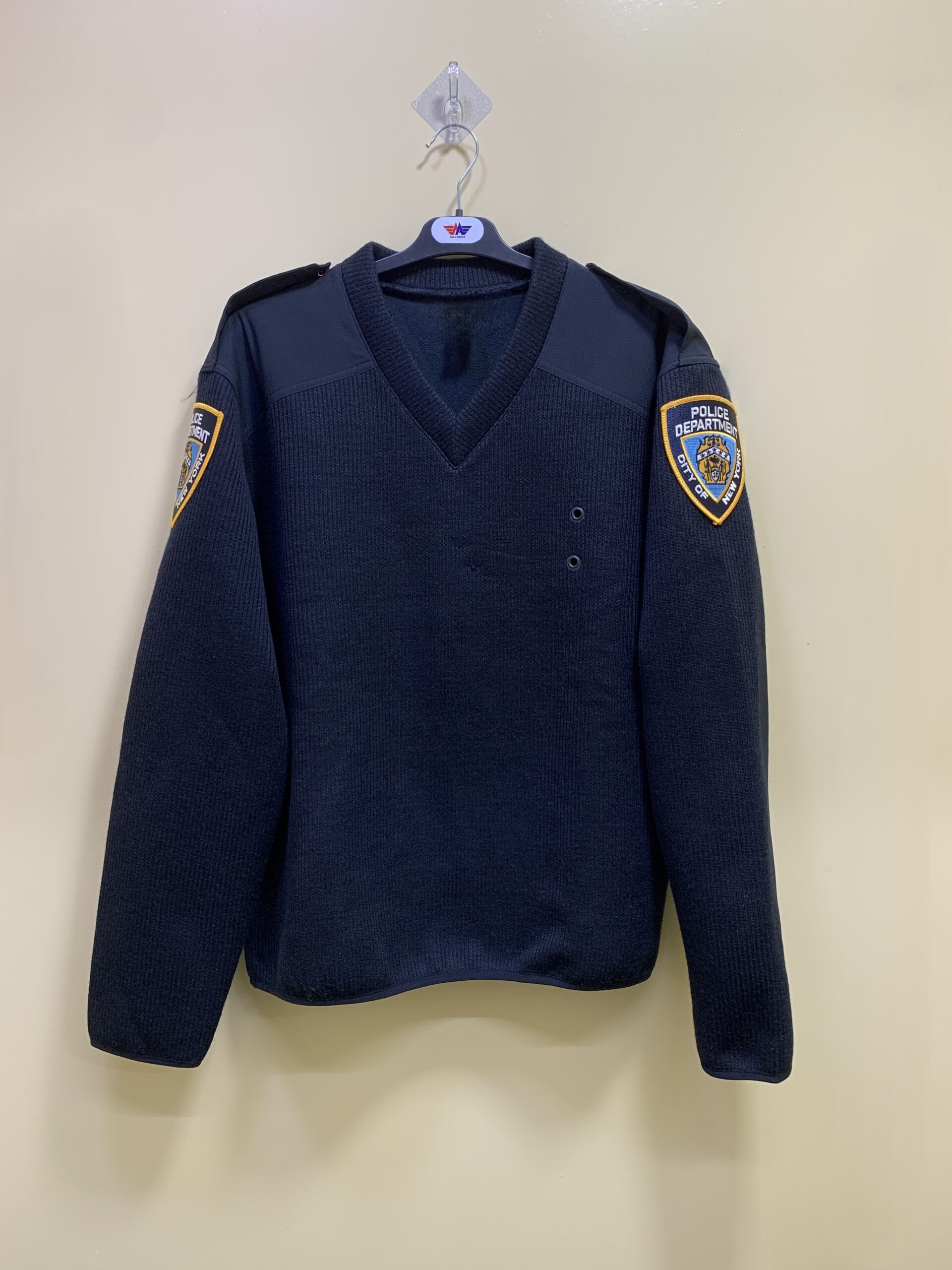
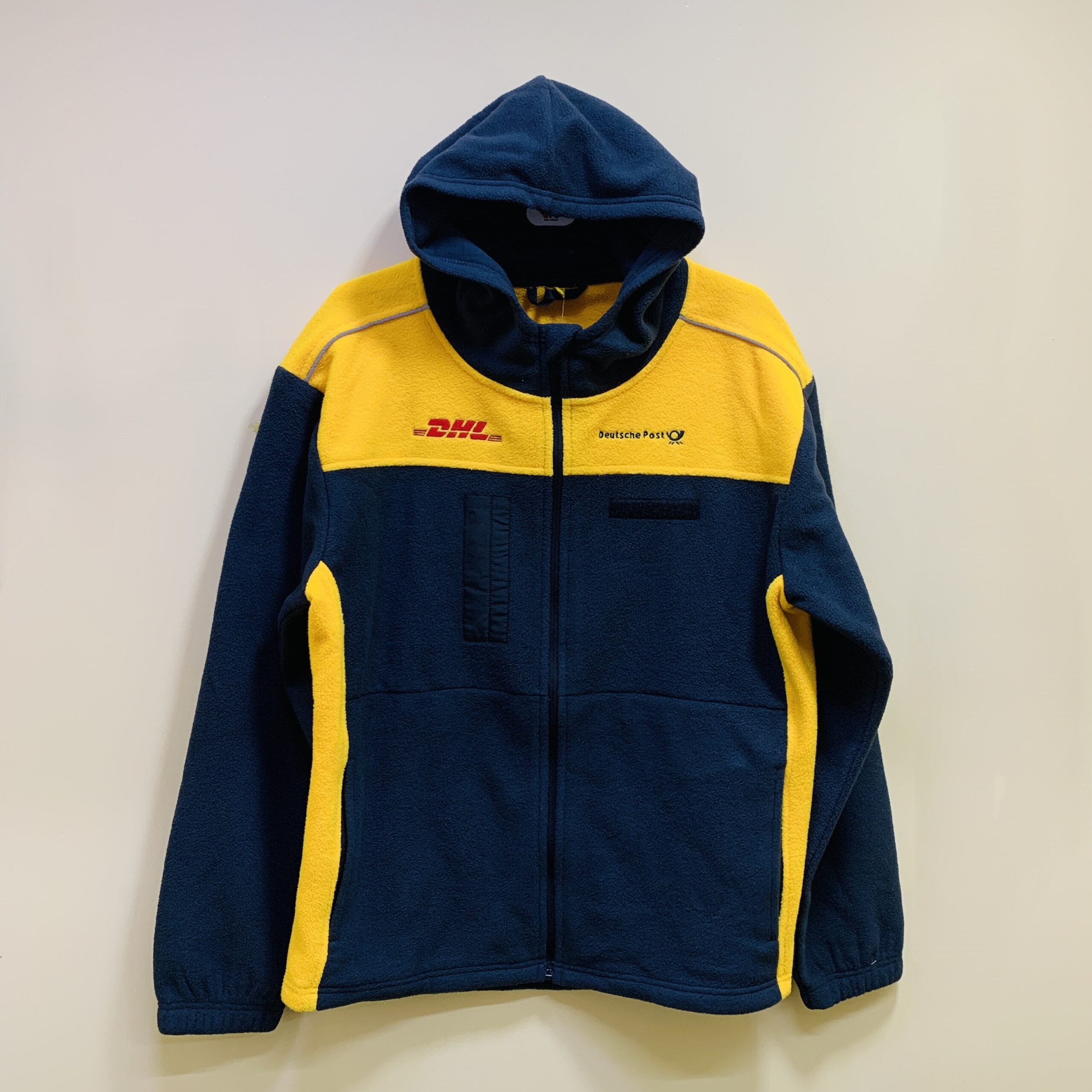
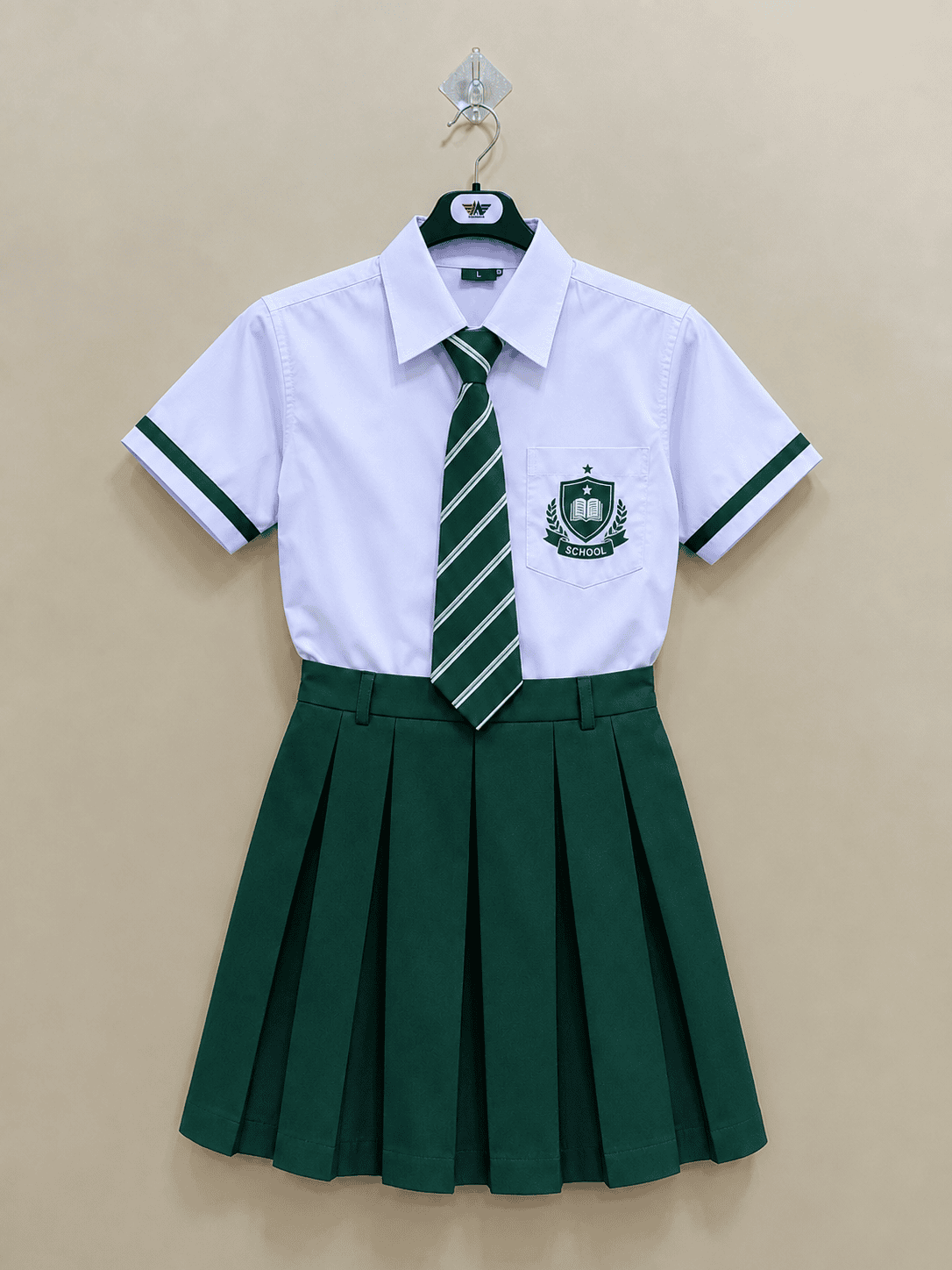
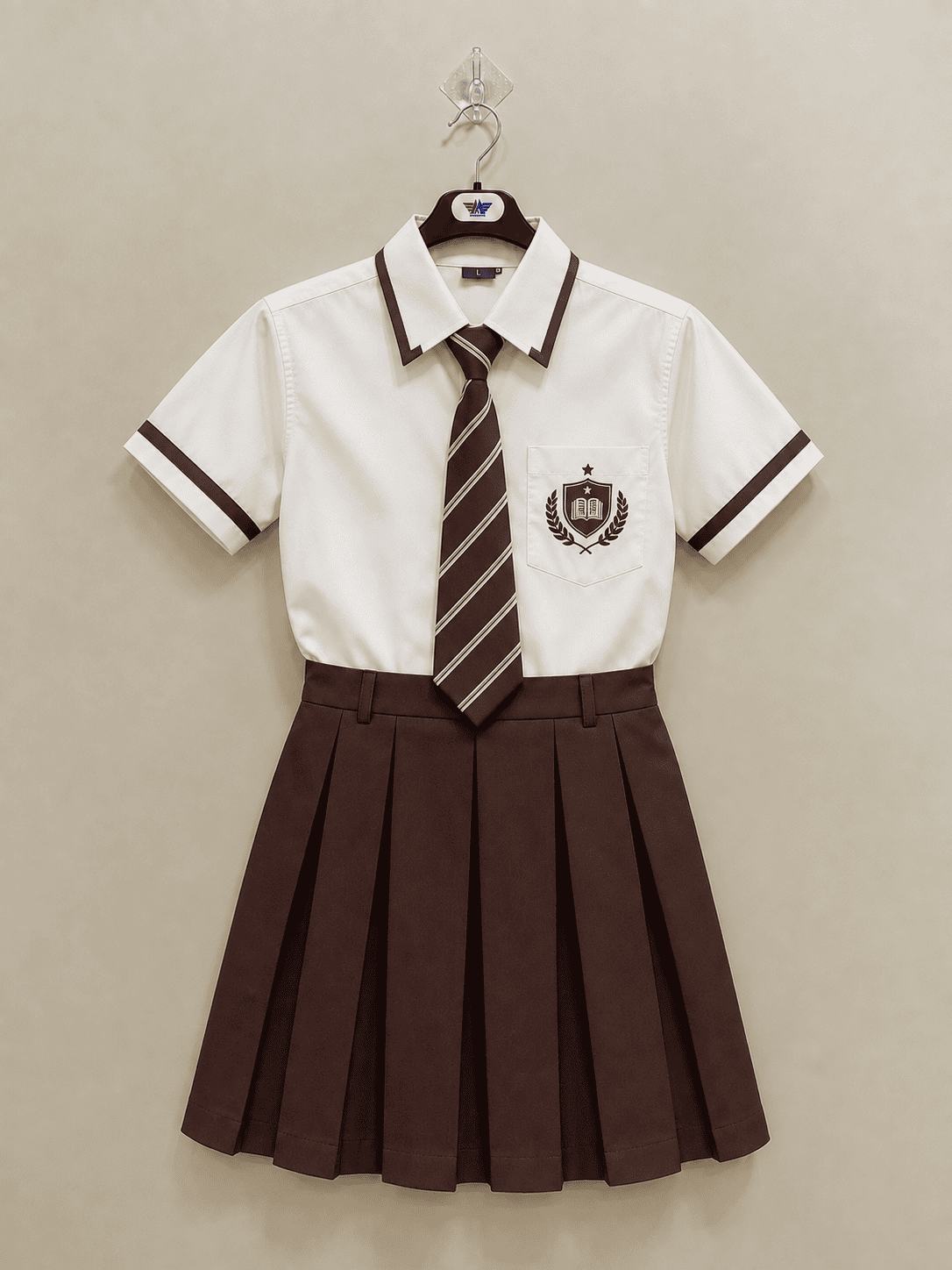
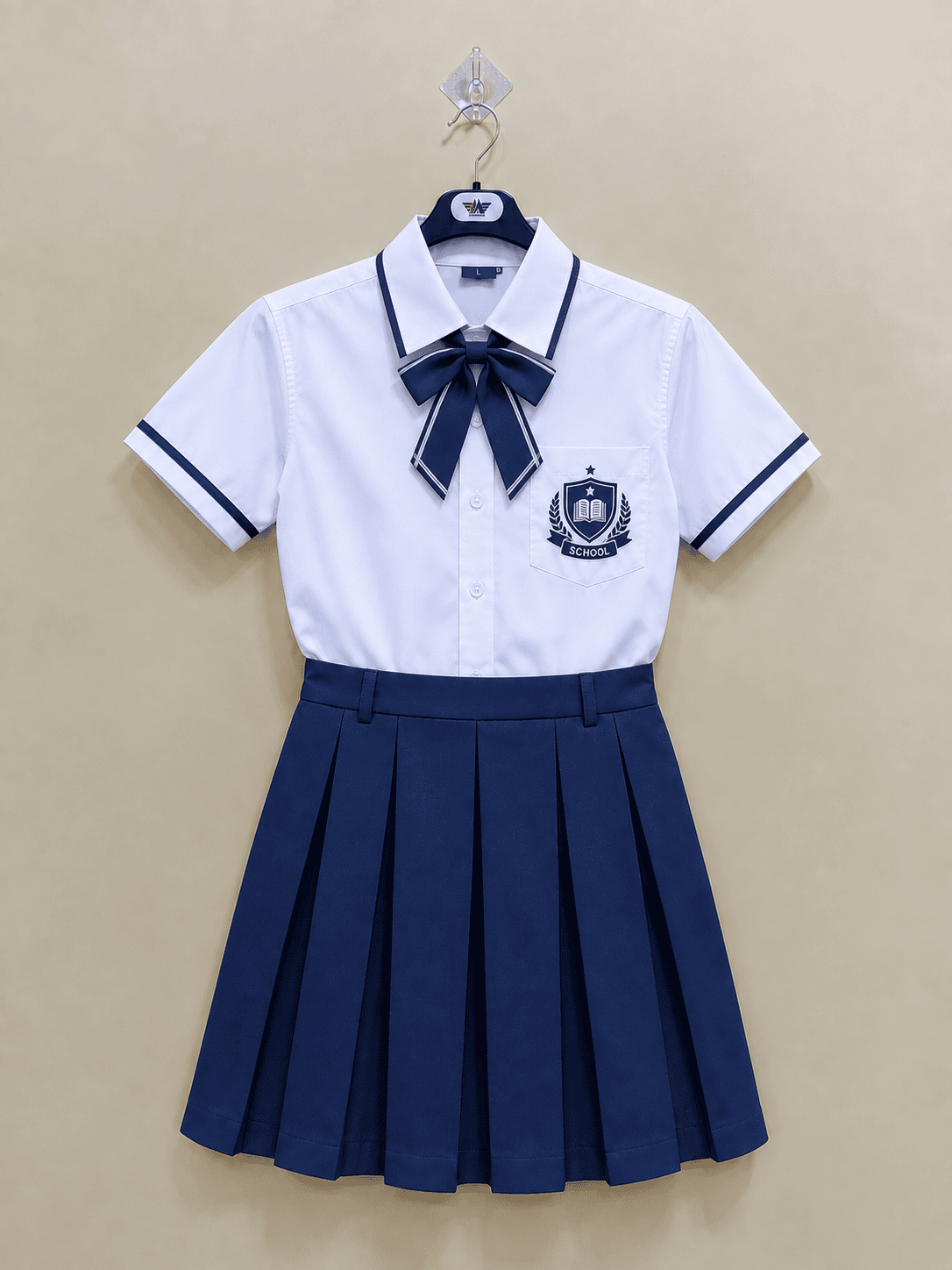
Keep colour approvals separate for body fabric, collars, rib trims and sewing thread where matching matters. A photo on a phone is useful for discussion but should not be the only reference for a critical shade. Agree the approval method and lighting conditions with the supplier. Catalogue photographs below are style references from the website’s media library; visible branding does not establish current availability or a customer relationship.
5. Test care performance before bulk approval
School uniform garments need a care plan that reflects how they will actually be washed. Agree the washing and drying procedure before comparing before-and-after measurements. Record the sample identification, care conditions and observations so a later reviewer can understand the result. An unlabelled washed sample provides much weaker evidence than a documented assessment.
CottonWorks explains that shrinkage and skew can affect garment dimensions, seam appearance and fit, with results influenced by fabric construction and processing. See its technical resource on shrinkage and skewing. This supports checking the finished garment under an agreed care procedure rather than assuming that a fibre name predicts the result.
Review colour transfer between contrasting panels, print or embroidery appearance, collar shape, seam puckering and the fit of the washed garment. Agree acceptable limits and suitable test methods with the buyer and, where necessary, a competent laboratory. A home trial can highlight development problems; it does not replace required laboratory evidence or destination-specific compliance checks.
Keep an approved unwashed reference and a documented washed comparison where practical. If fabric, dyeing, trim or decoration changes after approval, assess whether the affected tests and samples need to be repeated. The goal is a traceable decision on the actual school uniform specification.
6. Control samples with written approval gates
School uniform development becomes harder to manage when decisions are scattered across messages. Use one current specification and one revision log. Identify who can approve fabric, fit, colour, branding and packing. Feedback such as “make it better” should be replaced with an exact correction, a photograph and a reference to the relevant measurement or construction detail.
Separate a development sample from an approved production reference. A fit sample may use a substitute colour, while a branding sample may prove only logo execution. Mark those limitations clearly. Before bulk release, confirm which details have been approved together and which items remain open. Our sample approval guide provides a related framework.
The progress bars below illustrate seven planning stages. They are a visual workflow only: they do not report an actual order, completion rate, quality rating or delivery promise. Move an order forward only when the relevant evidence is complete.
| Gate | Record to retain | Release condition |
|---|---|---|
| Fabric and colour | Swatch reference and approval date | Agreed material and shade |
| Fit | Measured sample and comments | Approved chart and corrections |
| Branding | Artwork version and decorated sample | Agreed size, colour and placement |
| Care review | Conditions, measurements and observations | Buyer acceptance of results |
| Production reference | Final specification and approved sample ID | Open issues resolved in writing |
Stage 1: Brief agreed
Stage 2: Fabric selected
Stage 3: Size chart approved
Stage 4: Branding approved
Stage 5: Care review completed
Stage 6: Final sample approved
Stage 7: Packing confirmed
7. Plan packing, quotes and repeat orders together
School uniform packing should make receiving and distribution straightforward. Agree whether cartons contain one style and size or a defined mixed assortment. Specify garment labels, size stickers, set identification and carton markings before shipment preparation. Check that the packing list can be reconciled with the original style and size breakdown.
Compare quotations on the same basis: garment specification, branding, packaging, quantities, sample charges where applicable, delivery terms and destination. Ask what changes would affect the quoted cost or lead time. Avoid assuming a universal minimum order or fixed production period from an online guide; these depend on the final style and the supplier’s confirmed plan.
For replenishment, retain the approved fabric reference, measurement chart, artwork, colour decisions and sample identification. Confirm whether the same material remains available before promising identical repeat production. If a substitute is proposed, review it through the relevant approval stages rather than treating it as automatically equivalent.
Use the tech pack checklist and order checklist to organise an enquiry. For a coordinated uniform range, review sweaters and trouser options where appropriate to the brief. These category links are starting points for discussion, not confirmation of suitability for every school programme.
Ready to develop a school uniform range? Send M&A Sourcing your enquiry with garment references, proposed fabrics, size quantities, artwork, destination and delivery requirements. Request written confirmation of feasibility, quotation assumptions and the sampling plan before placing an order.
School uniform buying guide: frequently asked questions
What information is needed for a school uniform quotation?
Provide garment references, fabric requirements, colours, size quantities, branding artwork, packing instructions, destination and the required delivery window. Ask the supplier to state quotation assumptions.
Which fabric is best for school uniforms?
There is no single best fabric for every item. Compare composition, construction, weight, comfort, opacity and care performance for the intended garment and climate, then approve a representative sample.
Can age labels replace a size chart?
No. Use an approved finished-garment chart with a defined measuring method and tolerances. Age labels alone do not establish fit across suppliers.
Should school uniform samples be washed before approval?
Assess representative samples using an agreed washing and drying procedure. Record measurements and appearance before and after care, and obtain any required laboratory evidence separately.
How should a school logo be approved?
Approve the correct artwork version on the intended fabric. Record finished dimensions, colours, placement and the appearance of the reverse side where it may contact the wearer.
Are the catalogue images proof of current stock?
No. The images are style references from the website catalogue. Confirm current development options, materials, availability and commercial terms for the specific enquiry.
What is the minimum order quantity?
Request a style-specific confirmation. Quantity requirements can depend on fabric sourcing, colours, branding, size distribution and production arrangements.
Can matching sweaters and polos be discussed?
Yes. Include each item as a separate style in the brief and confirm its specification, fit, colour and care requirements with the supplier.
What should be kept for repeat orders?
Retain approved specifications, fabric and colour references, measurement charts, artwork, sample IDs and packing records. Reconfirm availability before placing a repeat order.
Does the workflow show actual production progress?
No. The seven bars illustrate planning and approval stages only. Actual order status must be confirmed using records from the supplier.