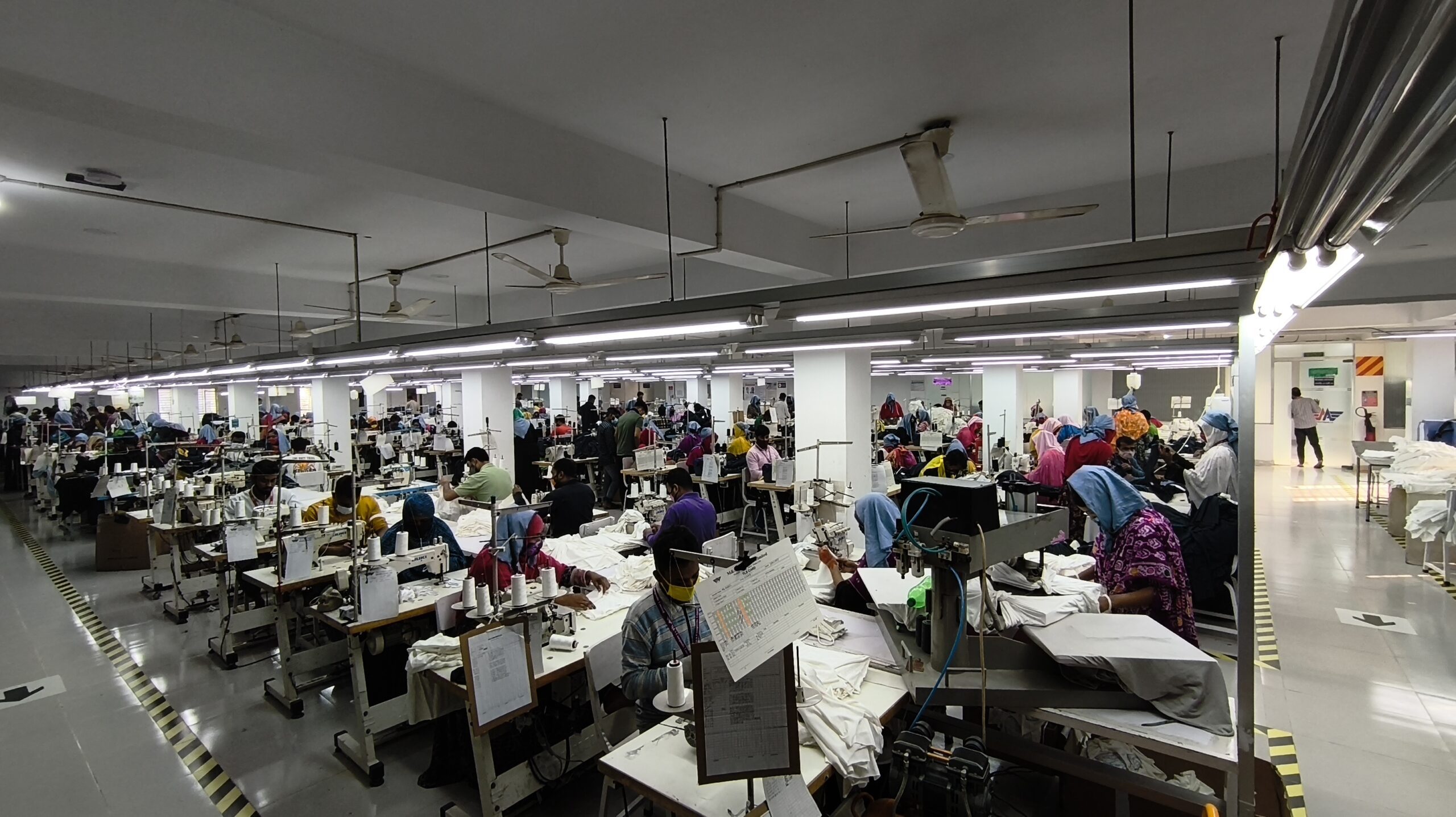
School Uniform Quality Control Checklist: 7 Essential Steps
A school uniform quality control checklist helps international buyers compare goods with approved specifications and retain a clear record of issues, corrections and release decisions. This guide covers fabric, seams, measurements, branding, care evidence and packing.
The worksheets are planning tools, not an inspection certificate or a universal acceptance standard. Agree the criteria, methods and responsibilities for the actual product and destination before using them.
Table of Contents
1. Define the approved reference and inspection scope
A school uniform quality control checklist should identify the exact product and revision being reviewed. Start with the style code, material reference, colour standard, measurement chart, artwork and approved sample ID. If those records conflict, resolve the conflict before deciding whether a garment is acceptable.
Separate development approval from inspection of production goods. A sample can demonstrate a proposed construction without proving that a later batch matches it. Likewise, an inspection record describes the goods and scope examined; it should not be presented as a guarantee that every unexamined item is perfect.
Agree the inspection stage, responsible reviewer, sampling approach and acceptance criteria with the buyer. This guide does not prescribe a universal AQL, sample size or defect allowance. Those decisions need the actual order, product risks and buyer requirements.
For product enquiries, visit our School Uniform Manufacturer in Bangladesh page. International buyers can use the school uniform sourcing guide to prepare the wider brief.
| Record | Check | If missing |
|---|---|---|
| Specification | Current style and revision | Clarify the controlling version |
| Material and colour | Identified approved references | Resolve substitutions |
| Measurements | Chart, diagrams and tolerances | Agree the measuring method |
| Branding | Artwork and decorated sample | Confirm execution reference |
| Inspection plan | Scope, criteria and authority | Agree before release decisions |
2. Compare fabric, shade and trims with the approved proposal
Review material identity before judging surface appearance. A fabric can look similar to the approved swatch while differing in composition or construction. Request the relevant specification and supporting evidence rather than identifying fibre content from a photograph or touch alone.
Check the garment for visible holes, stains, surface irregularities and unwanted shade differences. Compare panels and relevant trims against the agreed colour reference under the approved assessment conditions. Record the location of an observation so another reviewer can find it.
For a polo, consider the body, collar, cuffs and placket as interacting components. For a shirt, review the collar and visible panels. For bottoms, include waistband, pocket components and closures. For sweaters, review knit appearance and trim attachment.
Our school polo fabric selection guide helps organise material decisions before inspection. Category examples include tees and polos and sweaters; confirm specifications separately for each style.
| Area | Observation to record | Reference |
|---|---|---|
| Body fabric | Holes, stains or surface irregularity | Agreed material and criteria |
| Panels | Visible shade difference | Approved shade standard |
| Collar and cuffs | Appearance and coordination | Approved trim proposal |
| Closures | Correct component and condition | Construction specification |
| Substitution | Any unapproved change | Written buyer decision |
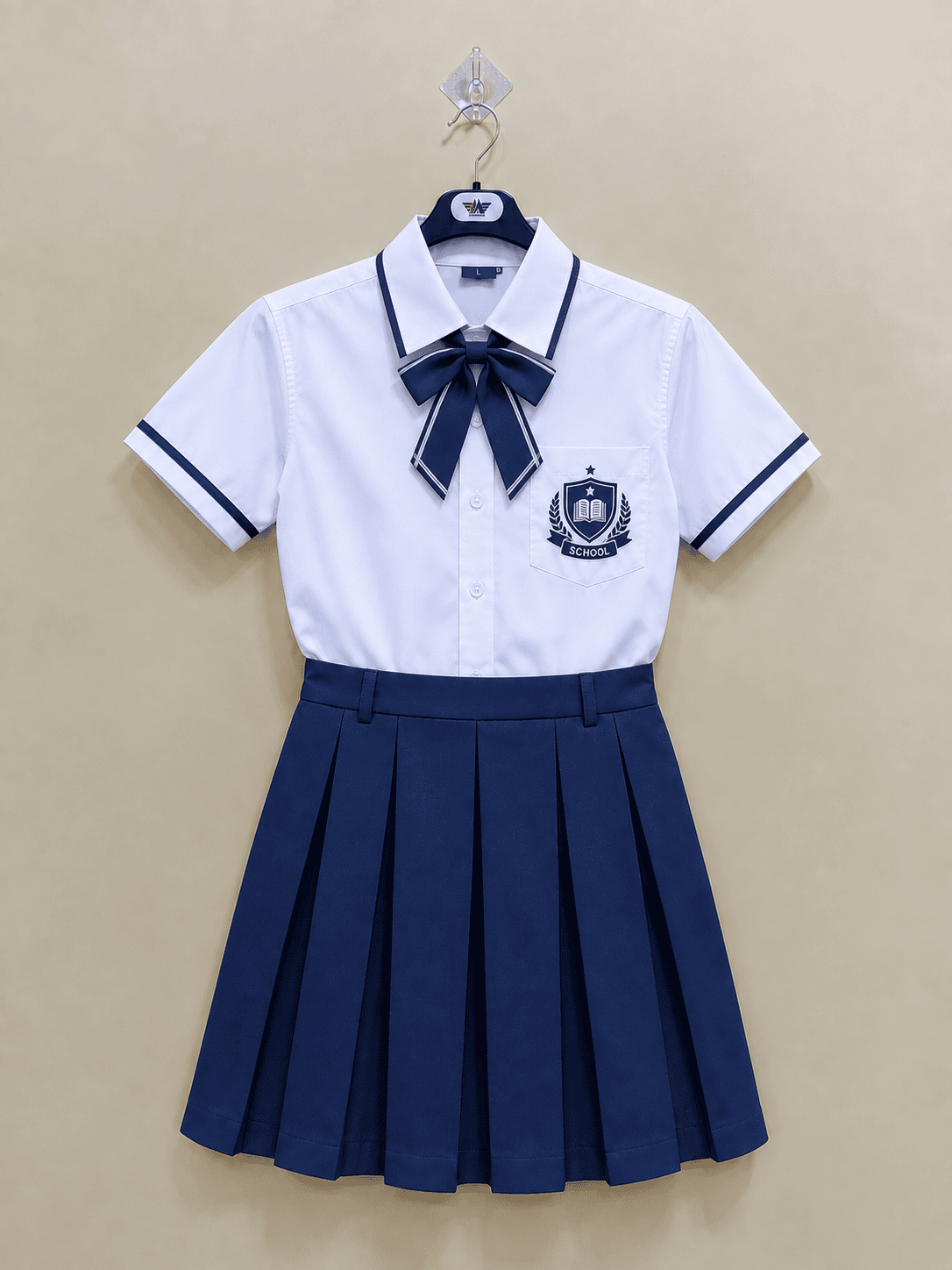
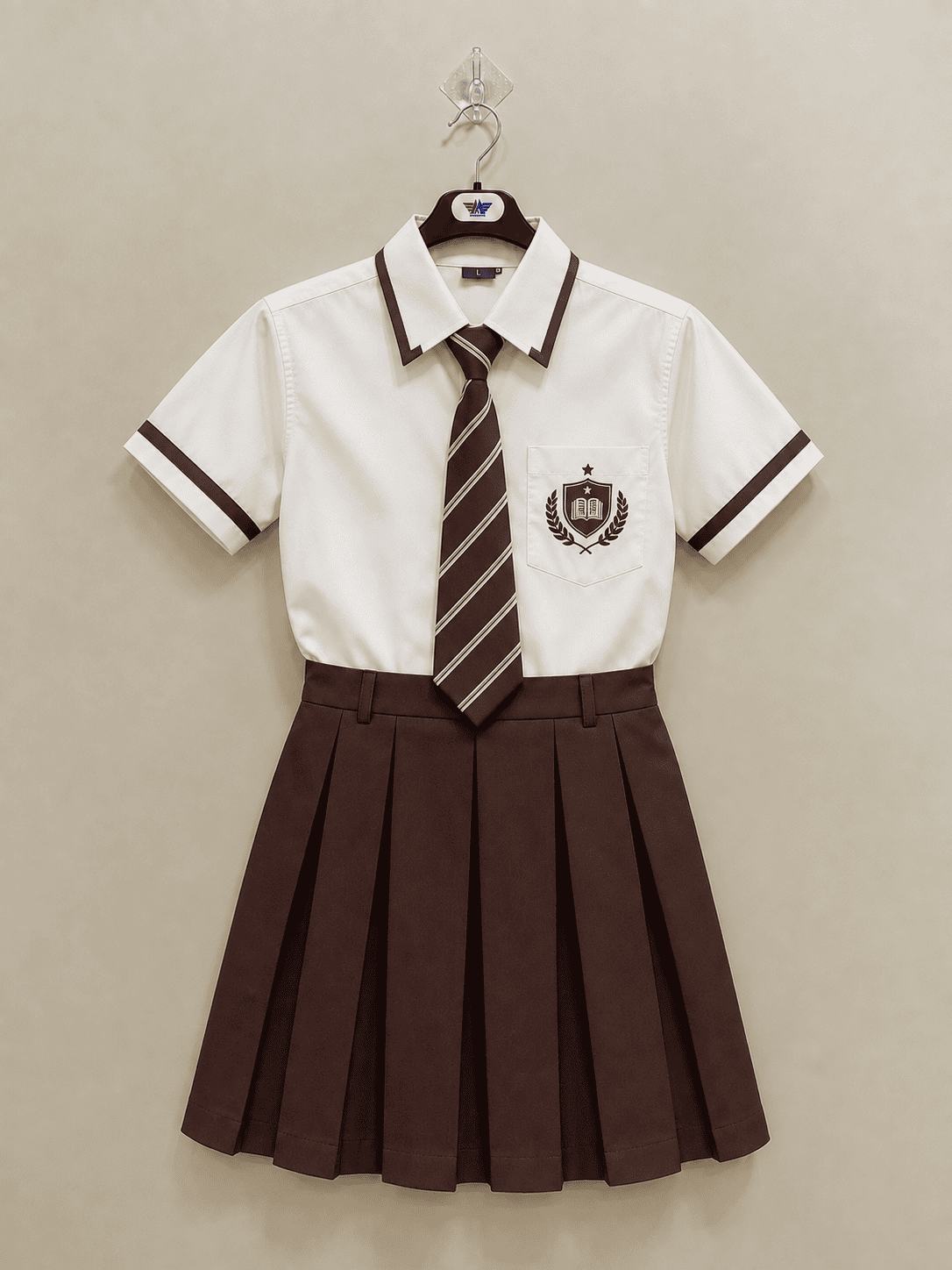
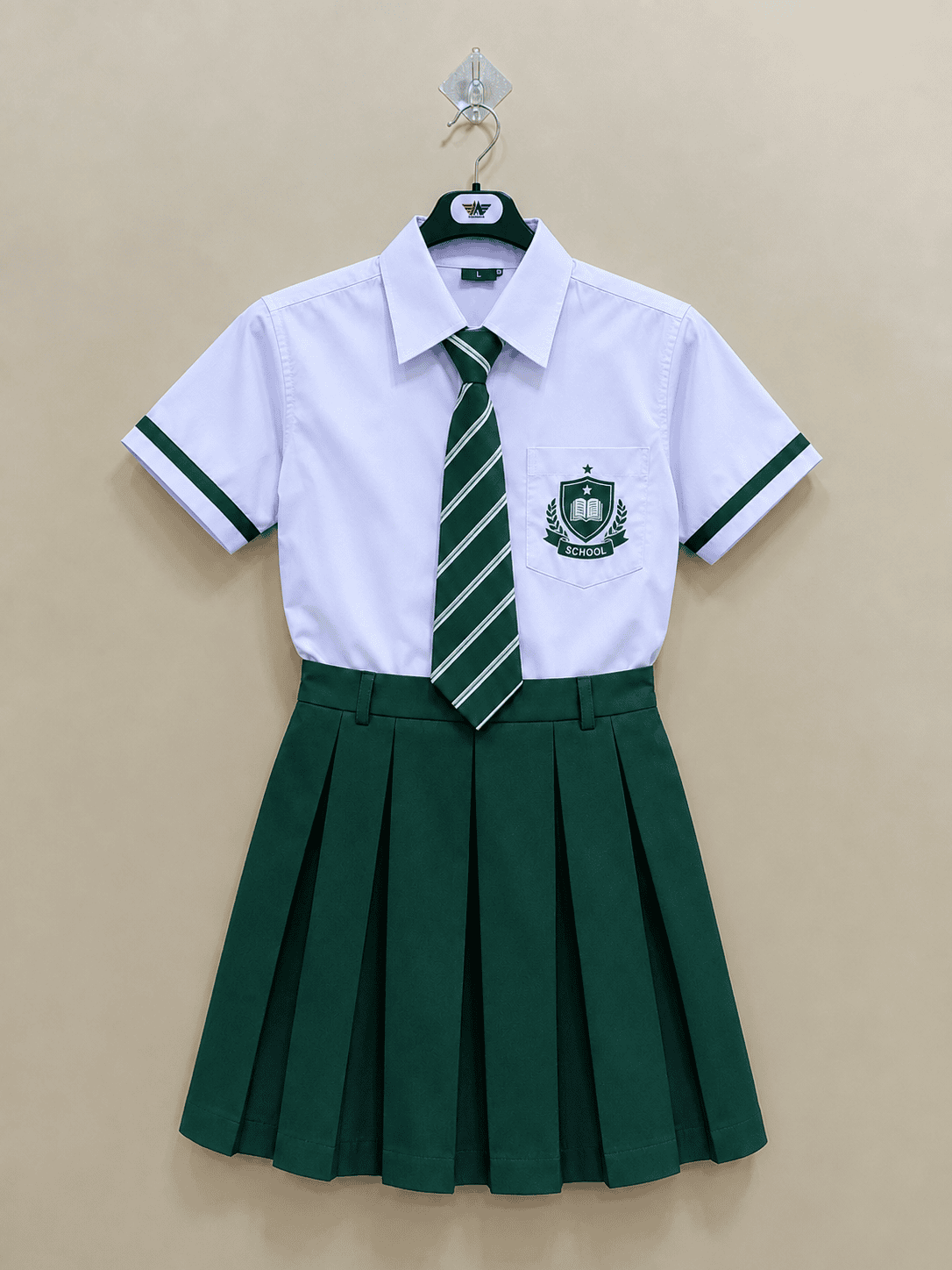
Catalogue photographs are style references, not evidence of completed testing, an inspected shipment, current stock or a brand relationship.
3. Inspect seams, closures and usable details
A school uniform quality control checklist should include the inside of the garment. Review seam continuity, skipped or broken stitching, unfinished areas and loose ends against the approved construction. Record exactly where the issue occurs rather than writing only “sewing problem.”
Operate buttons, zips or other closures through the agreed check. Inspect alignment and attachment, and compare pocket position and opening with the specification. A neat overall appearance can hide a closure that does not work correctly.
CottonWorks’ garment quality control resource identifies fit and seam integrity among garment quality considerations and notes the need to assess performance such as shrinkage. This supports treating appearance, construction and performance as related but distinct checks.
Agree any required test method with the buyer and competent testing provider. An informal handling check is not automatically equivalent to a laboratory seam-strength or attachment test. Record the method used and avoid assigning a performance rating that was not established.
For children’s garments, have the responsible importer or qualified specialist confirm applicable product safety requirements for the exact design and destination. Routine visual inspection alone does not establish complete market compliance.
4. Measure consistently and separate fit from label identity
Use the current approved finished-garment chart and diagrams. State the measuring units, garment condition and relevant measuring method. A measurement cannot be assessed fairly if one reviewer stretches a ribbed edge while another measures it relaxed.
Record actual values and compare them with the agreed tolerance at each point. Avoid inventing one universal tolerance for every garment dimension. Chest width, neckline and trouser length may need different buyer-approved criteria.
Separate a garment measurement issue from a size-label issue. If the garment matches one size but carries another label, changing the chart is not the appropriate response. Identify the affected batch and reconcile garment identity, external sticker and packing record.
Refer to the school uniform size set approval guide for range development and the measurement chart guide for record planning. A production measurement check should use the accepted revision from that process.
| Field | Entry required |
|---|---|
| Identity | Style, sample or item reference and labelled size |
| Chart | Version, units and point-of-measure diagram |
| Result | Actual value and approved tolerance |
| Observation | Measurement issue, method conflict or wrong label |
| Action | Hold, correction or agreed review |
| Recheck | Result, date and responsible reviewer |
5. Verify school crests, labels and care evidence
A school uniform quality control checklist should connect the school crest to its approved artwork. Compare spelling, colours, dimensions and measured placement, then review the surrounding material and the reverse side where relevant to comfort.
Check label artwork and garment identity against the approved records. Include care labels, size labels and any buyer-authorised identifiers in the review scope. A barcode that looks sharp can still contain the wrong data, so agree how it will be validated.
Treat care assessment as evidence with a defined procedure. Retain the sample ID, conditions, measurements and observations before and after care. Review shape, shade interaction, seams, trims and decoration together. Obtain laboratory evidence separately where required.
The final product and market determine which reviews are necessary. Approval of a logo does not establish label compliance, and a material report for a different product does not prove the result for the finished uniform. Ask the responsible parties to confirm the relevance of each record.
Use the technical pack checklist to keep artwork, labels and garment requirements together. Do not apply certification logos or performance claims without appropriate authorisation and evidence.
6. Record defects and verify corrective action
Use an issue log that another person can follow. Identify the garment, location, observation, photograph reference and agreed classification. The buyer’s criteria should control classification; the same word “defect” should not conceal very different safety, functional or appearance concerns.
Determine the affected scope before closing an issue. One incorrectly attached label may point to a local error or a wider batch problem. Keep uncertain goods identifiable and agree the investigation or recheck required.
Record the correction and verify its result. Do not close the issue only because someone confirms that work was done. Recheck the relevant criteria and assess whether the correction introduced a different problem, such as damage around a replaced decoration.
| Issue | Evidence | Action | Closure |
|---|---|---|---|
| Seam problem | Item ID, location and photograph | Agreed repair or replacement | Rechecked result |
| Wrong identifier | Label data and affected scope | Correct identity and reconcile records | Validated data |
| Measurement difference | Actual value and chart reference | Pattern, process or item review | Accepted remeasurement |
| Shade concern | Comparison and reference conditions | Buyer-approved disposition | Recorded decision |
The progress bars below show an illustrative review sequence. They are not a live inspection report, product pass rate or claim about a particular factory’s performance.
Stage 1: References confirmed
Stage 2: Materials reviewed
Stage 3: Construction checked
Stage 4: Measurements recorded
Stage 5: Branding verified
Stage 6: Corrections rechecked
Stage 7: Release documented
7. Reconcile packing and document the release decision
Before release, compare the garment identification, packing assortment, carton marks and final packing list. A correct garment can still be distributed incorrectly when mixed-size cartons or set pairings differ from the buyer’s instruction.
Check approved packaging presentation and record exceptions such as balance cartons, replacements or reopened packs. Update the physical records when contents change. Our packing checklist explains this reconciliation in more detail.
Keep the inspection result separate from the shipment authorisation. Name the person responsible for the final decision and record unresolved conditions explicitly. Do not describe a shipment as fully approved while a relevant hold remains open.
Retain the specification version, approved sample reference, report, photographs and correction closures for the buyer’s receiving and repeat-order process. Compare future changes with those records before assuming an earlier approval still applies.
Use our school uniform buying guide and sample approval guide for earlier development stages. The Workwear Manufacturer in Bangladesh homepage introduces M&A Sourcing’s wider range.
Send a school uniform enquiry with style references, destination, size quantities, material requirements and your proposed quality criteria. Request confirmation of feasibility, sampling arrangements and the agreed review scope through our school uniform product page.
School Uniform Quality Control Checklist: FAQs
What should a school uniform quality control checklist include?
Identify the approved references, materials, construction, measurements, branding, care evidence, packing and the process for recording corrections and release.
Does this guide prescribe a universal AQL?
No. Agree the inspection approach, sampling scope and acceptance criteria for the actual order with the buyer and responsible reviewer.
Can fabric composition be confirmed from photographs?
No. Request the relevant material specification and appropriate supporting evidence. Photographs provide visual references.
What is the difference between sample approval and inspection?
Sample approval accepts a defined proposal and scope. Inspection assesses identified goods against agreed criteria; one does not automatically replace the other.
Should all garment measurements use the same tolerance?
Do not assume so. Use the approved tolerance for each point and the agreed measurement method.
How should a wrong size label be handled?
Identify the affected scope and reconcile the garment, label and packing references. Do not change the measurement chart merely to match an incorrect label.
Does a visual check prove full product safety compliance?
No. Product and destination requirements need the appropriate review and evidence from the responsible parties.
How should embroidery be checked?
Compare spelling, artwork, dimensions, colours and measured placement with the approved reference. Review the surrounding material and relevant care results.
When is a corrective action closed?
Close it after the agreed recheck verifies the result and the authorised reviewer records the decision.
Which records should be retained?
Keep the controlling specification, approved sample ID, inspection record, photographs, correction closures and final release decision.