Workwear Manufacturing Process in Bangladesh: Sampling & QC
Published by M&A Sourcing Ltd. | Updated: 7 October 2026
The workwear manufacturing process in Bangladesh connects technical specifications, materials, fit samples, production checks and shipment release. This guide explains the records and decisions buyers should agree at each stage.
Discuss Your Industrial Workwear Programme →
Workwear manufacturing process in Bangladesh: from brief to release
A clear workwear manufacturing process in Bangladesh begins with a product brief and ends with an accepted garment and shipment arrangement. Each stage should have a controlling reference, a responsible person and a decision that resolves the next dependency.
For company capabilities and sourcing enquiries, visit our Workwear Manufacturer in Bangladesh homepage. This article develops the production workflow in more detail: technical packs, materials, samples, quality records and release conditions.
M&A Sourcing Ltd. supports buyer enquiries through product development and sourcing coordination. Confirm the allocated factory, operational responsibilities and order-specific scope in the proposal. The workflow below is a buyer planning guide rather than a live production report.
Use our custom workwear guide for design changes and workwear export guide for packing and document handover. The Bangladesh Garment Manufacturers and Exporters Association provides industry background.
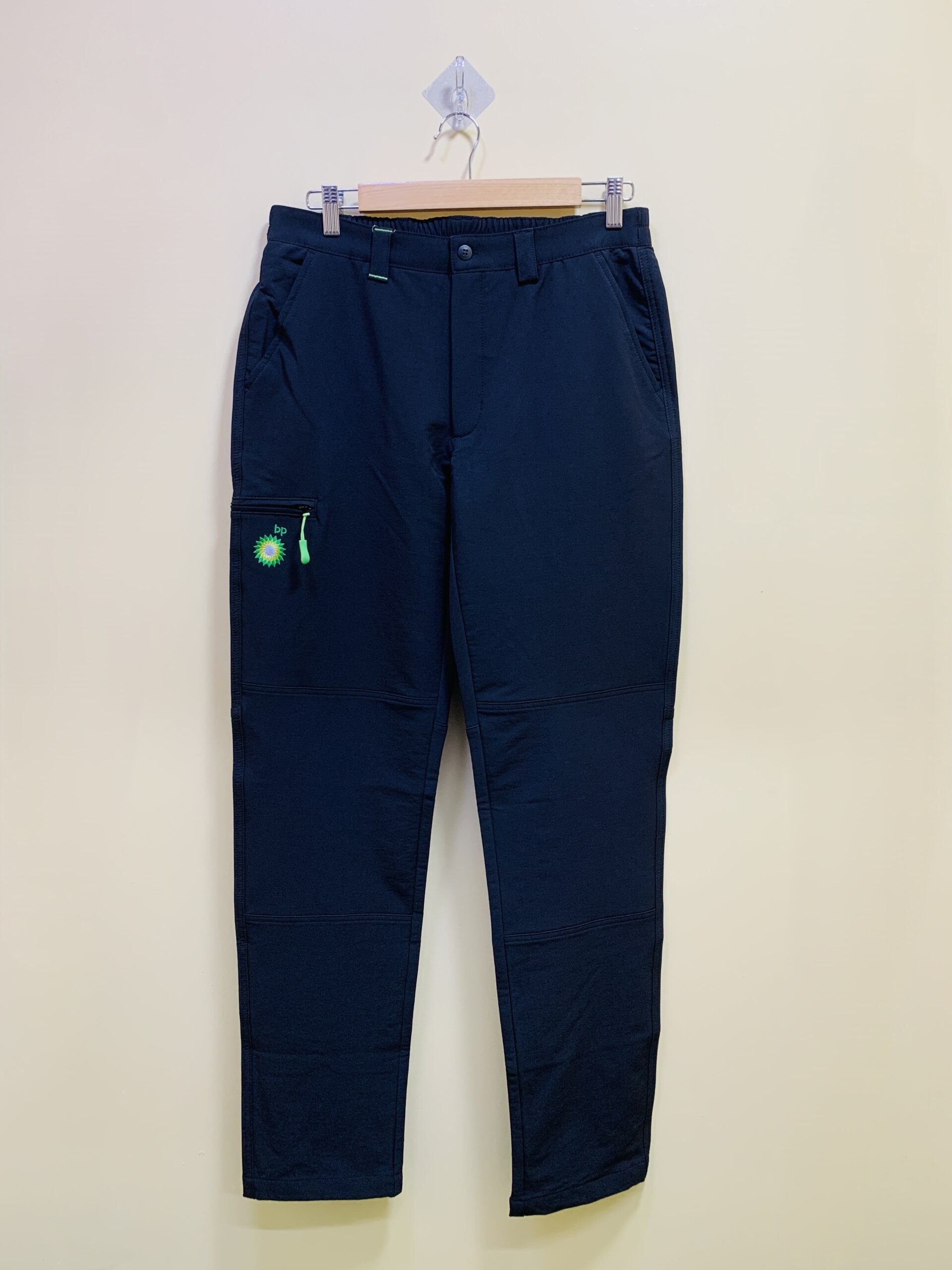
Real workwear product references for development
Use these existing catalogue photographs as starting references for an industrial programme. Click a picture or button to open the dedicated product page and view more examples. Confirm which details can be developed for your own programme.
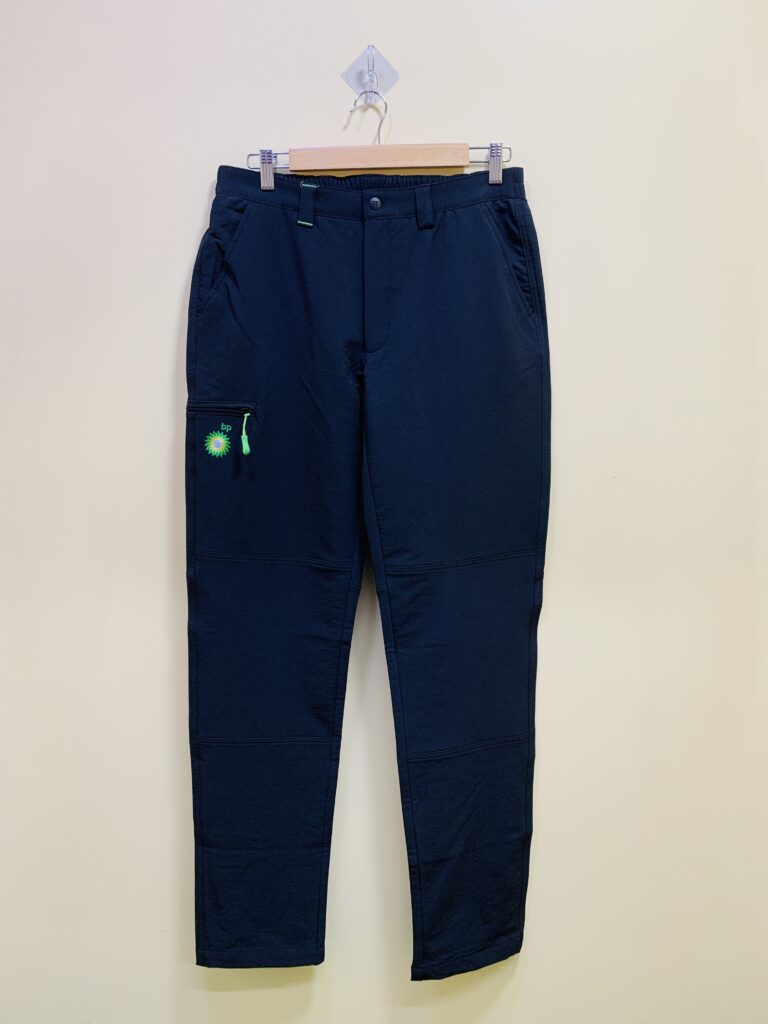
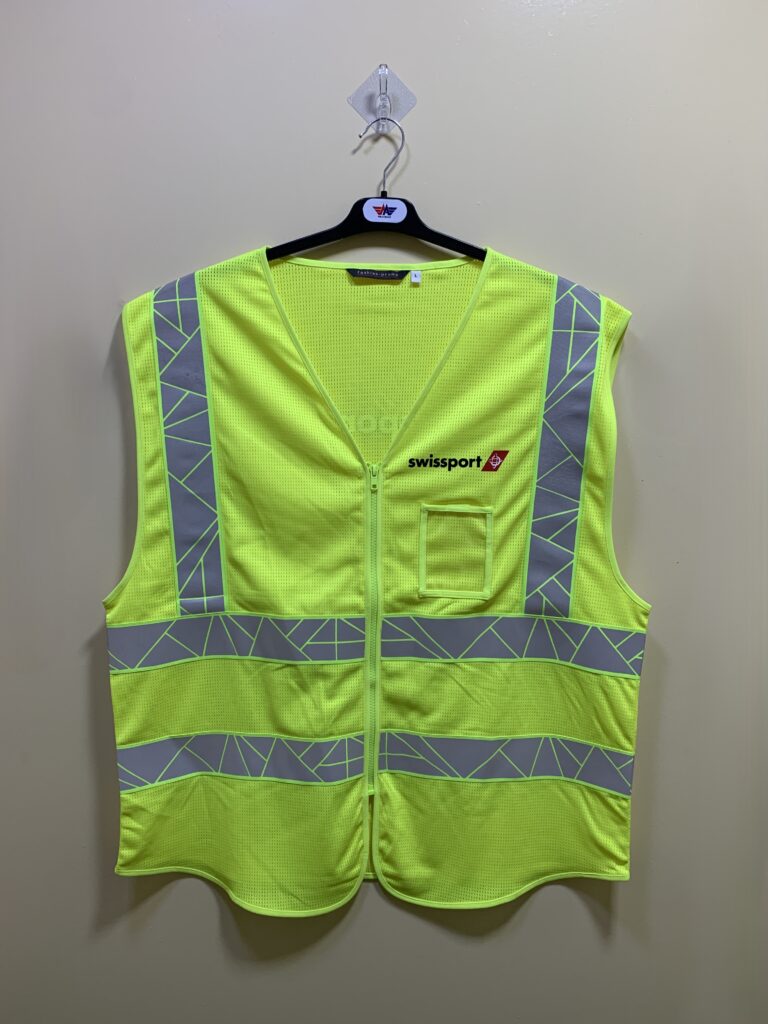
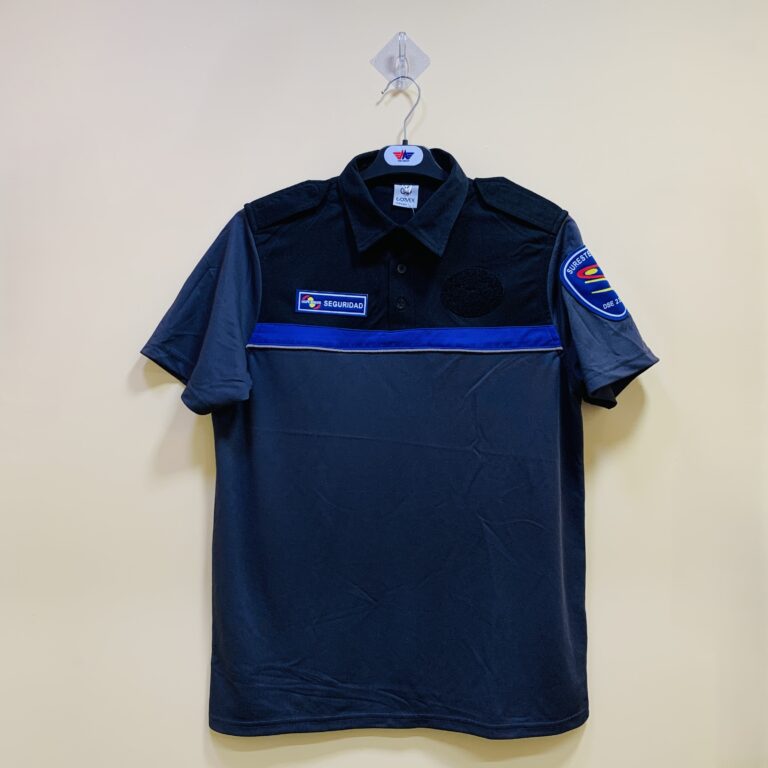
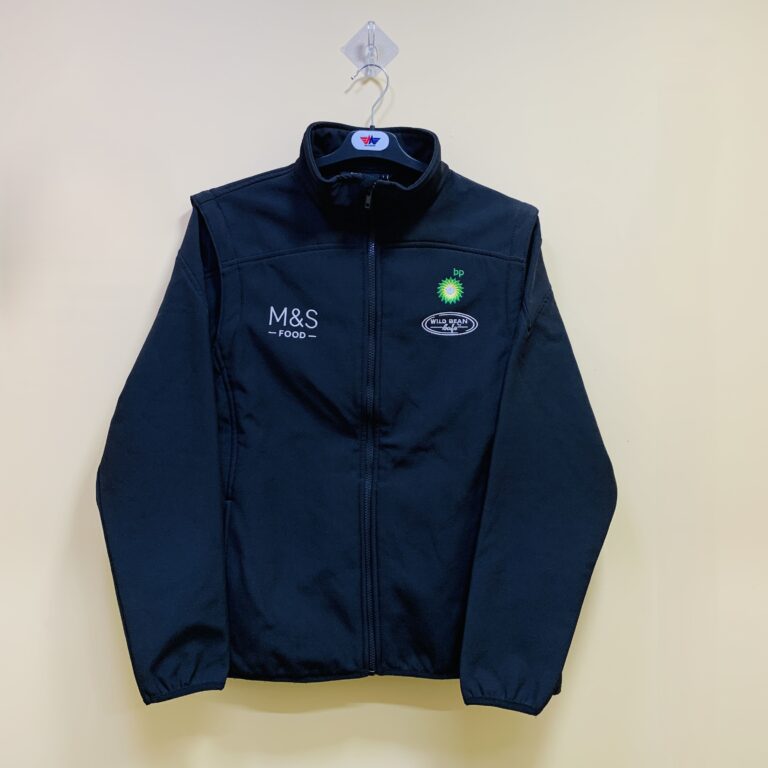
Also explore high-visibility wear, aprons, padded jackets and the complete workwear range. Catalogue images do not establish availability or protective performance for every proposed modification.
Essential records for a production-ready workwear order
- Wearer brief: identify garment categories, intended use and care.
- Product requirements: distinguish uniforms from specified protective characteristics.
- Factory suitability: review comparable samples and technical resources.
- Manufacturing arrangement: identify the site, operations and service scope.
- Materials: approve composition, construction, colour and trims.
- Fit and function: review measurements, movement, pockets and layering.
- Branding: approve artwork, labels and placement.
- Quality evidence: define inspections and corrective-action decisions.
- Commercial terms: confirm minimums, inclusions and schedule dependencies.
- Repeat control: retain approved references and review substitutions.
Compare suppliers using the same dated brief. Identify any change in material, construction, packing or inspection scope before treating an alternative offer as equivalent.
Workwear categories and development priorities
| Category | Details to define | Sample review |
|---|---|---|
| Work trousers | Waist, leg fit, pockets, closure and reinforcement | Movement, measurements and access |
| Coveralls | Torso fit, opening, sleeves and pocket layout | Fit, functional details and intended layering |
| Work jackets | Shell, lining, cuffs, closures and pockets | Construction and fit over intended clothing |
| Branded work tops | Fabric, neckline, cuffs and decoration | Dimensions, artwork and care expectations |
| Garments with specified protective characteristics | Required performance and supporting evidence | Design and evidence review for the actual product |
Explain why each detail is needed. A functional pocket, reinforcement panel or closure should connect to the buyer’s intended requirements rather than being added only because it appears in a catalogue photograph.
For example, a jacket and trouser programme may need a shared colour reference but separate fit reviews. If the buyer changes layering or garment layout, ask which drawings, measurements and samples require reassessment.
Define specialised protective requirements through the buyer’s responsible technical team and confirm feasibility and evidence before approval. Ordinary garment construction should not be treated as proof of flame, electrical, chemical or other protection.
Build the tech pack and quantity matrix
Assign each style a product code and revision date. Include technical drawings, construction details, finished garment measurements, tolerances, fabric requirements, pocket dimensions, closures, labels and packing. Mark unresolved requirements instead of asking production teams to guess.
Prepare quantities by style, colour and size. Add location allocation if garments are packed for different warehouses or teams. Distinguish sample quantities, initial bulk quantities and replacement stock.
For example, a cargo trouser brief should define pocket access, waistband construction and required measurement points. A jacket brief should specify closure details and intended layering. Product photographs communicate appearance but cannot replace these instructions.
Use one dated issue log for open questions, owners and decisions. When a requirement changes, update the controlling file and identify which sample or approval is affected. Retain the accepted quotation assumptions with the order.
Fabric, colour and trim approvals
| Component | Define | Approval record |
|---|---|---|
| Fabric | Composition, construction, weight and finish | Accepted swatch and specification |
| Colour | Reference and comparison method | Approved colour sample |
| Closures and trims | Identity, dimensions and functional requirements | Trim card or accepted components |
| Labels and decoration | Artwork, placement and current revision | Accepted files and decorated reference |
| Care | Intended laundering and appearance requirements | Agreed evaluation results and instructions |
Check the actual proposed materials against the approved references. Identify components substituted during development and obtain bulk approval separately. Fabric weight alone does not establish durability, comfort or protective performance.
Agree which evaluations are required for the intended use. Retain results for the relevant material or garment revision and review whether later substitutions affect acceptance. A supplier description should not silently become a verified performance claim.
Artwork, decoration and label control
Supply current logo files, dimensions, colours and placement references. Approve decoration on a relevant garment so seams, pockets and closures can be reviewed with the artwork.
Keep garment and artwork revisions connected. If a pocket or panel changes, check whether placement needs a new approval. Record brand, size and care labels separately, including who approves the text and files.
For garments with a defined protective claim, refer proposed design or decoration changes to the party responsible for technical conformity. A branding approval does not by itself establish performance evidence.
See our branding approval guide for related artwork control questions.
Real company images: sourcing staff and samples
These existing company photographs show staff, samples and production-related activity. Discuss who will review your brief and maintain the sample approval log.
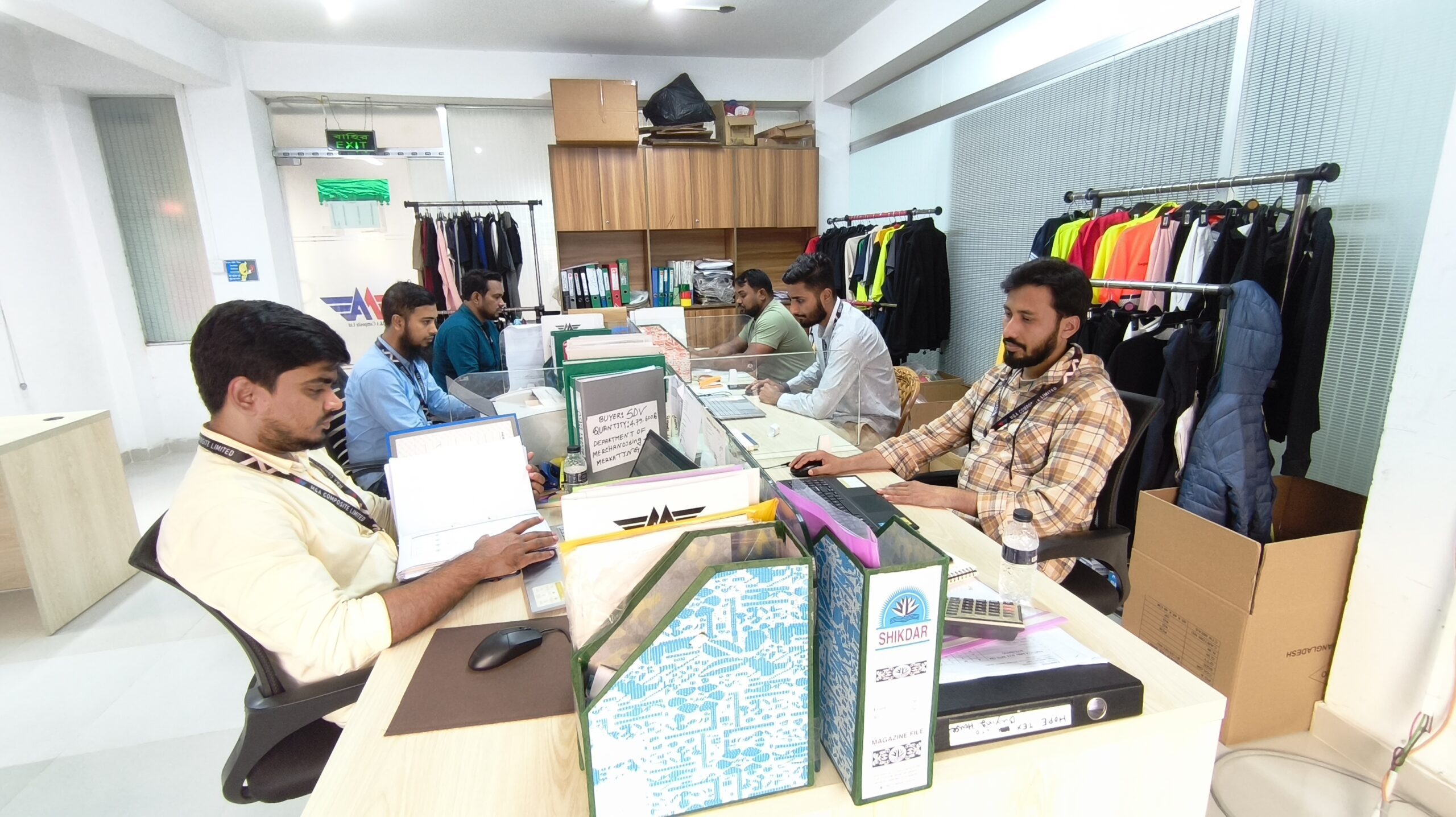
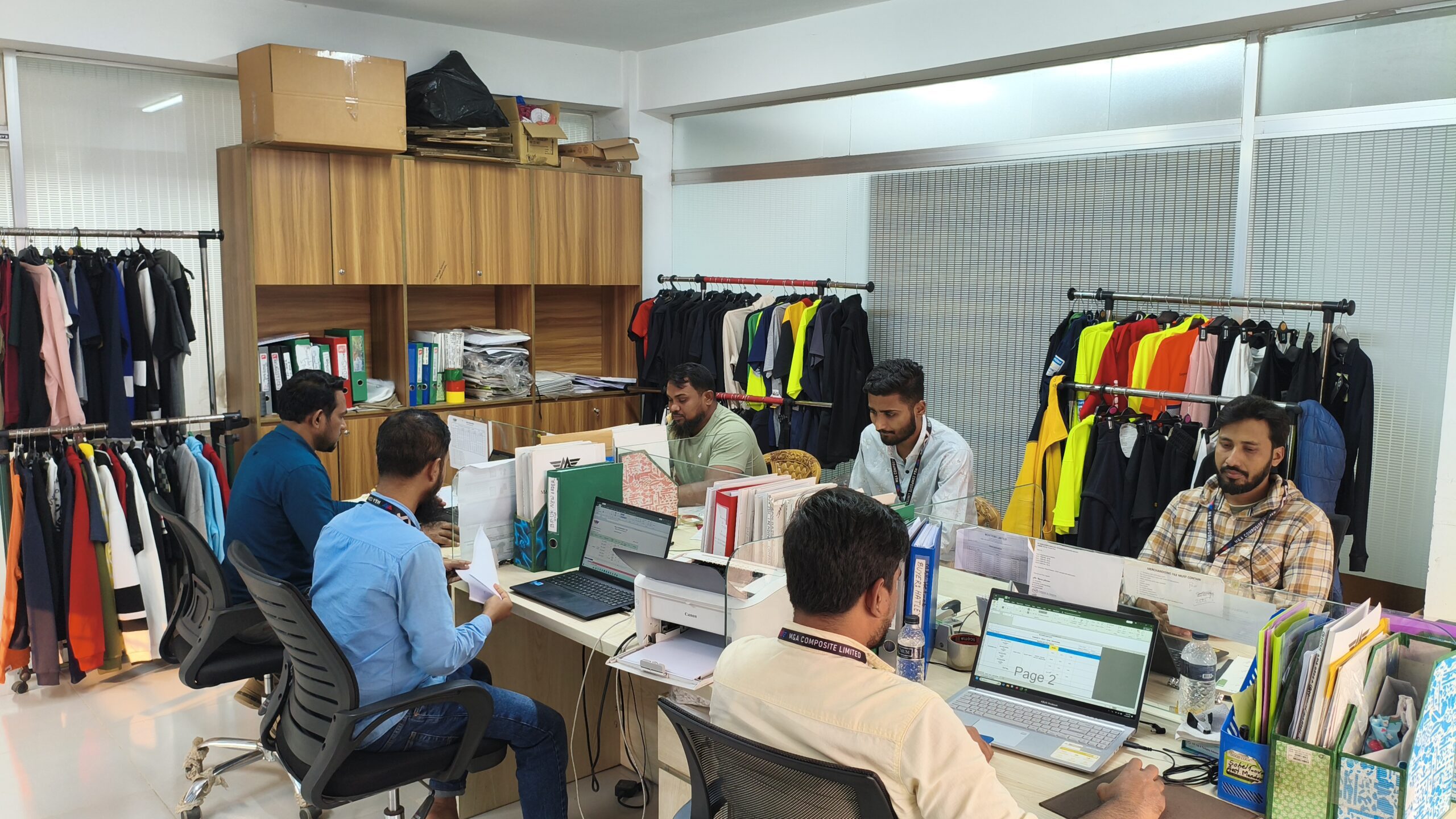
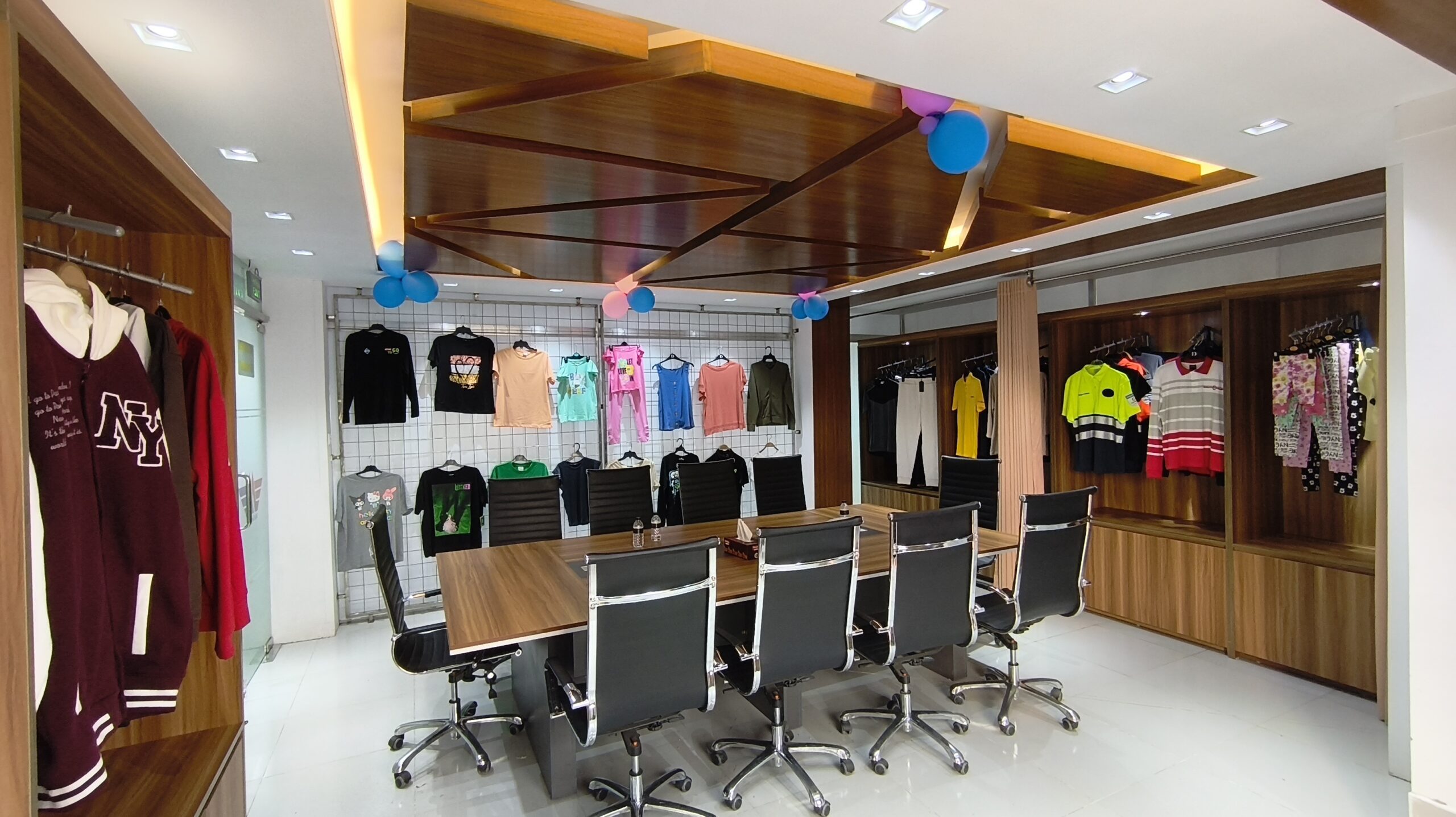
Agree a named contact and escalation route. The photographs introduce the working environment; relevant samples and current records support capability discussions.
Sampling, comments and pre-production release
Agree what each sample stage resolves. A development sample checks construction; a fit sample checks measurements and movement; a decorated sample checks artwork; the pre-production reference consolidates accepted materials and garment details.
Review sitting, bending, reaching and pocket access where relevant to the brief. Mark exact measurement or component changes in the sample comments. Record the sample identifier, review date, status and approver.
For coordinated trousers and jackets, approve each garment individually and check the intended clothing combination. An accepted sample in provisional fabric should not automatically release different bulk material.
Before production, consolidate approved drawings, measurements, materials, branding, labels and packing. Resolve open points and identify the controlling revision. A late change needs assessment of cost, schedule and any evidence affected before acceptance.
Workwear manufacturing process: 7 approval milestones
These bars illustrate a process. They are not live completion percentages, product-performance scores or delivery guarantees.
Identify the product, changes, wearer requirements and quantities.
Confirm the site, scope and commercial assumptions.
Resolve fit, colour, construction and trim comments.
Confirm artwork, labels, packing and accepted references.
Track dated findings, revisions and corrections.
Check acceptance conditions and allocation.
Coordinate dispatch and preserve the approved design.
Use a dated tracker for an actual order, showing owners, open issues and next actions.
Quality records and revision control
| Stage | Record | Decision |
|---|---|---|
| Pre-production | Accepted sample, material and specification revisions | Release or resolve open approvals |
| Material review | Identity and findings against approved references | Accept or hold affected components |
| Cutting and sewing checks | Measurements, construction findings and traceable corrections | Confirm follow-up before further output |
| Final inspection | Results against agreed scope and acceptance criteria | Accept, rework or review |
| Packing and release | Labels, quantities, allocation and outstanding conditions | Confirm readiness or correct differences |
Agree the inspection arrangement before production. Define the checks, measurements, defect categories and acceptance method. Where acceptance sampling is used, an AQL number alone does not specify the full inspection plan.
Record findings against the affected style and revision. Connect corrective actions with the original issue and retain follow-up evidence. Rework should receive a clear review decision before the affected goods are released.
Keep production completion, inspection acceptance and shipment readiness as separate decisions. Check quantities, labels and carton allocation against the accepted packing instructions. Resolve outstanding conditions with the responsible buyer or coordinator before dispatch.
Related real images: production workers and garment handling
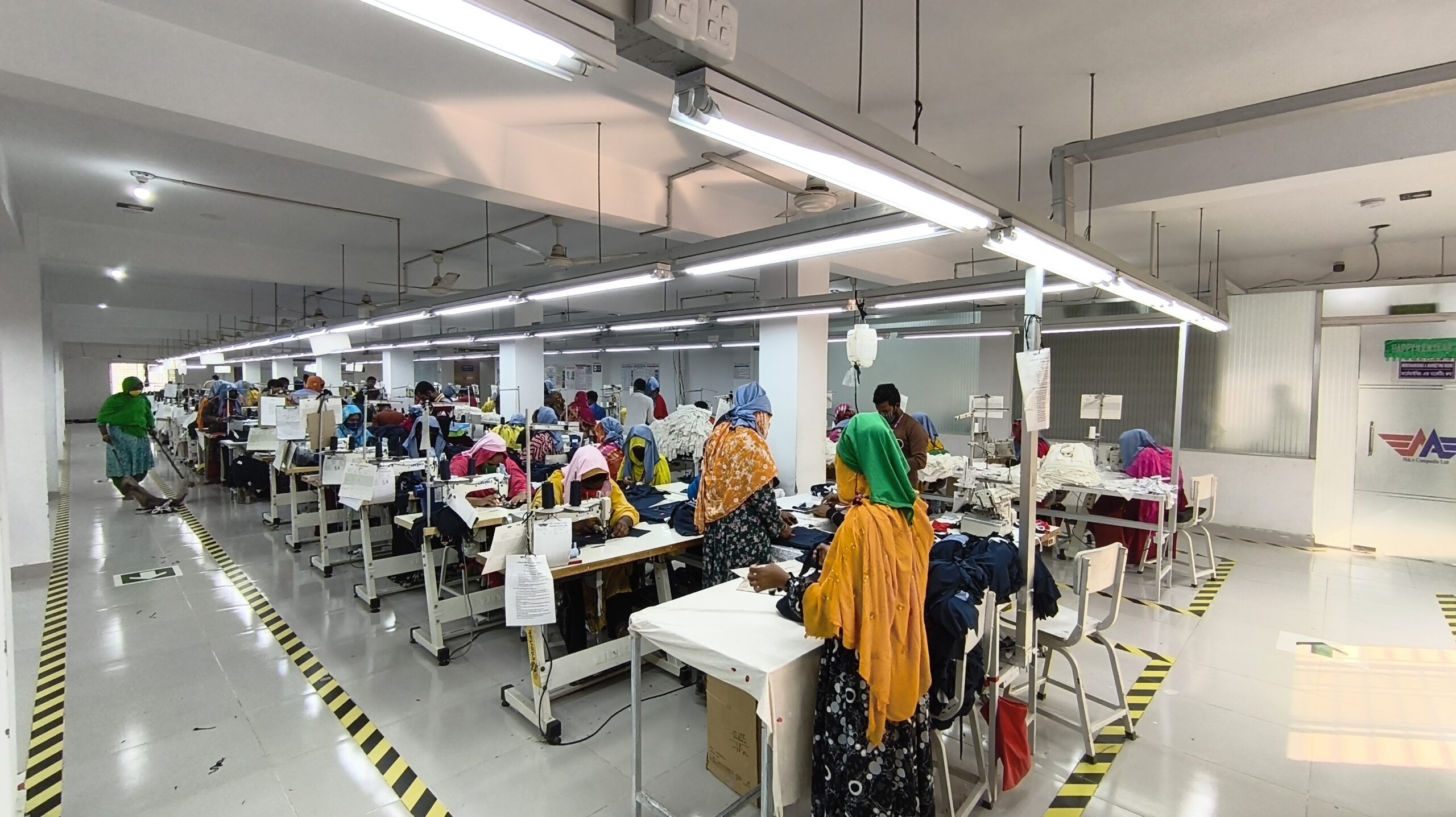
These existing company photographs show sewing activity and garment handling. Discuss the proposed manufacturing site and any operations performed elsewhere.
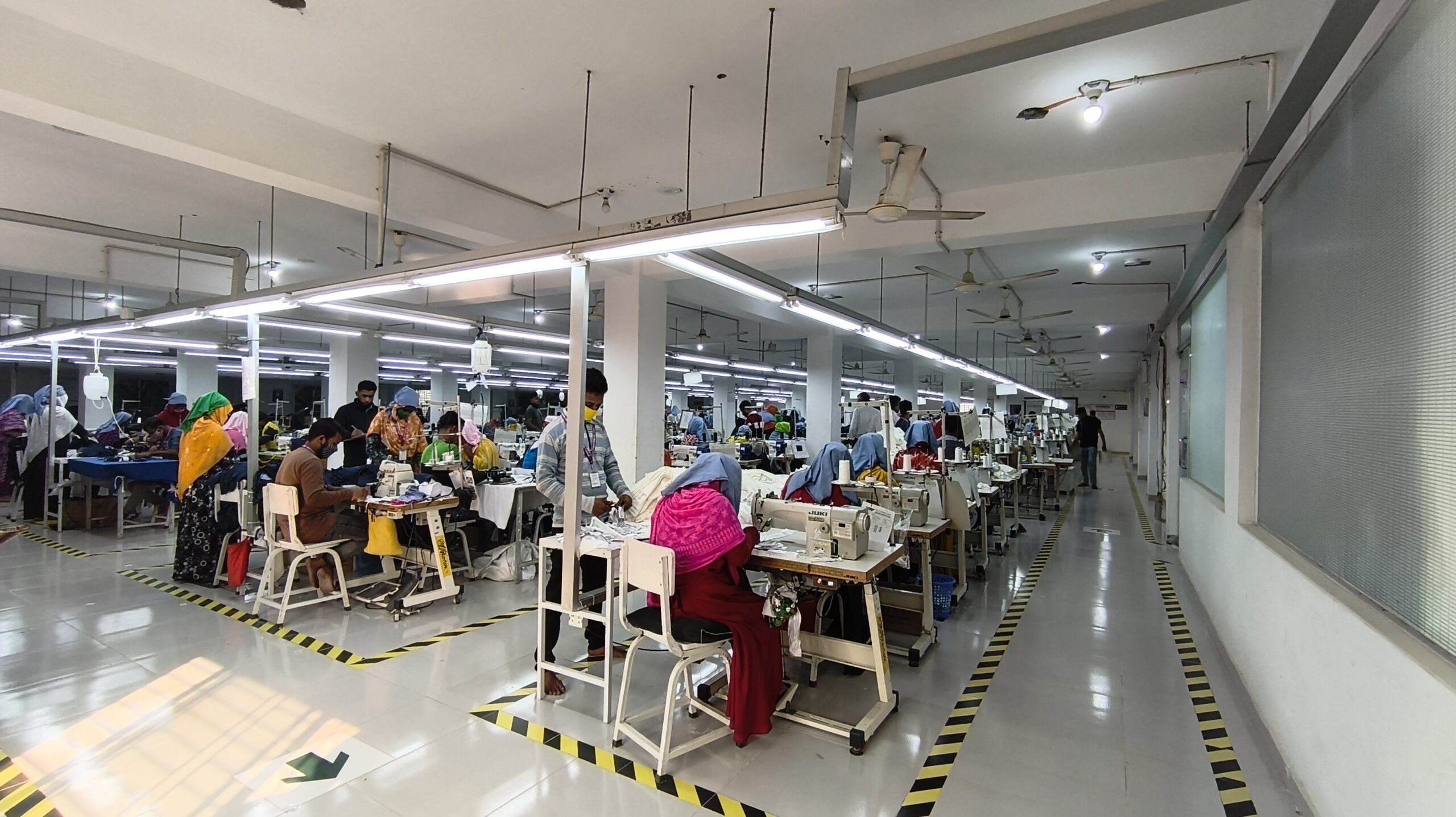
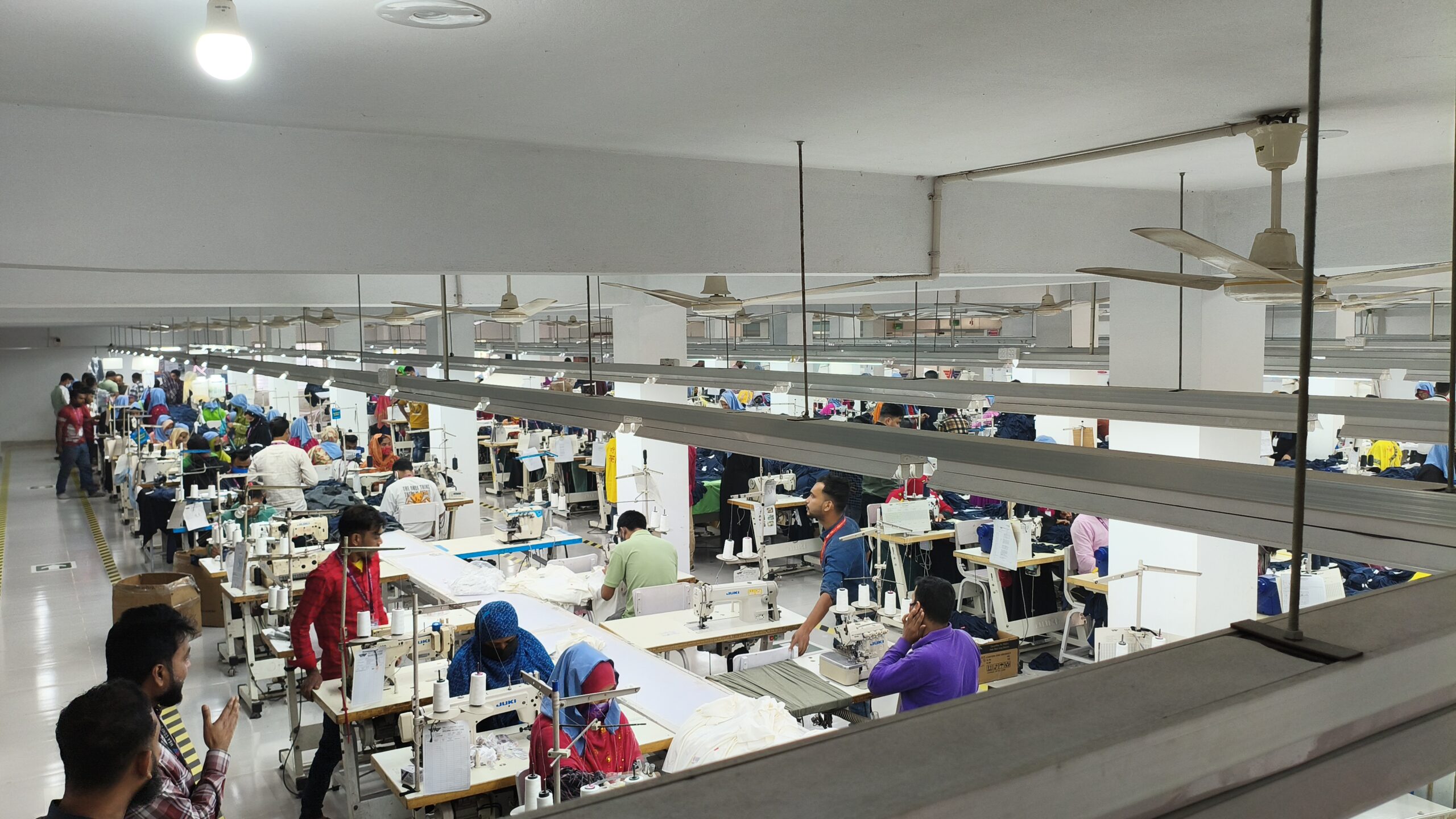
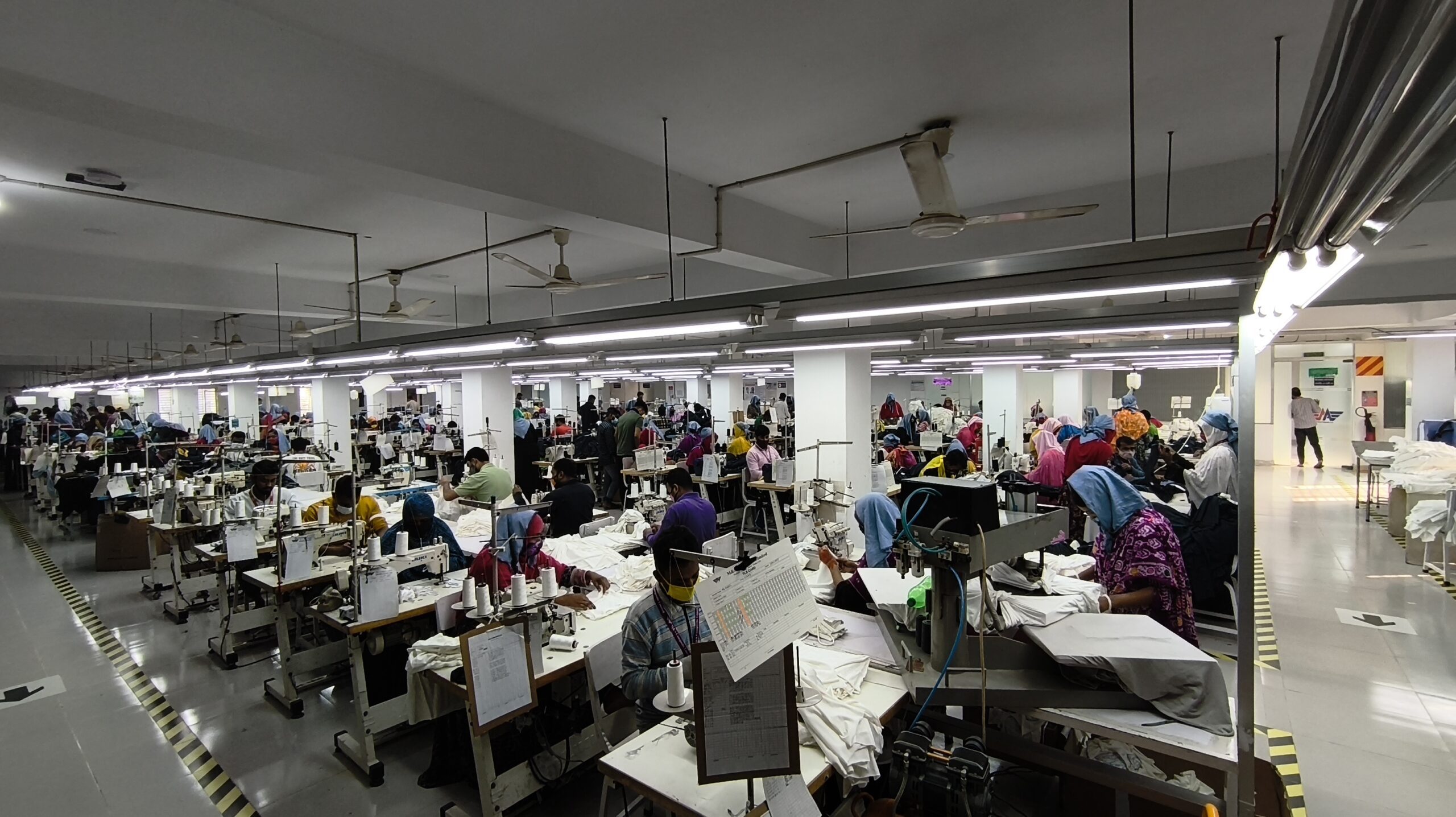
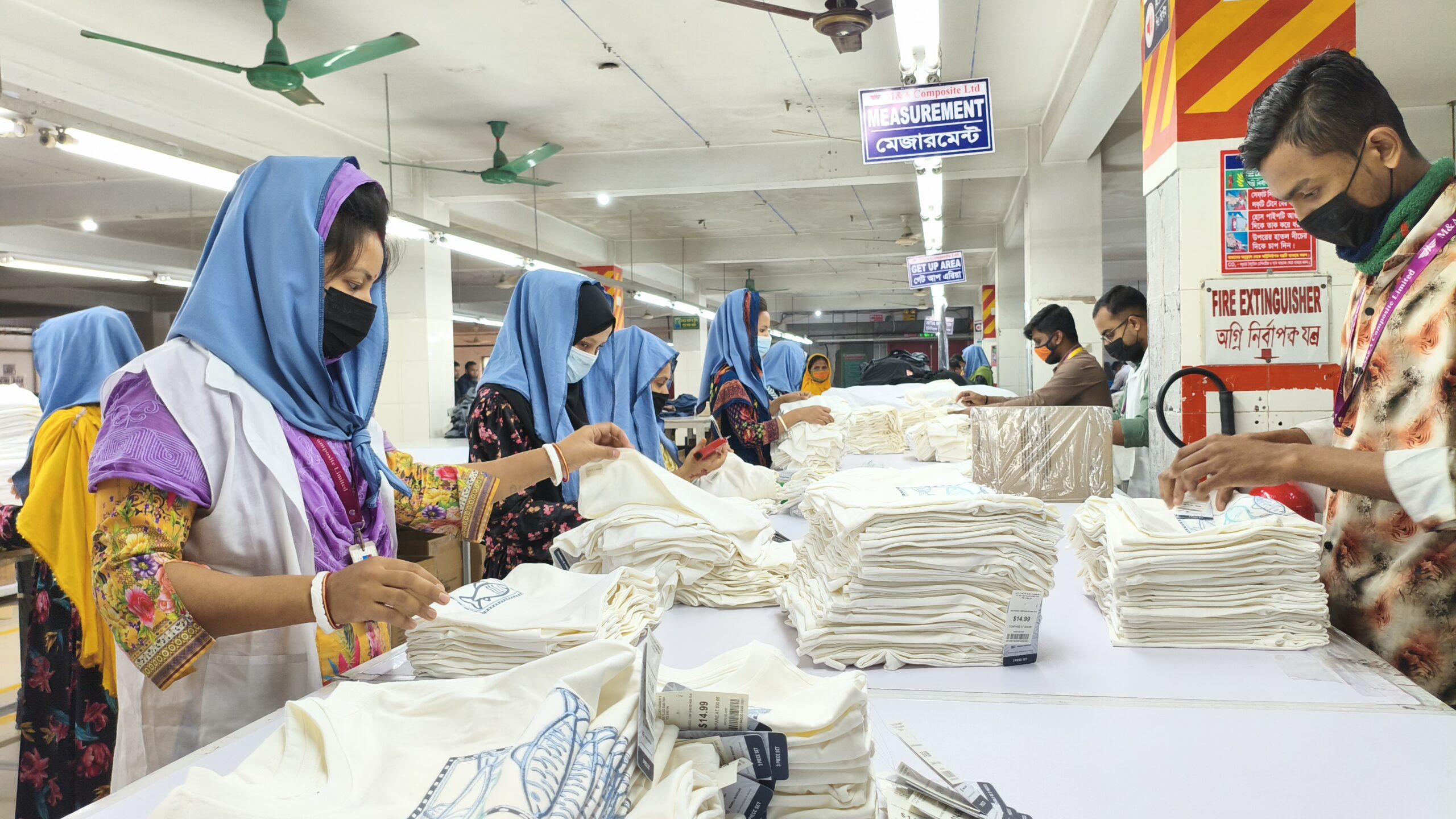
The images are not presented as a particular customer’s custom order, audit result or delivery status. Request current programme-specific records for those decisions.
Responsible sourcing and product evidence
Review documents for the actual manufacturing entity and allocated site. Check scope, dates, findings and corrective actions. A document from another factory does not establish the selected site’s status.
Sedex’s SMETA guidance describes an audit methodology rather than certification. Review site-specific findings and improvement actions.
OEKO-TEX STANDARD 100 concerns textiles tested for harmful substances. Confirm the relevant certificate and article scope.
Define any required protective or environmental claim and its supporting evidence for the actual programme. Broad compliance wording should not replace product-specific review.
MOQ, price, schedule and repeat designs
No universal MOQ, price or timeline is offered here. Request terms matching the materials, customisation, quantities, packing and approval requirements.
| Question | Confirm in writing | Purpose |
|---|---|---|
| What minimums apply? | Style, colour, material and trim restrictions | Checks feasibility |
| What is included? | Product revision, branding, packing and services | Allows comparable offers |
| What is separate? | Development, samples, tests or inspections where applicable | Clarifies additional work |
| What starts the schedule? | Material, approval and payment dependencies | Connects dates to milestones |
| How are changes accepted? | Product, cost and timing impact | Controls revisions |
| How are repeats reviewed? | Approved references, substitutions and current terms | Preserves a controlled design basis |
Retain samples, charts, materials, drawings, artwork and inspection records. Review substitutions before repeating the order and use specific buyer feedback to revise future specifications.
For bulk allocation, see the wholesale guide. For coordination, read the garment sourcing workflow.
Frequently asked questions
What are the stages of workwear manufacturing?
Define the brief, review feasibility, approve materials and samples, release pre-production references, monitor production, review final quality and packing, and coordinate shipment handover.
Where can I see M&A Sourcing’s workwear capabilities?
Visit the homepage and linked product catalogue pages. This guide focuses on the production workflow and approval records.
What should a workwear tech pack include?
Include drawings, materials, measurements, tolerances, construction, pockets, closures, branding, labels, packing, quantities and a revision date.
What is the difference between a development and pre-production sample?
Development samples resolve design questions and may use provisional components. The pre-production reference consolidates accepted details for production release.
How are material substitutions controlled?
Identify the proposed substitute and review its effects on fit, construction, care, cost and any required evidence. Obtain approval before changing the controlling reference.
What should inline quality checks record?
Record dated findings against the style and specification, identify affected output and retain corrective actions and follow-up decisions.
Does an AQL number describe the full inspection plan?
No. Agree the sampling arrangement, inspection scope, defect categories and acceptance criteria rather than relying on a number alone.
Are the progress bars live completion percentages?
No. They illustrate seven manufacturing milestones. Actual status needs a dated tracker with owners, dependencies and next actions.
Is there a fixed production lead time?
No universal timeline is stated here. Materials, quantities, approvals, production arrangements and delivery requirements affect the order-specific proposal.
What should be retained for repeat workwear orders?
Keep accepted specifications, samples, materials, artwork, labels, inspection and packing records. Review availability and substitutions before replenishment.
Related buyer guides
Discuss your workwear development brief
Send your design references, wearer brief, materials, artwork, quantities and destination. Request a proposal covering development, samples, production responsibilities, quality checks and commercial assumptions.