Garments Sourcing in Bangladesh: 7 Essential Steps for Buyers
Published by M&A Sourcing Ltd. | Updated: 7 October 2026
Planning garments sourcing in Bangladesh? Start with a clear product brief, then connect factory selection, costing, samples, production checks and shipment decisions through recorded approvals. This guide helps international apparel buyers prepare practical enquiries with M&A Sourcing Ltd.
Explore real company images, four buyer tables, a visual sourcing roadmap and answers to common questions about apparel development and bulk-order coordination.
Discuss Your Garment Sourcing Requirements →
Garments sourcing in Bangladesh: from enquiry to shipment
Garments sourcing in Bangladesh combines product development, supplier selection, commercial review and order coordination. The objective is to connect a buyer’s requirements with a suitable production arrangement and maintain clear approvals through sampling, bulk production and shipment.
M&A Sourcing Ltd. offers apparel sourcing services for workwear, uniforms and other garment programmes. Confirm which development, merchandising, quality-control and shipment activities will be included in your proposal. A sourcing relationship works best when both parties understand who makes decisions and who carries out each task.
This guide follows the order workflow rather than ranking sourcing companies. It explains the records, questions and handovers that help an international buyer discuss a programme with a Bangladesh-based sourcing partner.
Use the Bangladesh Garment Manufacturers and Exporters Association for published industry background. Country-level information does not prove that every factory is suitable for every product; assess the actual site and arrangement proposed for your order.
Real company images: sourcing staff and sample discussions
The photographs below are existing company-supplied images showing office staff, sample-related meeting space and production activity. They introduce the working environment behind the sourcing conversation.
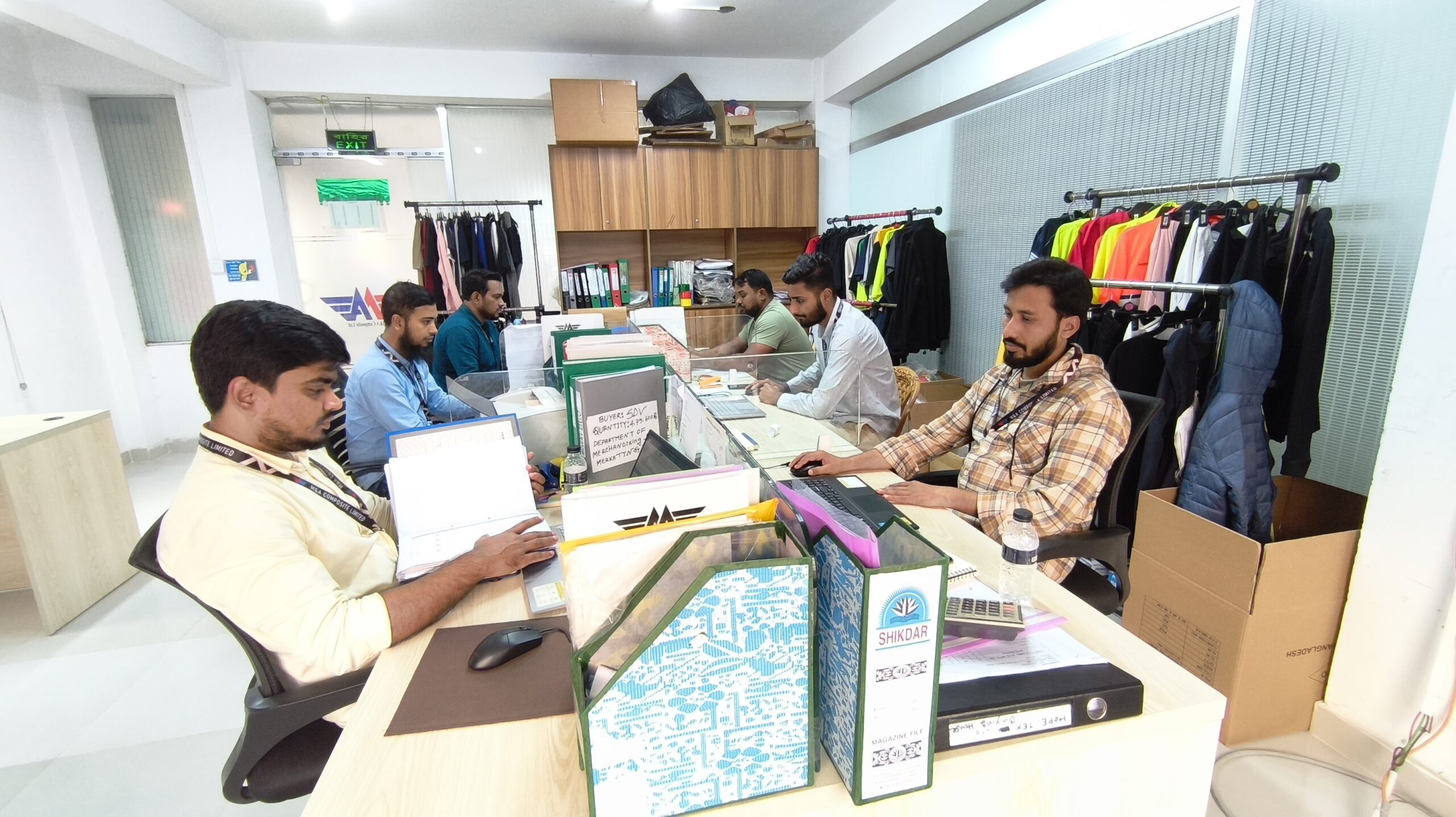
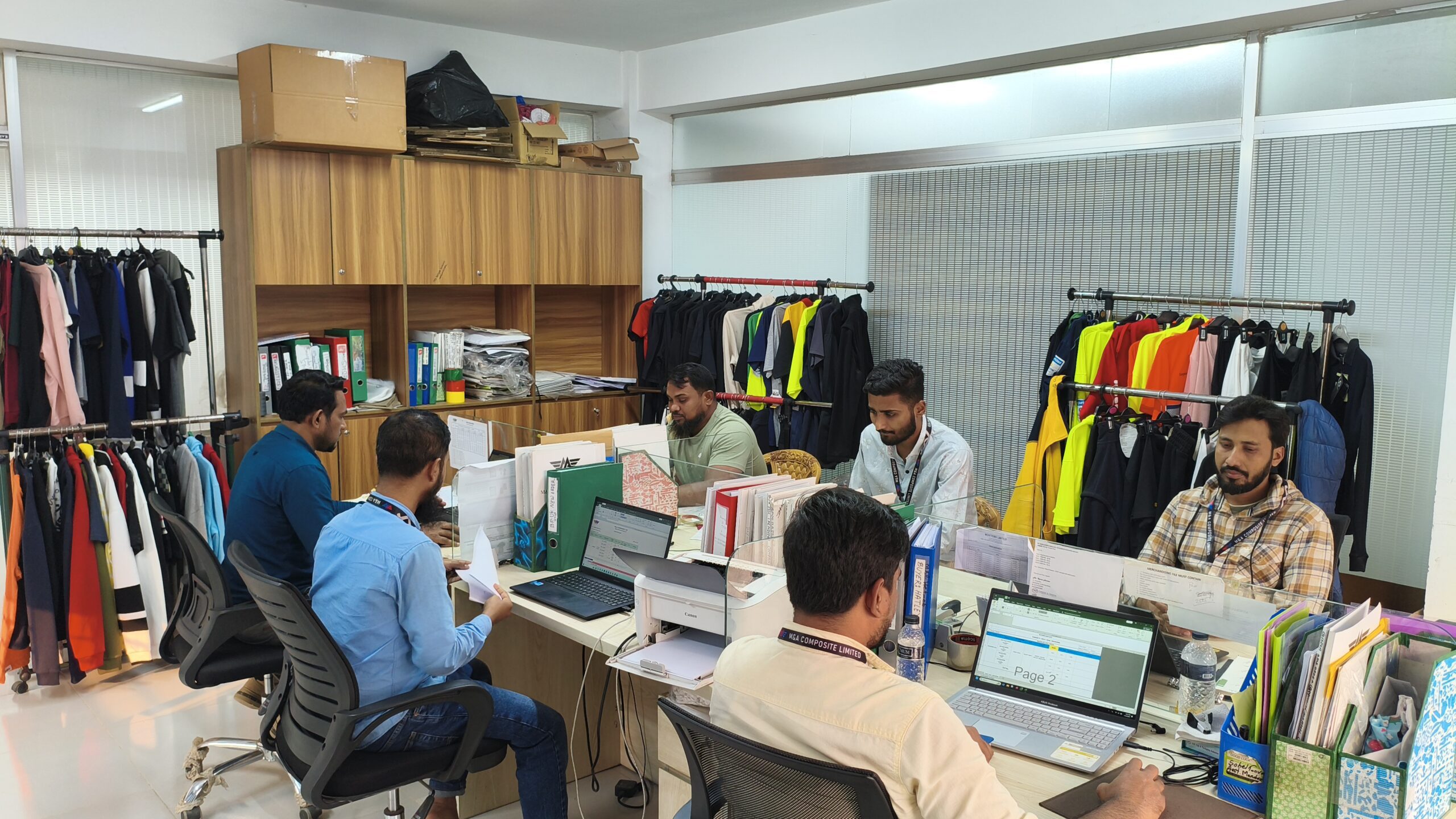
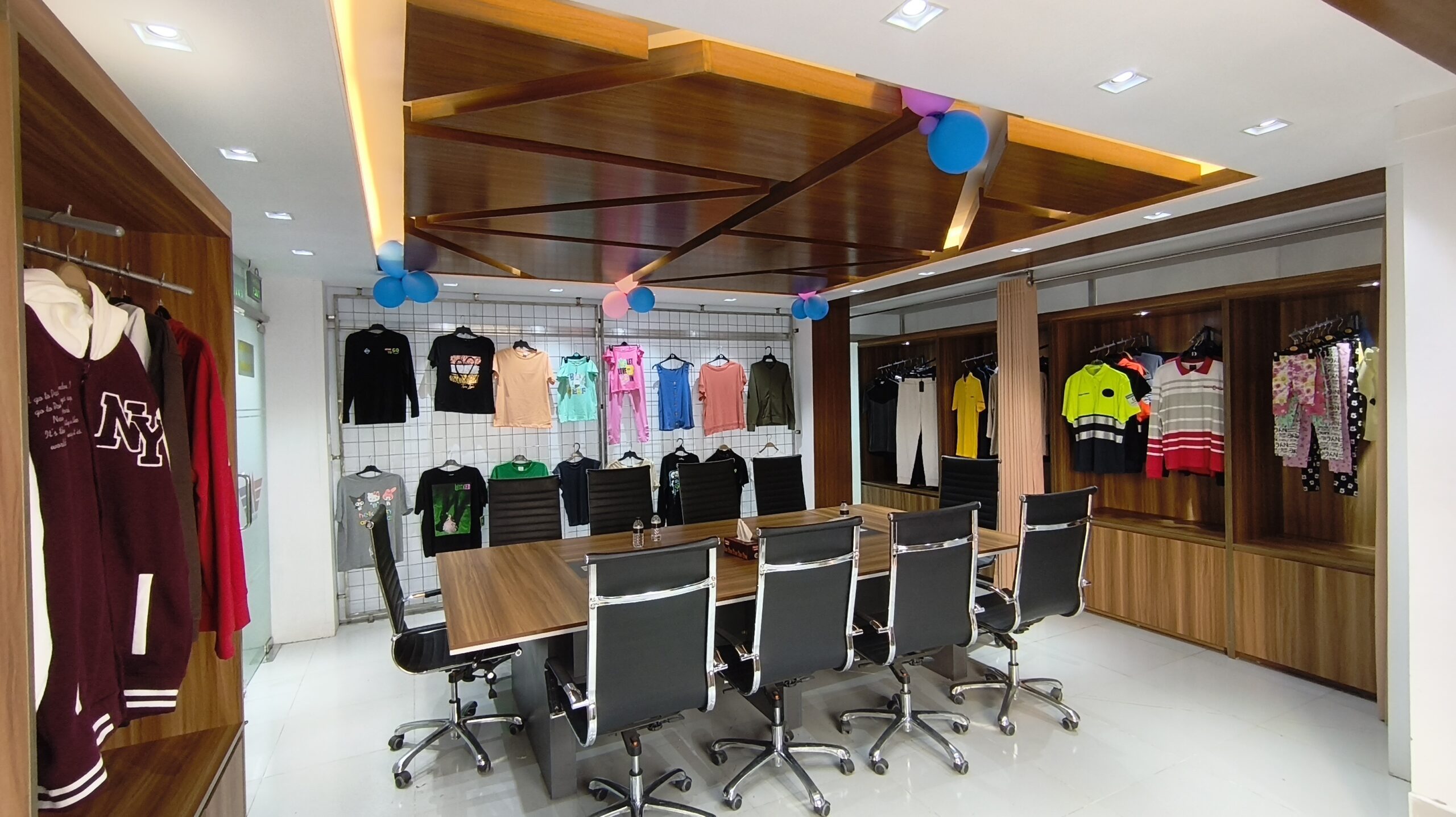
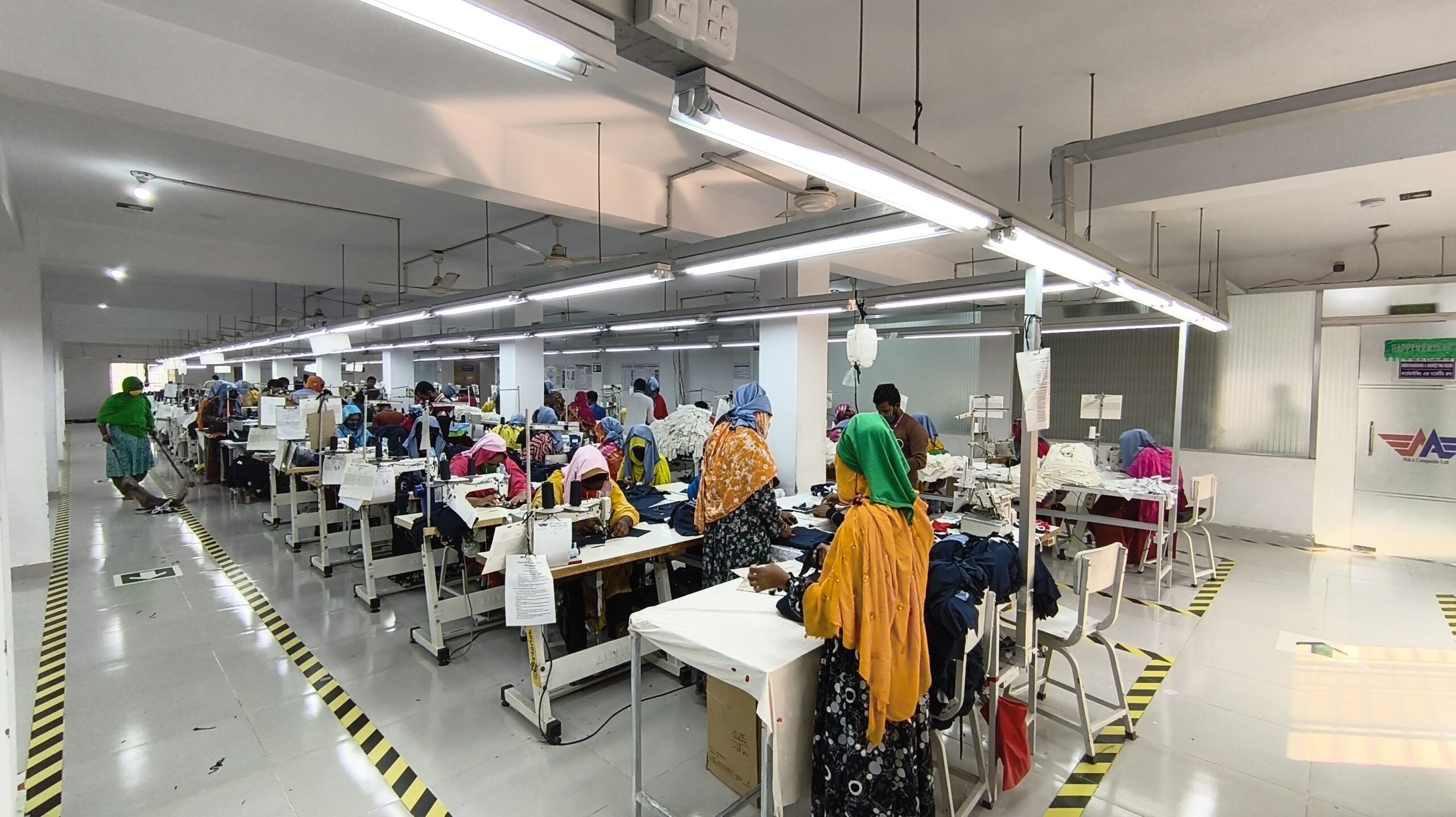
Ask who will review your specification, maintain the sample comments and coordinate factory updates. Confirm an assigned contact and an escalation route before the order starts. The images provide context, while current documents, relevant samples and order records support specific service or capability claims.
Define the sourcing scope and decision responsibilities
Before development starts, identify the buyer, sourcing partner, manufacturing entity and any inspection or logistics provider involved. Ask who issues the quotation, signs the commercial agreement, receives payment and approves production changes.
| Activity | Decision to clarify | Record to retain |
|---|---|---|
| Product brief | Who supplies the specification and resolves open requirements? | Dated tech pack and enquiry brief |
| Supplier allocation | Who proposes and approves the manufacturing site? | Named factory and agreed production scope |
| Samples | Who reviews, comments and authorises approval? | Sample reference and approval log |
| Quality checks | Who performs checks and who accepts corrective action? | Inspection plan and findings |
| Commercial changes | Who accepts changes to price, quantity or timing? | Written revision and approval |
| Shipment | Who coordinates packing, documents and transport? | Agreed responsibilities and dispatch records |
A service described as “end to end” still needs defined boundaries. Sampling costs, laboratory evaluations, independent inspections and transport arrangements may require separate agreement. Ask for the inclusions and exclusions before comparing offers.
For company selection questions, see our sourcing house buyer guide. This workflow article focuses on how an agreed sourcing programme moves from one approval to the next.
Step 1: create a usable garment sourcing brief
A sourcing brief should make the product and buying requirements understandable to someone who has not attended your design discussions. Include drawings or clear references, material requirements, measurements, construction details, decoration, labelling and packing instructions.
Break quantities down by style, colour and size. State the destination and target delivery information, and distinguish fixed requirements from areas where supplier recommendations are welcome. Mark the current revision so different suppliers do not quote from different versions.
- Product: front and back references, functional details and intended use.
- Materials: fabric composition, construction, target weight, colour and finish.
- Fit: measurement chart, size range, tolerances and measuring instructions where available.
- Branding: artwork, dimensions, positions and intended decoration method.
- Quantities: the style-colour-size matrix and repeat-order expectations.
- Delivery: destination, preferred commercial basis and required approval dates.
If you have only a sample or design idea, identify what still needs development. Ask the sourcing partner to list open questions before confirming a production quotation. A provisional estimate should remain clearly distinguished from an offer based on an approved specification.
Step 2: match the product with a suitable factory
Factory selection should follow the product rather than a general supplier list. Review comparable garments, technical resources, machinery and the proposed production operations. A factory experienced in one type of knitwear may not be suited to a complex woven uniform or layered jacket.
| Category | Technical focus | Useful evidence |
|---|---|---|
| Knit tops and polos | Fabric construction, neckline or collar, seams and decoration | Comparable samples and fabric references |
| Woven shirts and uniforms | Pattern accuracy, closures, seam construction and pressing | Relevant samples and measurement review |
| Workwear trousers and coveralls | Functional pockets, fit, reinforcement and intended care | Construction samples and agreed specifications |
| Outerwear | Shell, lining, insulation and closure compatibility | Development sample and material review |
Identify which operations will take place at the allocated factory and which require another site or provider. Ask how changes of site are disclosed and approved. Relevant capacity should be discussed for the planned production period, not inferred from a photograph or company-wide claim.
Read our garment factory evaluation guide for a more detailed shortlist framework. For category-specific requirements, explore the workwear manufacturer guide and T-shirt sourcing guide.
Step 3: compare costing, MOQ and commercial terms
Costing should reference the same approved product and quantity breakdown that will be ordered. Confirm whether fabric, trims, decoration, labels, packing and the agreed sourcing activities are included. Request a clear list of additional charges and assumptions.
MOQ, unit price and production timing vary with the garment, materials, colour allocation and supplier arrangement. No fixed commercial offer is published in this guide. Obtain an order-specific proposal and a validity period before committing.
| Point | What to confirm | Why it matters |
|---|---|---|
| Specification | Product reference and revision used for the offer | Prevents comparing different products |
| Minimums | Restrictions by style, colour, fabric and trims | Reveals material or component minimums |
| Price scope | Included operations, packaging and services | Clarifies the actual cost of the programme |
| Extra costs | Samples, tests or inspections where applicable | Avoids assuming that separate services are included |
| Delivery basis | Agreed term and named place | Allows offers to be compared consistently |
| Schedule | Material, approval and payment dependencies | Shows what starts and affects production timing |
| Changes | Procedure for revising price, quantity or dates | Creates a controlled route for later decisions |
If an alternative is proposed to meet a target price, identify the changed material, construction or service. Evaluate its suitability before accepting it. A cheaper quotation with different inclusions is a different proposal, not proof that the same programme costs less.
Step 4: approve materials, fit and sample references
Sampling turns the design brief into a production reference. Agree the required sample stages according to the product’s development needs. A prototype explores construction; a fit review addresses measurements; decoration and packing may need separate approvals.
Review actual fabric and trim references. If development uses substitute materials, record what differs and what must be reviewed again using bulk materials. A sample approval should identify the exact reference and which details are accepted.
Write sample comments against the tech pack revision. Specify the component, measurement, position or material that needs changing. Update the relevant drawing or chart so the instruction remains clear when it is passed to the factory.
For example, if a work shirt needs a revised chest pocket and a new logo, the approved fit may remain unchanged while the pocket drawing and decoration reference are revised. Keep accepted elements and changed elements visible in the approval log.
Discuss colour, dimensions, care behaviour and appearance using agreed evaluation methods. Where formal test evidence is required, define its scope separately from informal development checks. For more detailed branding decisions, read the custom workwear development guide.
Garment sourcing progress: 7 practical approval milestones
The bars below illustrate stages in the sourcing workflow. They are not live completion percentages, supplier ratings or promised delivery results.
Identify the product, quantity matrix and open requirements.
Confirm the production arrangement and commercial assumptions.
Resolve fit, colour, trims, construction and decoration comments.
Consolidate the approved reference pack and production plan.
Track dated progress, inspection findings and corrective actions.
Assess acceptance criteria, allocation and shipment readiness.
Review dispatch information and preserve repeat-order references.
For an actual order, connect each milestone to a responsible person, planned date, actual date, open issue and next action. If an approval changes, update the affected material, production and shipment dates.
Step 5: release production with controlled instructions
Before bulk production, consolidate the accepted sample, tech pack, measurement chart, material references, branding and packing instructions. Confirm which revision controls the order and who authorises release.
Use a pre-production discussion to resolve remaining questions about construction, inspection points, quantity allocation and timing. If a detail remains open, identify whether it blocks material purchasing, cutting or another dependent activity.
Agree the format and frequency of production updates. A useful update links activity to a style and date, states any deviation from the plan and identifies the next action. Photos should support that record rather than replace the explanation.
Control changes through a written approval. If a buyer requests a revision or the supplier proposes a substitution, record its effect on the product, cost and schedule before proceeding. Keep the factory and sourcing teams aligned with the accepted version.
Related real images: sewing-floor activity and garment handling
These existing company images show workers at sewing stations and garment finishing areas. They provide visual context for the production-monitoring stage of garments sourcing in Bangladesh.
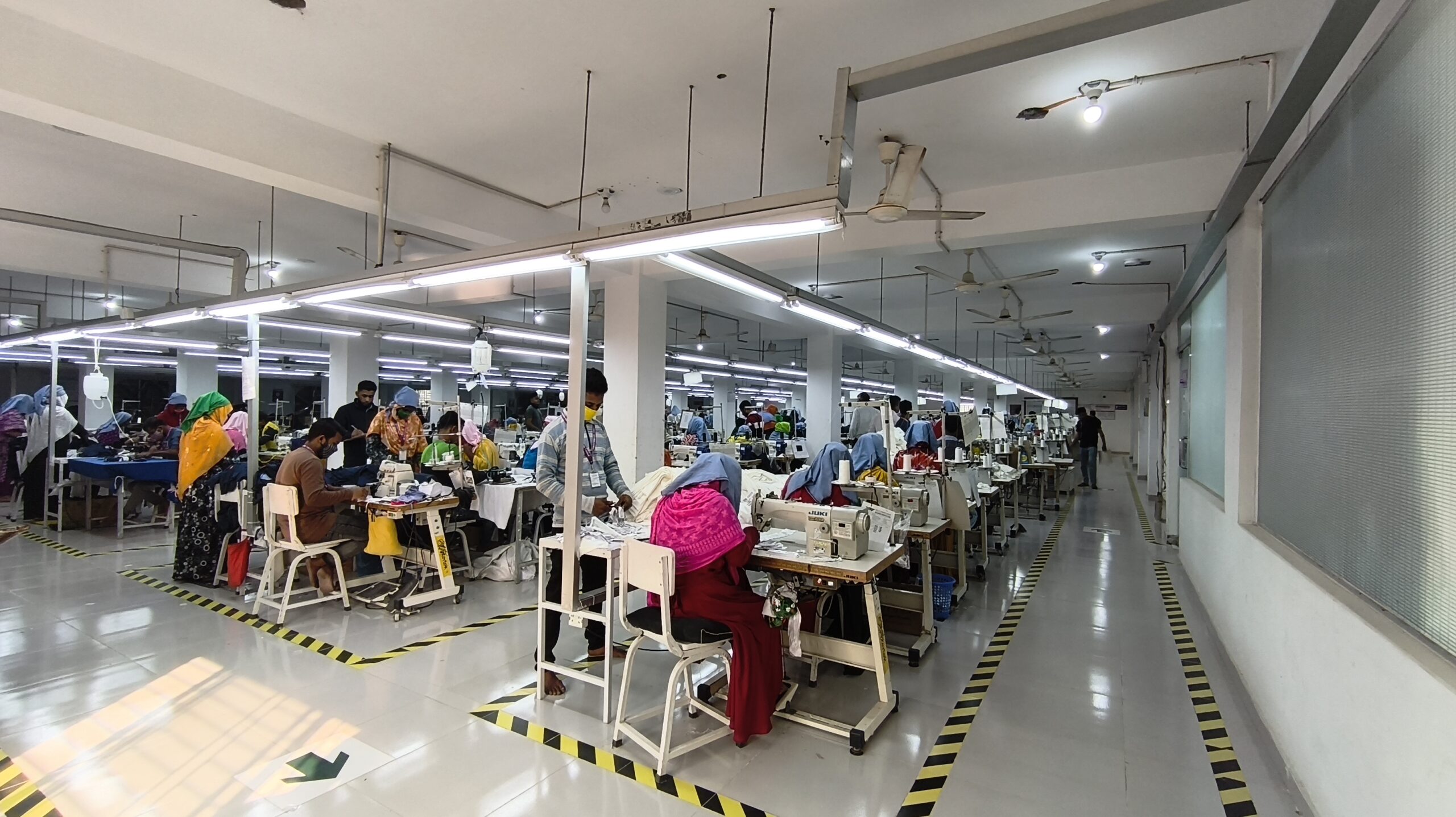
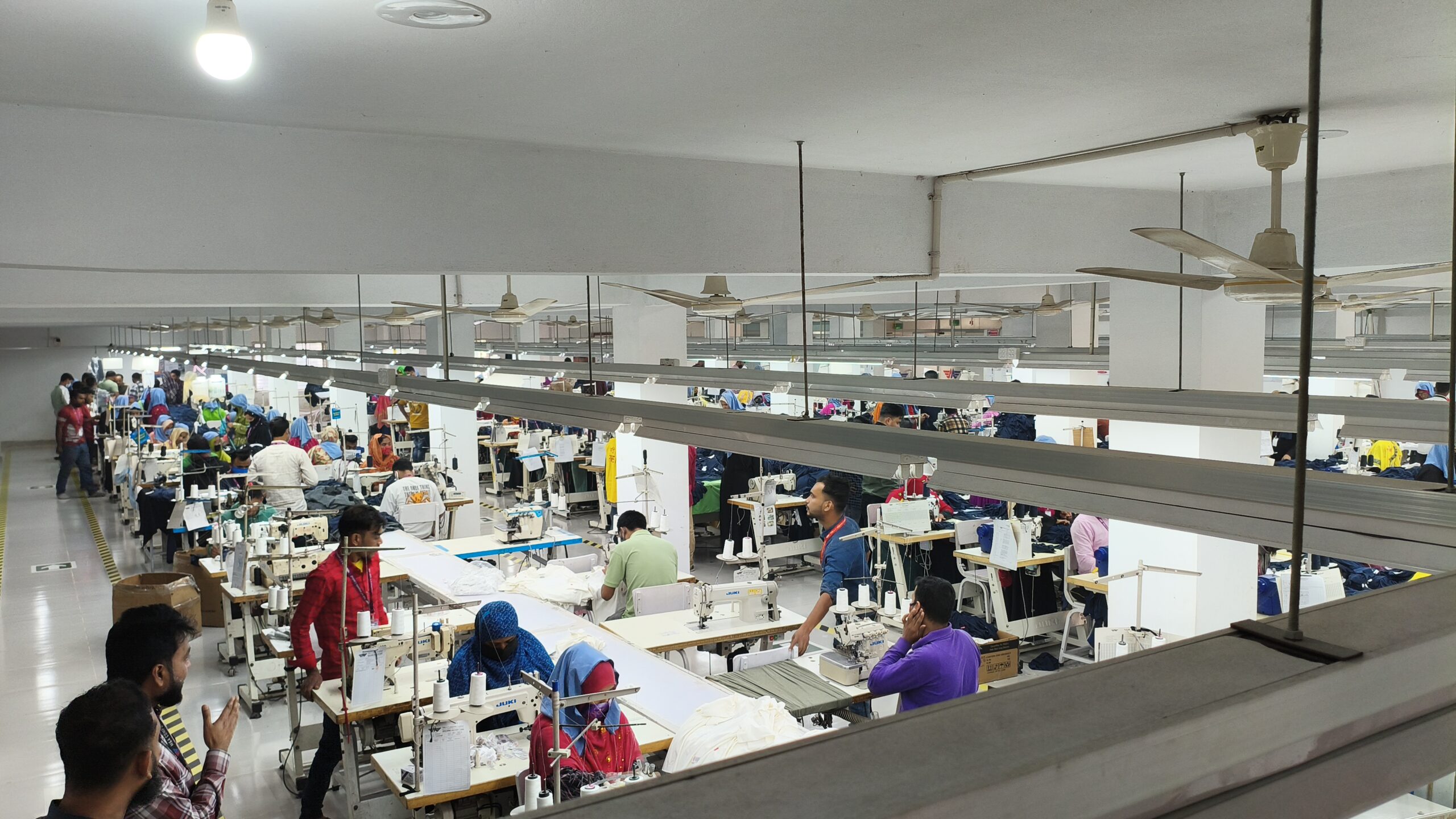
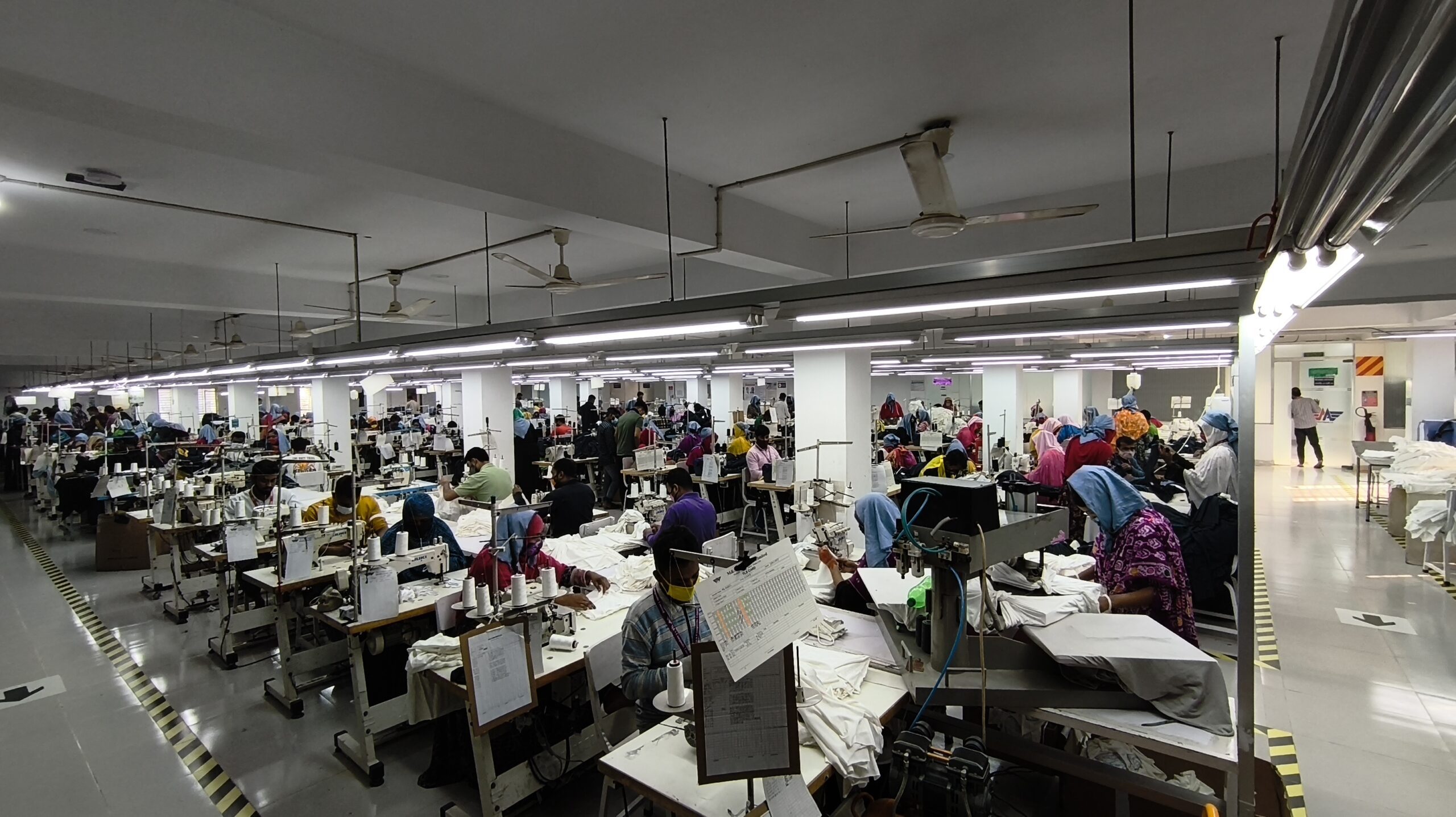
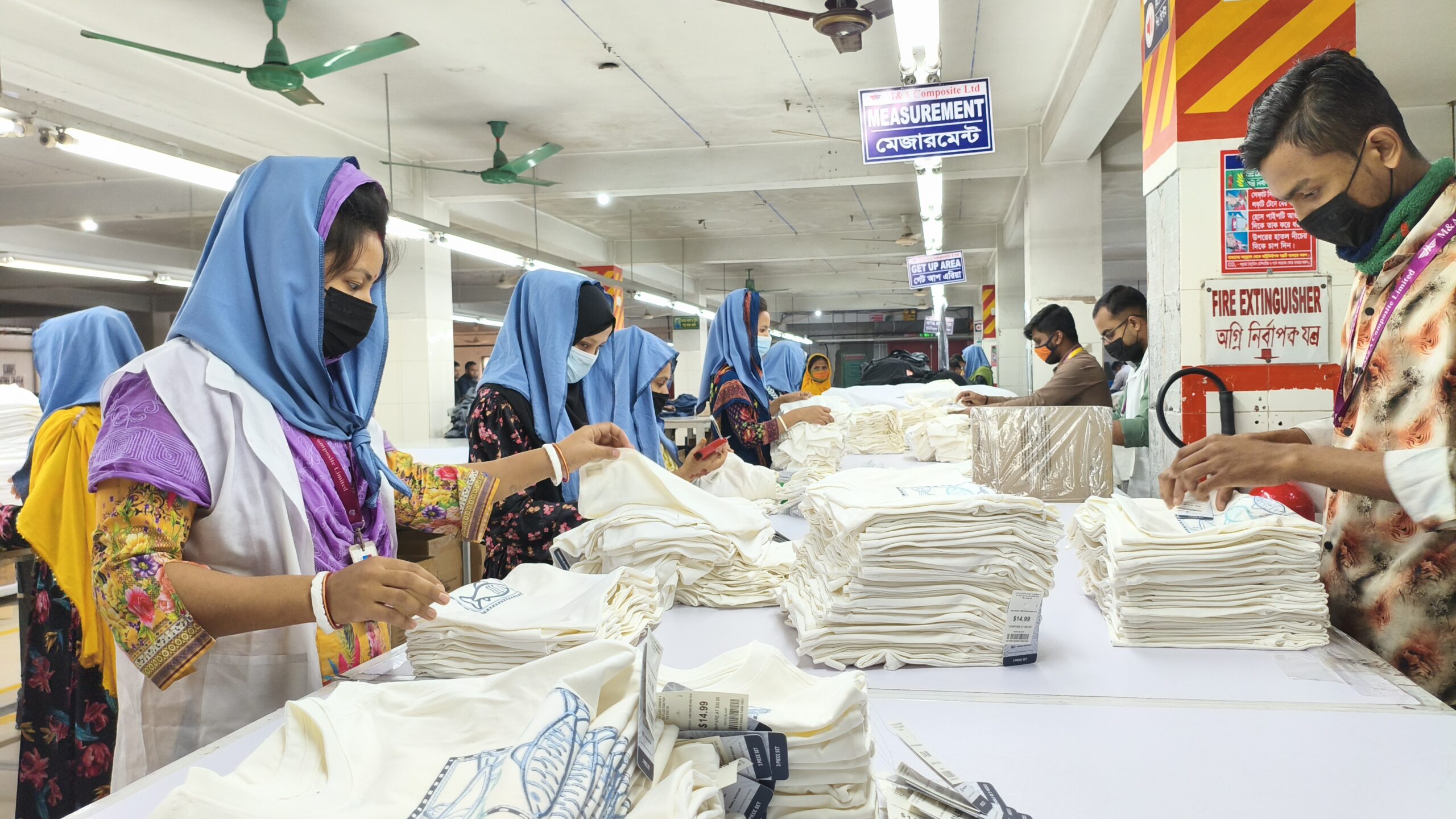
Ask which site and operations relate to your proposed programme. The pictures are not presented as proof of a particular order’s progress, factory certification or available capacity. Request current project-specific updates when those details are relevant to an approval.
Step 6: review quality evidence and corrective actions
Define the quality checks and acceptance criteria before the order starts. Agree which sample, material, inline, final and packing reviews are required, who performs them and what reports the buyer receives.
| Stage | Record to discuss | Decision it supports |
|---|---|---|
| Development | Measurements, construction review and comments | Whether the product is ready for the next sample stage |
| Material approval | Fabric, trim, colour and relevant evaluation evidence | Whether materials match the agreed requirements |
| Inline production | Dated findings and corrective-action records | Whether production issues are being resolved |
| Final inspection | Results against the agreed inspection plan | Acceptance, rework or further review |
| Packing verification | Quantity allocation, marks, labels and carton details | Shipment readiness against packing instructions |
If acceptance sampling is used, specify the inspection method, levels and defect categories. An AQL reference alone does not define the whole plan or mean that every garment has been checked.
Follow corrective actions through to evidence of resolution. Record what was found, the affected style or batch, the proposed action and the accepted outcome. A final report should make outstanding issues visible so shipment decisions can follow the agreed contract.
Responsible sourcing: distinguish audits, certificates and product tests
Request evidence for the actual manufacturing entity and site allocated to the order. Check its scope, dates and relevant findings. Documentation from a different site in a supplier network should not be treated as proof of the selected factory’s status.
Sedex’s official SMETA guidance describes a social audit methodology addressing labour and health and safety, with environmental and business ethics coverage in four-pillar audits. SMETA is not a certification; review the site’s findings and corrective actions.
OEKO-TEX STANDARD 100 concerns textiles tested for harmful substances. Confirm the relevant article and certificate scope. Product, management-system and social-audit evidence serve different purposes.
Where the garment needs protective performance, define that requirement separately and agree the supporting evidence. General sourcing experience or a chemical-safety label does not by itself establish suitability for every protective use.
Step 7: coordinate shipment and preserve repeat-order records
Shipment coordination should connect the approved product with the packing plan, quantity allocation and required documents. Confirm who prepares and reviews the documentation, who arranges transport and what is included in the commercial agreement.
Review garment identification, carton marks, size or colour allocation and dispatch information before the shipment decision. Keep unresolved quality or packing issues visible rather than treating production completion as automatic shipment approval.
Retain the final approved references for repeat orders. Before replenishment, reconfirm materials, trims, quantities, production site and current commercial terms. Discuss any substitution and the approvals it requires.
Buyer feedback is more actionable when linked to a style, batch, size and specific issue. Use that information to update future specifications while preserving the accepted reference for orders already in production.
For distributors planning replenishment and inventory allocation, read our wholesale workwear buyer guide.
Frequently asked questions
What is garments sourcing in Bangladesh?
It is the process of matching a buyer’s apparel requirements with a production arrangement and coordinating agreed development, supplier selection, approvals, quality checks and shipment activities.
Can M&A Sourcing help with a garment sourcing enquiry?
Share your product references or tech pack, materials, quantity breakdown, branding and delivery requirements. Confirm the service scope, proposed manufacturer and commercial terms in an order-specific proposal.
What should I send before requesting a quotation?
Send drawings or product references, fabric requirements, measurements, quantities by style, colour and size, decoration artwork, labelling, packing and destination information. Identify requirements that still need development.
How should I choose a garment factory?
Review comparable products, technical resources, proposed operations, relevant documentation and schedule availability. Identify the actual production site and any subcontracting.
Is there one standard MOQ or production timeline?
No universal MOQ or timeline is stated here. Minimums and dates depend on materials, quantity allocation, product complexity, approvals and the supplier arrangement.
Which samples should be approved?
Agree the development, fit, decorated and pre-production references needed for your product. Record each sample’s purpose, accepted details and outstanding changes.
Do these progress bars show a live order?
No. They illustrate seven sourcing milestones. An actual order needs a dated tracker with owners, issues and next actions.
What quality records should a sourcing programme include?
Agree sample comments, material approvals, inline findings, corrective actions, final inspection results and packing verification according to the order’s inspection scope.
Does a SMETA audit mean a supplier is certified?
No. Sedex describes SMETA as an audit methodology rather than certification. Review the correct site’s audit scope, findings and corrective actions.
How do I contact M&A Sourcing about garments sourcing?
Use the contact page, email info@mnasourcing.com or WhatsApp +8801993672513. Include your product brief, quantity matrix and target delivery information.
Garments Sourcing in Bangladesh: Related Guides
Garments Sourcing in Bangladesh: Plan Your Enquiry
Share your tech pack or product references, materials, branding, quantity breakdown, packing and destination. Ask for a proposal identifying the sourcing scope, production arrangement, approval milestones and commercial assumptions.