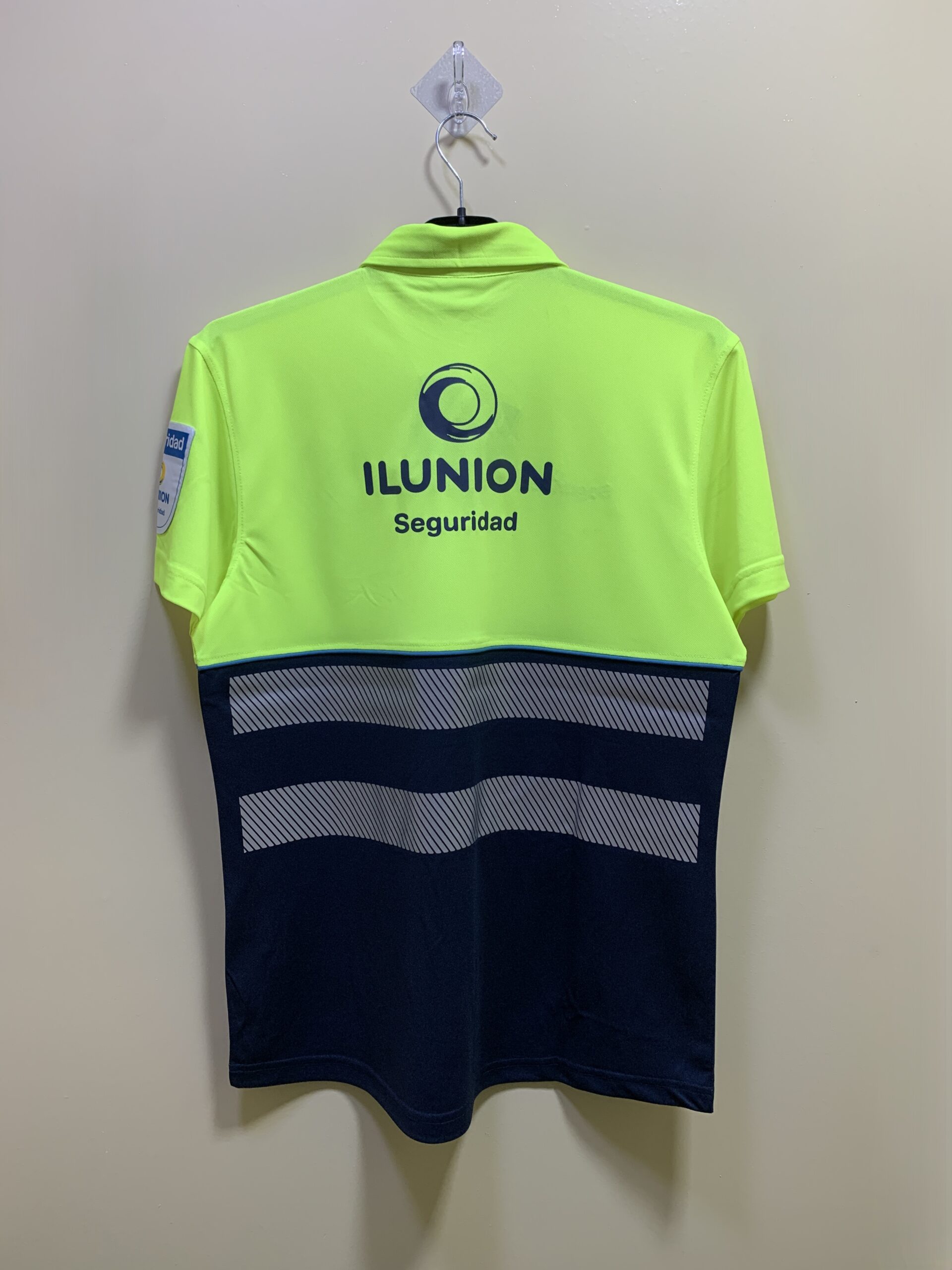
Largest Sourcing House in Bangladesh: 10 Essential Buyer Checks
Published by M&A Sourcing Ltd. | Updated: 7 October 2026
Looking for the largest sourcing house in Bangladesh? This buyer guide helps you assess supplier coordination, technical support, sampling, quality records and commercial transparency. It introduces M&A Sourcing Ltd.’s apparel sourcing services without presenting an unsupported size ranking.
Explore real company images, comparison tables, a seven-stage sourcing roadmap and practical questions for your next workwear, uniform or apparel enquiry.
Discuss Your Apparel Sourcing Project →
Largest sourcing house in Bangladesh: what should buyers measure?
Searching for the largest sourcing house in Bangladesh usually signals a need for dependable capacity, a broad supplier network and organised order management. However, “largest” is meaningful only when the comparison identifies a metric, a period and a reliable source. Annual sourcing value, employee count, number of active vendors and available production capacity describe different things.
This article does not assign M&A Sourcing Ltd. an independently verified size ranking. Instead, it explains how international apparel buyers can evaluate a sourcing partner using evidence relevant to their order. A large network is useful only when the selected factory, technical resources and oversight match the actual product.
M&A Sourcing Ltd. offers apparel sourcing support for workwear, uniforms and other garment programmes. Use the questions below to discuss product development, factory selection, sampling, quality control and shipment coordination. Confirm the precise service scope and commercial responsibilities in writing.
For industry background and published trade information, consult the Bangladesh Garment Manufacturers and Exporters Association. Industry information provides context; it does not establish a particular sourcing company’s rank.
Sourcing house, buying agent or factory: clarify the relationship
A sourcing house connects the buyer’s requirements with a production arrangement and coordinates the agreed stages of an order. Depending on the contract, its role may include supplier shortlisting, merchandising, sampling follow-up, inspections and shipment documentation. These responsibilities should be defined rather than assumed.
| Arrangement | Typical role | Confirm before ordering |
|---|---|---|
| Sourcing house | Coordinates suppliers and agreed sourcing activities | Service scope, fee structure, approval authority and manufacturing entity |
| Buying agent | Represents the buyer within an agreed mandate | Who appoints and pays the agent; responsibility for decisions and reports |
| Direct factory | Manufactures garments at an identified site | Production operations, subcontracting and who manages buyer communication |
| Trading supplier | Sells products under agreed commercial terms | Who manufactures the goods and who bears contractual responsibility |
The same organisation may perform more than one role. Ask who issues the quotation, who signs the contract, who receives payment and who is responsible for the product. A sales contact’s familiarity with the order does not automatically define legal or commercial responsibility.
For the manufacturing side of this assessment, read our garments factory in Bangladesh buyer guide. Keep factory capability and sourcing coordination as separate evaluation points.
Real company images: sourcing staff and sample discussions
These existing company photographs show office staff, sample-related meeting space and garment production activity. They help introduce the people and working environment behind the sourcing discussion.
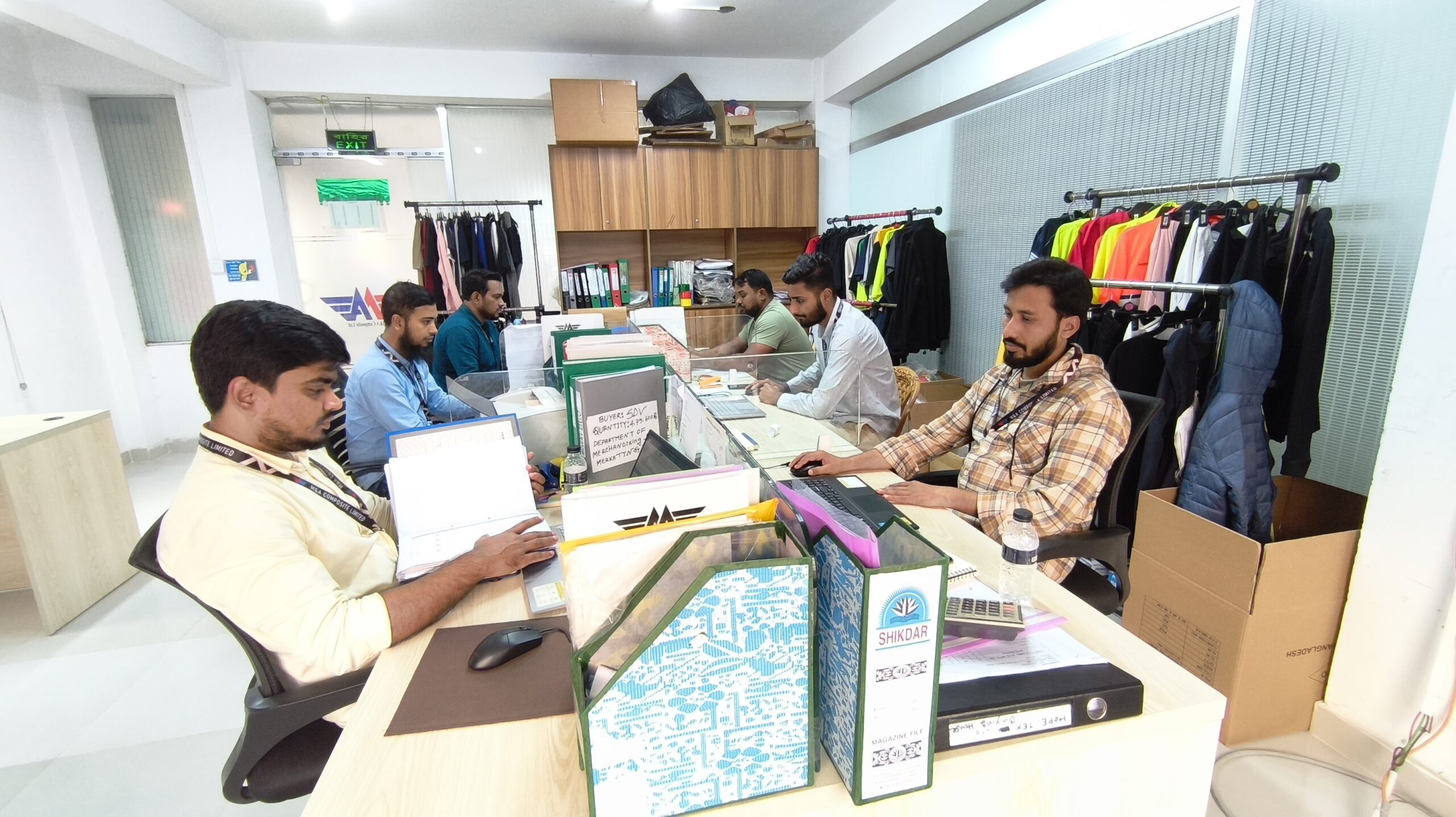
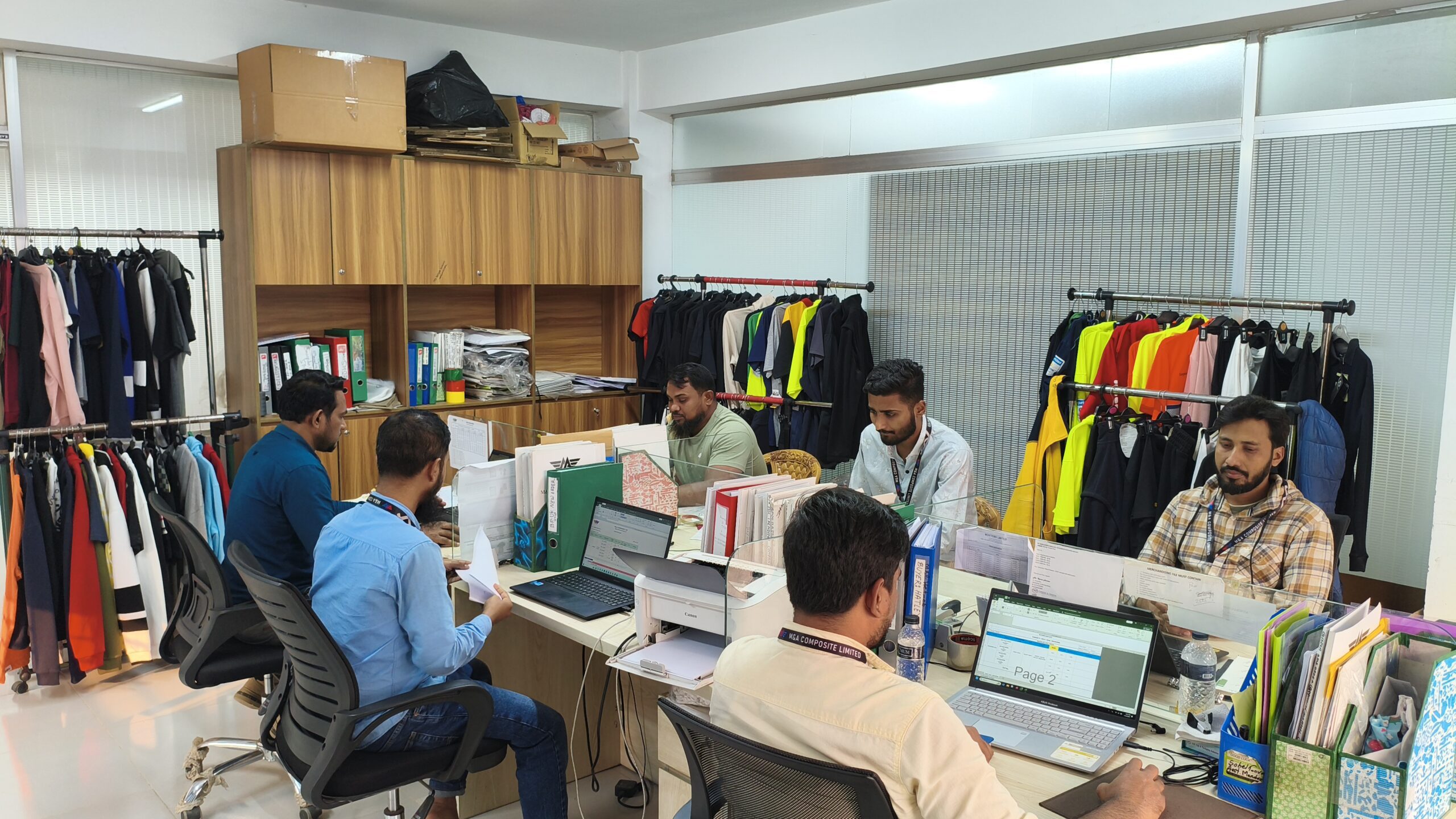
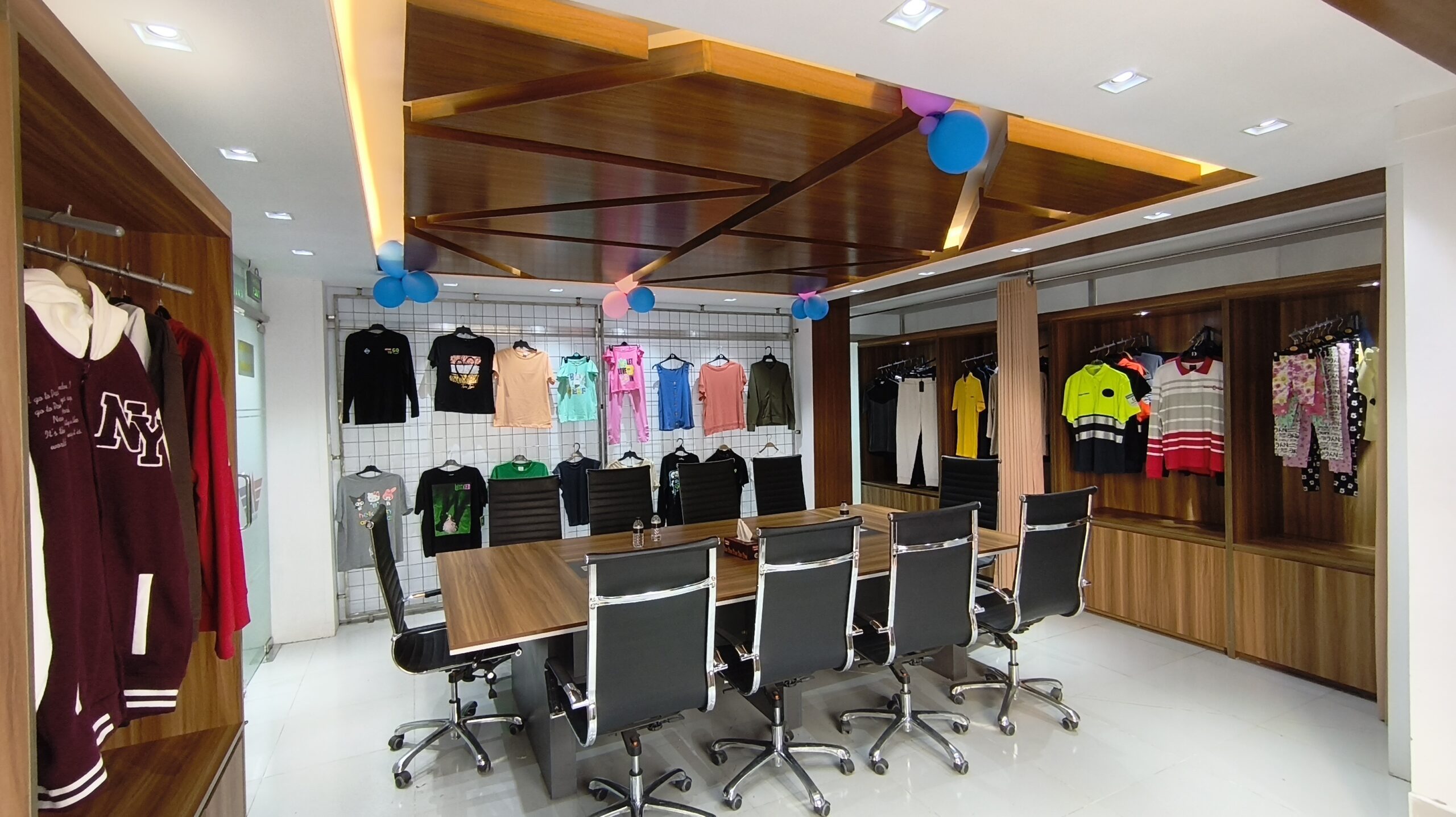
Request a project-specific conversation about who will review your tech pack, communicate sample comments and track production milestones. Ask for the assigned contact and an escalation route. Photos support familiarity with the working environment, while order records and current documentation support specific capability claims.
10 essential checks when shortlisting a sourcing house
- Relevant product experience: examine samples similar to your construction, fabric, decoration and finishing requirements.
- Identified production site: confirm the factory proposed for the order and the operations handled elsewhere.
- Technical review: ask who checks patterns, measurements, material compatibility and production feasibility.
- Supplier selection: request the criteria used to match your garment programme with the proposed manufacturer.
- Service boundaries: agree which sampling, inspections, tests and logistics activities are included.
- Transparent quotation: compare the same specification, quantity split, packing and delivery basis.
- Approval records: require clear references for samples, colour, trims and revised specifications.
- Quality reporting: agree inspection points, acceptance criteria and responsibility for corrective action.
- Documentation review: check the entity, site, scope and dates of relevant audit or certification evidence.
- Schedule ownership: identify who updates the production plan and communicates risks to the buyer.
Use the same enquiry pack for each candidate. Otherwise, a supplier offering a lower fabric weight or a different decoration method may appear cheaper without providing an equivalent product. Request a written explanation of any proposed substitution.
For example, a uniform programme with several size groups may need a different sampling and packing plan from a single-style promotional T-shirt order. Evaluate how the sourcing house handles your actual complexity, rather than relying on a broad product catalogue.
Product coverage: workwear, uniforms and fashionwear
| Programme | Key requirements | Evidence to request |
|---|---|---|
| Industrial workwear | Functional pockets, closures, reinforcement and care expectations | Comparable samples and agreed construction details |
| Corporate or institutional uniforms | Fit consistency, colours, logo placement and size allocation | Approved size set, decoration sample and packing plan |
| T-shirts and polos | Fabric construction, shrinkage expectations and branding | Fabric swatches, measurement review and decorated sample |
| Shirts and woven apparel | Pattern accuracy, seam construction and pressing | Relevant garment samples and specification review |
| Outerwear | Compatibility of shell, lining, insulation and closures | Construction sample and agreed performance requirements |
M&A Sourcing’s main focus includes workwear and uniforms. Explore the workwear sourcing guide, custom workwear development guide and T-shirt manufacturer guide for category-specific questions.
A product photograph does not confirm protective performance. If a garment needs particular safety or performance characteristics, define the required documentation and testing expectations for the intended market. Confirm feasibility before approving the design or quotation.
Prepare a sourcing brief that produces comparable quotations
A useful sourcing brief combines the tech pack with material requirements, style quantities, size and colour breakdowns, decoration artwork, labelling, packing instructions and target delivery information. Identify the current revision so suppliers do not quote from different versions.
Explain what is fixed and what can be proposed as an alternative. If you accept fabric recommendations, specify the intended use and care routine. If the design is already approved, ask the supplier to highlight assumptions instead of silently changing the specification.
For an initial enquiry, share:
- Technical drawings or clear front and back references.
- Fabric composition, construction, target weight and finishing requirements.
- Measurement chart, sizing method and tolerances where available.
- Quantity by style, colour and size, including any repeat-order expectations.
- Logo artwork, decoration positions and brand label instructions.
- Destination, preferred delivery basis and required approval dates.
Where information is missing, ask the sourcing house to list open points before giving a firm quotation. A preliminary estimate and a confirmed production price should be labelled clearly. Keep the approved specification attached to the final commercial agreement.
Sampling and approvals: build one shared production reference
Sampling should answer specific questions. A development sample checks the design direction; a fit sample addresses measurements and proportion; a decorated sample checks artwork and placement. The stages required depend on the product and how much is already defined.
Record comments against a dated sample and a specification revision. Describe changes precisely: the affected component, target measurement, position or material reference, and who approves the correction. “Improve the fit” gives production staff less direction than a revised measurement chart with explained adjustments.
Before bulk production, identify the reference sample, approved fabric, trim card, decoration artwork and packing instructions that control the order. Where a sample uses substitute materials, record the differences and what must be approved using bulk materials.
For a practical scenario, consider a repeat uniform order requiring a new logo. The established fit may remain approved, while embroidery size, thread colours and positioning still need a fresh approval. Separate accepted details from changed details to avoid reopening the entire specification unnecessarily.
Agree how buyer delays or design revisions affect material purchasing and delivery. Sampling approval is a decision milestone, not simply a photograph sent in a message.
Sourcing progress: 7 approval milestones
This roadmap illustrates the sequence of sourcing approvals. The bars show stages in the process; they are not live order completion percentages, performance scores or delivery guarantees.
Record product requirements, quantity breakdown and the latest specification.
Identify the proposed production site, commercial assumptions and service scope.
Resolve fit, fabric, trim, colour and decoration comments.
Confirm the reference pack, inspection plan and production schedule.
Track dated updates, inspection findings and corrective actions.
Check agreed acceptance criteria and shipment readiness.
Review documents, dispatch details and remaining commercial obligations.
For your own order, agree a dated tracker showing the responsible person, planned date, actual date, open issue and next action for each milestone. If material approval slips, update dependent dates rather than leaving the original shipment plan unchanged.
Quality control and reporting: ask for actionable evidence
A sourcing partner should explain how inspection findings are recorded and resolved within the agreed service scope. Define the checks before production: appearance, measurements, construction, decoration, packing and any agreed material or performance evaluations.
| Checkpoint | Useful record | Buyer decision |
|---|---|---|
| Sample review | Measurements, construction comments and approval status | Approve, revise or request another sample |
| Incoming materials | Material reference, shade observations and relevant evidence | Release materials or resolve discrepancies |
| Inline production | Dated findings, affected styles and corrective actions | Confirm correction and whether wider checks are needed |
| Final inspection | Agreed inspection plan, results and outstanding issues | Accept, rework, reinspect or escalate under the contract |
| Packing review | Size allocation, carton marks, labels and quantities | Confirm shipment readiness or correct the packing |
If acceptance sampling is used, agree the applicable inspection method, levels and defect categories with the supplier or inspection provider. A reference to “AQL” alone does not describe the full inspection plan or establish that every piece has been checked.
A useful update states what was inspected, what was found, what action follows and who owns it. If a defect is corrected, request evidence connected to the original finding. Keep the decision trail so the final shipment approval is based on resolved issues.
Responsible sourcing: review documents for the actual factory
Ask for documents relevant to the selected production site and your buyer requirements. Check the named entity, address, scope, reporting date and outstanding findings. A document belonging to another factory in a supplier network does not establish the status of the allocated site.
Sedex’s official SMETA guidance describes a social audit methodology addressing labour and health and safety, with environmental and business ethics coverage in four-pillar audits. SMETA is not a certification. Review findings and corrective actions rather than treating a scheme name as blanket approval.
Audit reports, management-system certificates and product test reports answer different questions. Ask which requirement each document supports and how it relates to the order. Where specialised evidence is needed, agree who arranges it, the scope and any additional charges.
Use a sourcing conversation to identify any planned subcontracting. Confirm how changes of site or operation are disclosed and approved. Supplier visibility is part of the buying decision and should continue through production.
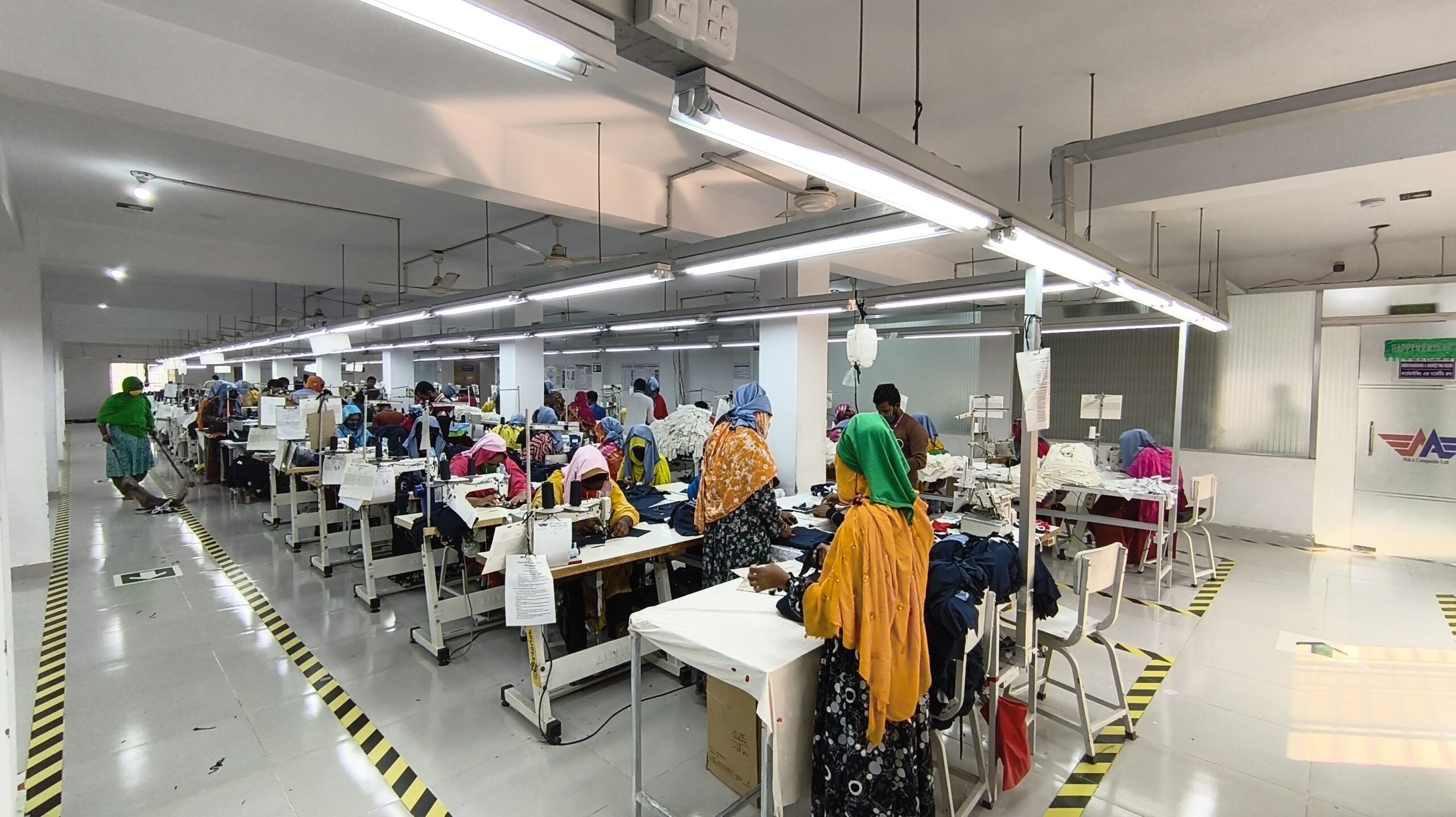
Related real images: workers, sewing lines and garment handling
The production photographs below show workers at sewing stations and garment handling areas. Discuss which site and operations are proposed for your own programme and request current project-specific updates when needed.
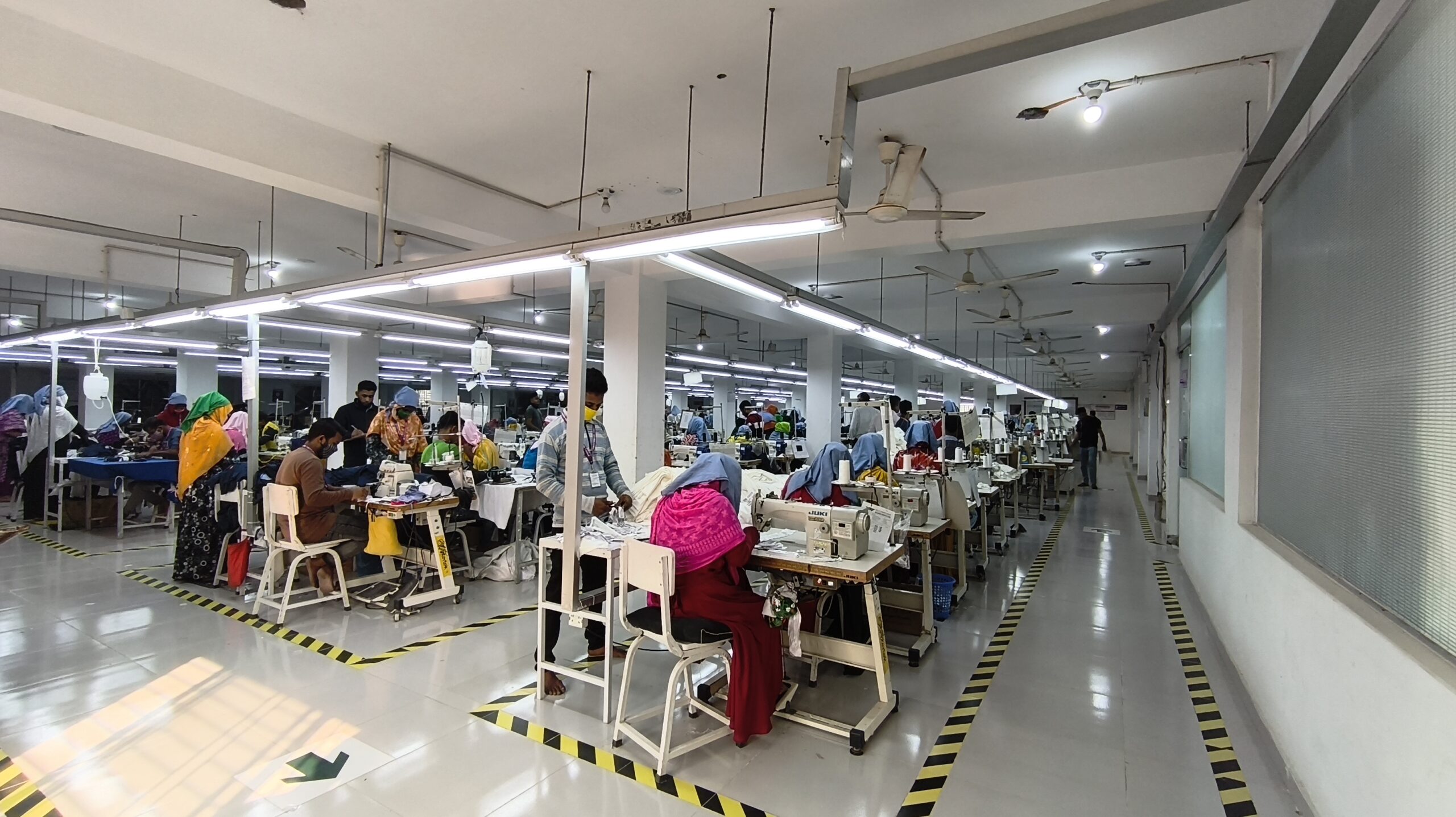
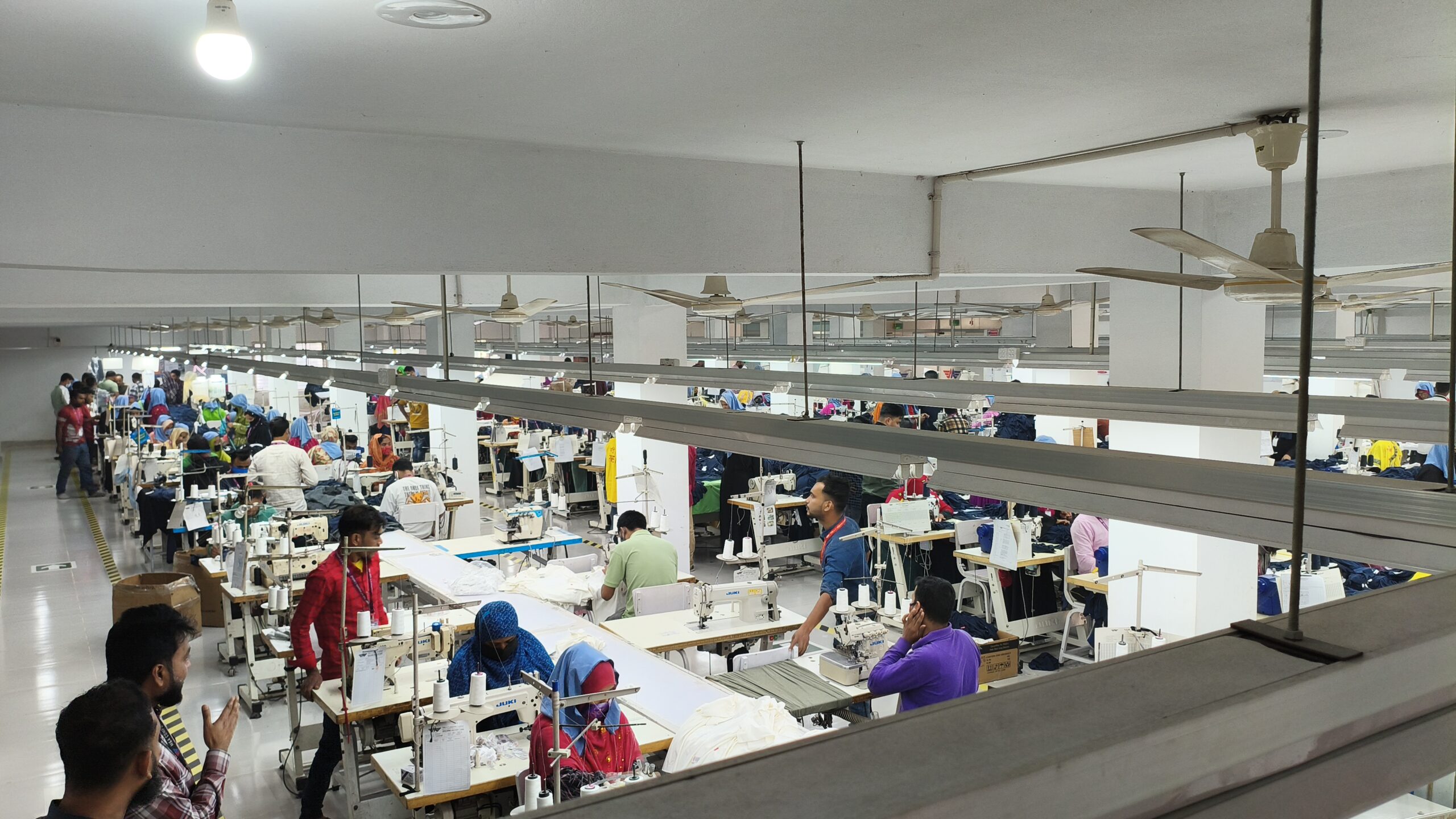
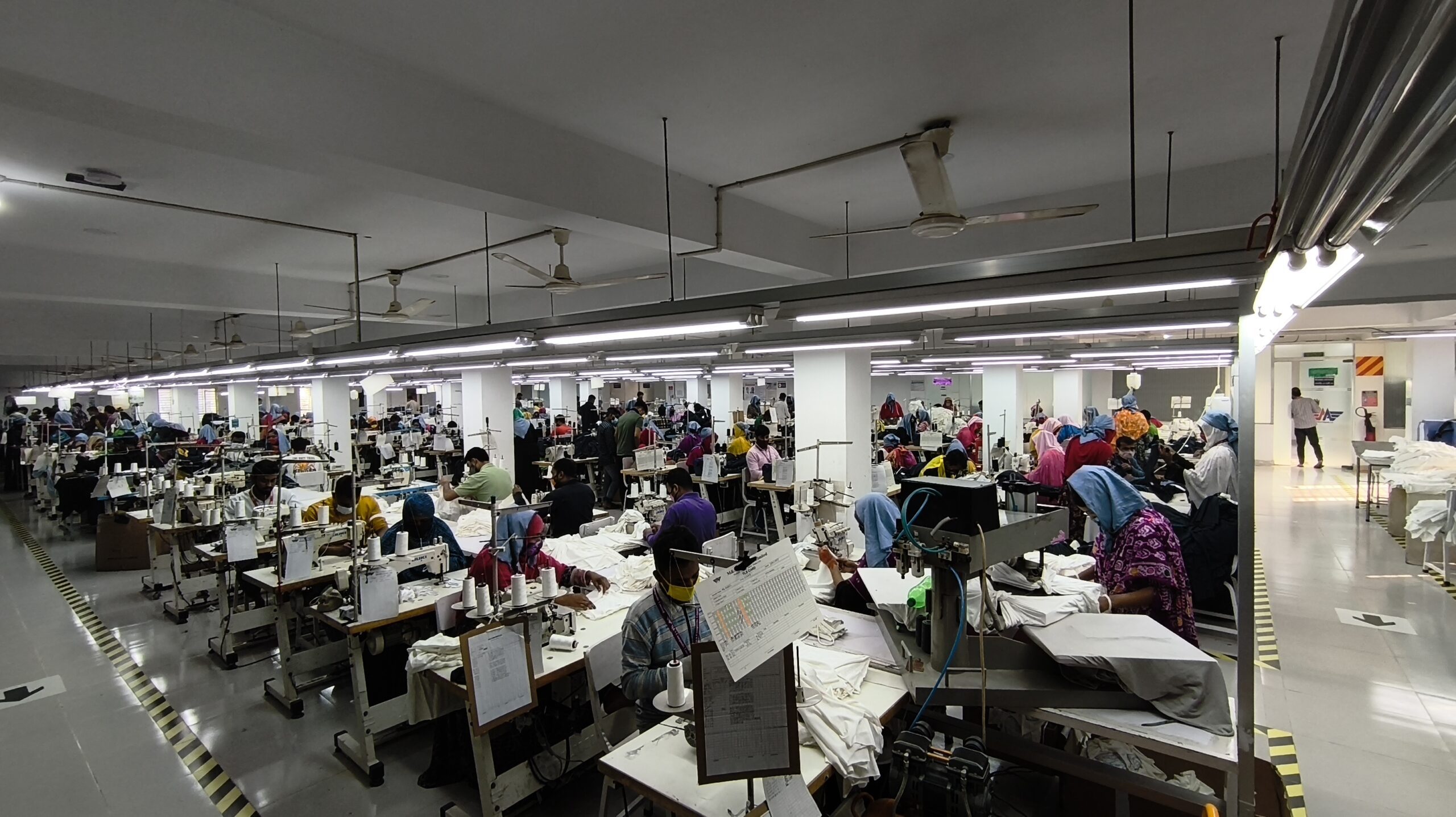
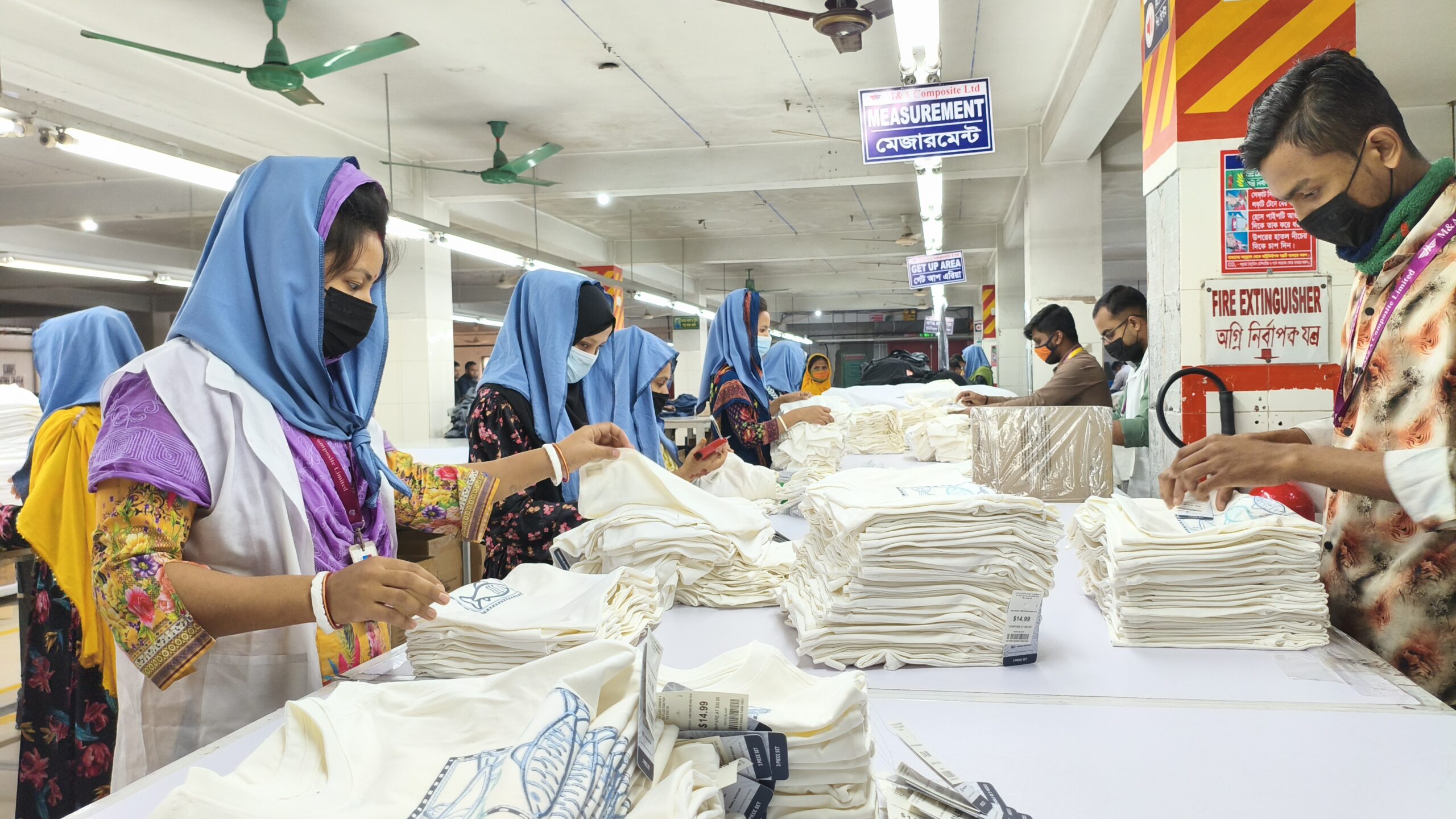
Company photographs provide visual context for the sourcing guide. They do not establish available capacity, current audit status or the outcome of a customer order. Match capability discussions with relevant samples, current records and the written production arrangement.
MOQ, sourcing fees, price and lead time: compare the full offer
There is no single MOQ, unit price or lead time that applies to all apparel sourcing programmes. Fabric availability, dye lots, decoration, trims, size allocation, packing and approval timing influence the offer. Request terms for the specification you actually plan to buy.
| Question | What to record | Why it matters |
|---|---|---|
| What is the minimum quantity? | Style, colour, material and size restrictions | A headline MOQ may omit material or colour minimums |
| What is included in the price? | Fabric, decoration, labels, packing and agreed delivery basis | Different inclusions prevent a fair comparison |
| How is sourcing support charged? | Included margin or separate fee, with its agreed scope | Clarifies the cost of the coordination service |
| Which additional costs apply? | Samples, tests, inspections or special packaging where applicable | Prevents assumptions about included services |
| When does the schedule start? | Material availability, approvals and payment conditions | Connects the quoted timeline with dependencies |
| How are changes managed? | Written price and schedule impact before approval | Protects the order from uncontrolled revisions |
Ask for a quotation validity period and a clearly identified revision. Compare complete offers on the same delivery basis. If an alternative is proposed to reach a target price, record exactly what changes and review its suitability before accepting it.
A sourcing house can coordinate planning, but delivery still depends on approvals, materials, production and transport arrangements. Agree how risks are reported and how revised dates are accepted. Avoid interpreting a general marketing statement as a contractual delivery guarantee.
Communication, shipment coordination and repeat-order records
Agree a named contact, update frequency and escalation route before placing an order. Keep important approvals in a shared record that identifies the style, revision and date. Messaging is convenient for discussion, while a consolidated approval log helps everyone work from the same instruction.
Shipment coordination should connect the physical order with the required packing and documents. Confirm carton quantities, size allocation, marks and the documents to be reviewed. Identify who arranges freight and which responsibilities are included in the agreed commercial terms.
For repeat orders, retain the approved specification, material references, artwork, sample comments and final inspection records. Check whether any fabric, trim, production site or process has changed before releasing a repeat. A previous approval should not conceal a new substitution.
After delivery, record buyer feedback in a form that the sourcing team can act on. Identify the style, batch, issue and required improvement. This creates a more useful basis for the next programme than a general request for better quality or a lower price.
Frequently asked questions
Is M&A Sourcing Ltd. independently verified as the largest sourcing house in Bangladesh?
This guide does not establish an independent size ranking. A largest claim needs a defined metric, comparison period and reliable evidence. Evaluate M&A Sourcing against the requirements of your own apparel programme.
What does a sourcing house in Bangladesh do?
A sourcing house coordinates agreed activities such as supplier selection, merchandising, sampling follow-up, quality inspections and shipment documentation. Confirm the exact scope and responsibilities in the contract.
How is a sourcing house different from a garment factory?
A factory manufactures garments at an identified site. A sourcing house coordinates the buyer’s requirements and the agreed production arrangement, which may involve one or more suppliers.
Can I discuss workwear and uniform sourcing with M&A Sourcing?
Yes. Share the product specification, fabric needs, branding, quantity breakdown and destination. Confirm feasibility, sampling requirements and commercial terms for the proposed programme.
What information should I send for a quotation?
Send technical drawings or references, material specifications, measurements, quantities by style and colour, decoration artwork, packing requirements and target delivery information. Identify any open requirements.
Is there a fixed MOQ for all sourcing orders?
No universal MOQ is stated here. Minimums depend on the product, fabric, colours, decoration and supplier arrangement. Request a written breakdown for the proposed order.
How should sourcing progress be tracked?
Use a dated milestone tracker with the responsible person, planned and actual dates, open issues and next actions. The progress bars in this guide illustrate stages rather than live completion percentages.
Does a SMETA audit mean a factory is certified?
No. Sedex describes SMETA as a social audit methodology rather than a certification. Review the correct site’s audit findings, scope and corrective actions.
What quality-control records should a buyer request?
Agree sample approvals, material checks, inline findings, final inspection results and packing verification according to the order. Define acceptance criteria and responsibility for corrective actions in advance.
How can I contact M&A Sourcing for an apparel project?
Use the contact page, email info@mnasourcing.com or WhatsApp +8801993672513. Include your product brief, quantity breakdown and delivery requirements so the team can review the enquiry.
Largest Sourcing House in Bangladesh: Related Guides
Largest sourcing house in Bangladesh: Enquiry Planning
Share your tech pack or product references, fabric requirements, branding, quantity breakdown and destination. Ask for a proposal identifying the production arrangement, service scope, approval stages and commercial terms.