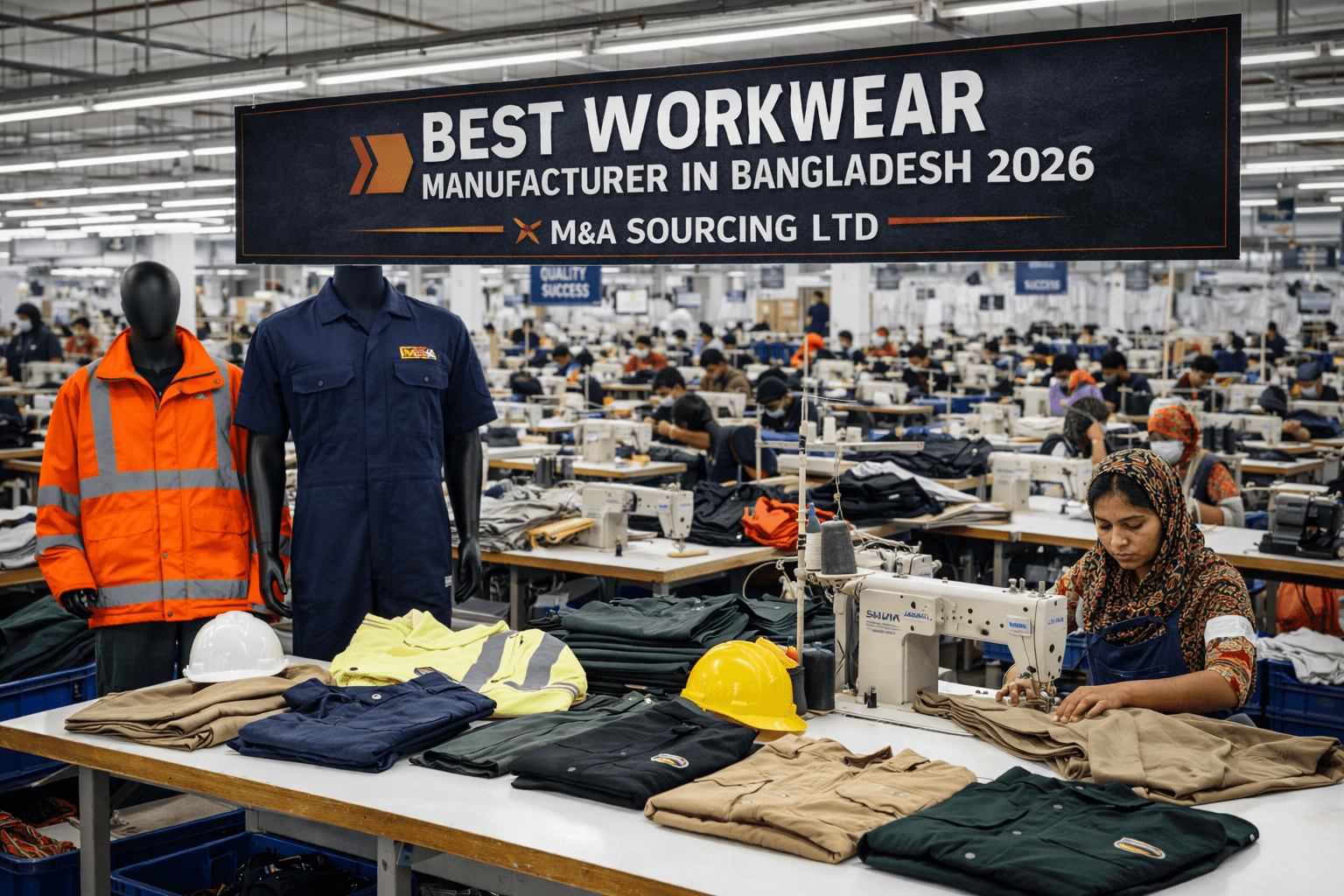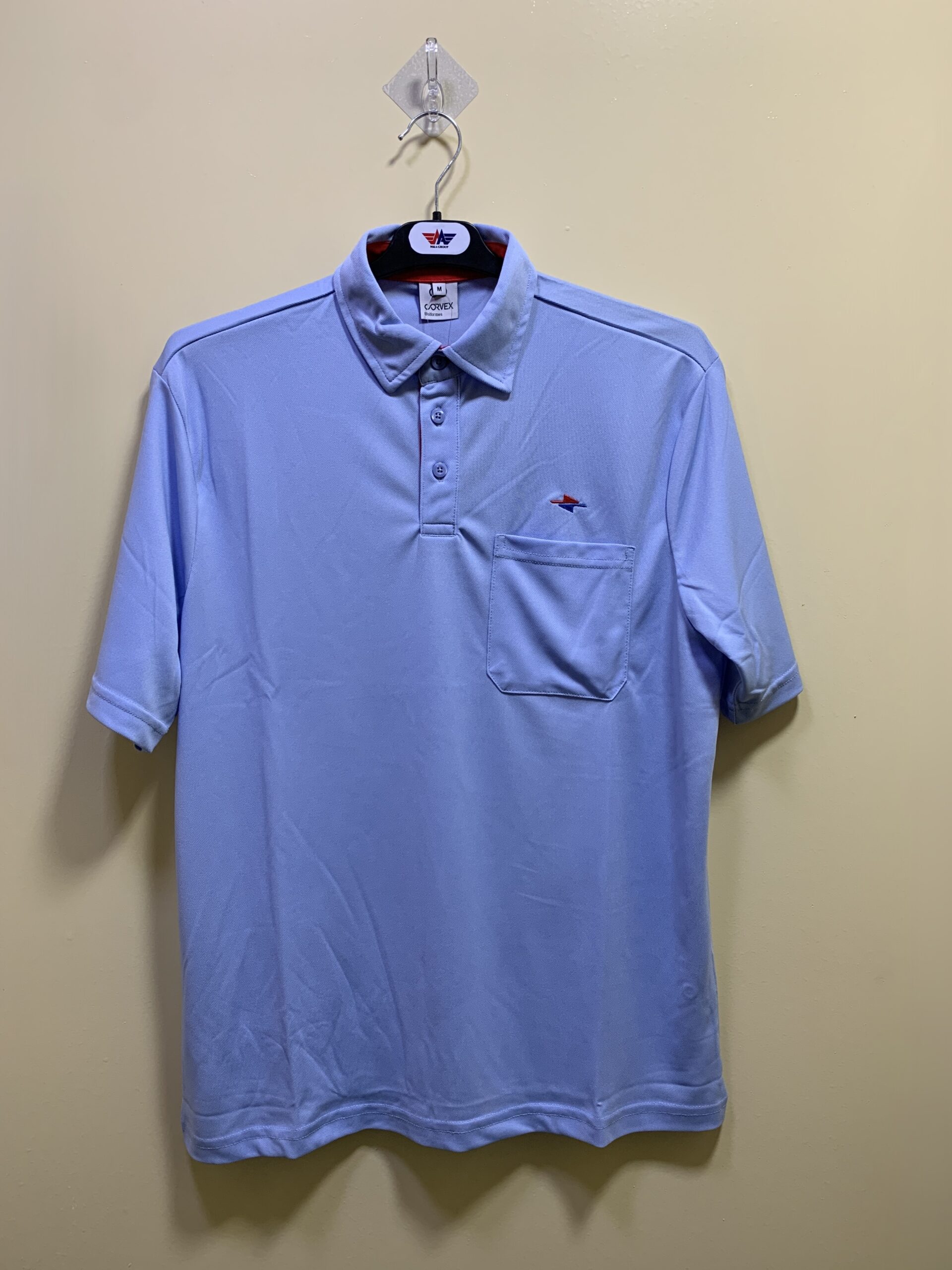
Best Customs Workwear Manufacture In Bangladesh
Finding the Best Customs Workwear Manufacture In Bangladesh is not always straightforward. On paper, many factories appear similar—comparable pricing, similar product lists, even overlapping certifications. But once you move beyond the surface, differences begin to show. Some manufacturers focus on volume, others on flexibility, and only a few seem to balance both in a way that actually works for international buyers.
M&A Sourcing Ltd. fits somewhere in that narrower group. Not perfect—no supplier really is—but consistent in ways that matter. Over time, that consistency tends to matter more than bold claims.
A Closer Look at Custom Workwear Manufacturing
Custom workwear isn’t just about putting a logo on a uniform. That assumption comes up often, especially among new buyers. In reality, it’s a layered process. Fabric selection, stitching methods, pocket placement, even the way a garment handles repeated washing—all of these details shape the final product.
A manufacturer positioned as the Best Customs Workwear Manufacture In Bangladesh would need to handle these variables with some care. M&A Sourcing, from what can be observed, approaches customization as a collaborative process rather than a fixed template. Clients suggest, the factory adjusts, and somewhere in between, a workable product takes shape.
That back-and-forth may slow things slightly at the beginning. Still, it often leads to fewer issues later in production.
Why Bangladesh Continues to Attract Workwear Buyers
Bangladesh’s position in global garment manufacturing didn’t happen overnight. It appears to be the result of gradual shifts—investment in infrastructure, a growing skilled workforce, and, perhaps just as importantly, experience gained from working with international compliance standards.
Costs are still competitive. That part is obvious. Yet focusing only on pricing might miss the larger picture. Many buyers return not just because it’s affordable, but because production tends to be predictable once the relationship is established.
For companies searching for the Best Customs Workwear Manufacture In Bangladesh, this mix of cost and reliability can be difficult to ignore.
Flexibility in Order Quantities
Large-scale production dominates the industry, but not every business operates at that level. Startups, pilot projects, or seasonal orders often require smaller quantities. This is where some manufacturers struggle.
M&A Sourcing appears to take a more flexible position. Smaller runs are possible, though they may come with slightly adjusted pricing. Still, the willingness to accommodate these orders suggests a practical understanding of how brands grow—slowly at first, then all at once.
That adaptability could be one reason why some consider them among the Best Customs Workwear Manufacture In Bangladesh, especially for newer brands testing the market.
Materials: More Than a Technical Choice
Fabric selection is often treated as a technical decision, but in practice, it shapes how the garment feels after hours of use. Cotton canvas, for instance, offers durability but can feel heavy in warmer conditions. Blended fabrics—polyester and cotton—tend to balance comfort and maintenance, though they behave differently under stress.
Ripstop fabrics show up in more demanding environments. Denim still holds its place, though it’s not always the most practical option. Flame-resistant materials, of course, serve a specific purpose and can’t be substituted casually.
A manufacturer claiming to be the Best Customs Workwear Manufacture In Bangladesh would need to guide clients through these choices rather than simply offering a catalog. That guidance, when it happens, often reduces costly mistakes later.
Pricing—And What It Actually Means
Low pricing gets attention. It always does. But in manufacturing, the lowest number doesn’t always translate into the best outcome. There are hidden trade-offs—fabric quality, stitching durability, or even delivery timelines.
M&A Sourcing seems to position itself somewhere in the middle. Not the cheapest, but not excessive either. The pricing structure appears tied more to process efficiency than shortcuts, which may explain why repeat orders are relatively common.
For buyers evaluating the Best Customs Workwear Manufacture In Bangladesh, this balance between cost and consistency can be more useful than chasing the lowest quote.
Customization That Goes Beyond Appearance
Customization is often reduced to branding—logos, colors, labels. Yet functional details tend to matter just as much. Pocket depth, reinforced seams, fabric weight—these elements influence how the garment performs in real conditions.
M&A Sourcing appears to treat customization as a technical exercise as much as a visual one. Samples are usually developed before bulk production, which adds time but reduces uncertainty. That trade-off might frustrate some buyers initially, but it often leads to fewer corrections later.
Production Timelines and Delivery
Deadlines in garment manufacturing are rarely absolute. Delays happen—fabric sourcing, shipping congestion, even weather can interfere. What matters more is how those delays are handled.
From available patterns, M&A Sourcing tends to maintain relatively stable timelines, though not without occasional adjustments. Communication plays a role here. When updates are clear, delays become manageable rather than disruptive.
That reliability—imperfect but steady—may explain why some clients continue to view them as a Best Customs Workwear Manufacture In Bangladesh option.
Final Thoughts
Choosing the Best Customs Workwear Manufacture In Bangladesh isn’t about finding a flawless supplier. It’s more about identifying a partner whose strengths align with your priorities—whether that’s flexibility, pricing, quality control, or communication.
M&A Sourcing Ltd. doesn’t claim perfection, at least not in ways that feel exaggerated. Instead, it appears to offer something more grounded: a manufacturing process that works, most of the time, in ways that clients can rely on.
And in this industry, that might be enough.