Workwear MOQ: 16 Essential Tips for Better Orders
Workwear MOQ is easier to evaluate when buyers know exactly what the minimum covers. This guide explains order quantities, style and colour allocations, material proposals, branding components and repeat-order questions for international uniform buyers and workwear distributors sourcing from Bangladesh.
Published by M&A Sourcing Ltd. The numerical examples are fictional planning data, not company quotations. Catalogue photographs illustrate products and do not establish current stock, tested performance or a customer relationship. Confirm the actual proposal directly with the supplier before placing an order.
Reading guide: allow approximately 25 minutes. The contents link to individual decisions. A reading-progress line follows your position through the article in browsers supporting scroll-driven animation.
Table of Contents
1. Workwear MOQ: establish what the minimum actually covers
Workwear MOQ means the minimum order quantity a supplier proposes for a defined workwear order. The important question is not only how many pieces are required. Buyers also need to know whether the quantity applies to the entire purchase, one garment style, one colour, one material route or a particular decoration.
A statement such as our minimum is five hundred pieces leaves several questions unanswered. Can different garments be combined? Does every colour have its own requirement? Are sizes mixed within the style? Is the quotation based on a standard material or a newly developed one? Request written clarification before using the number in a buying plan.
Treat the minimum as one part of a product-specific proposal rather than a company-wide promise for every future enquiry. A polo programme and a lined jacket order can involve different materials, components and development work. Even within the same category, a changed fabric, colour or logo can change the basis of the offer.
This guide is published by M&A Sourcing Ltd. for uniform distributors, employers, private-label buyers and importers. It does not announce a fixed company minimum, guaranteed small-order service or universal production threshold. Ask the team to confirm current feasibility for your actual specification, allocation and delivery expectations.
For a broader introduction to supplier selection, visit the homepage for Workwear Manufacturer in Bangladesh and our clothing manufacturing guide. This article focuses specifically on quantity planning and quotation questions rather than repeating the full development process.
2. Separate order, style, colour and component minimums
A useful workwear MOQ discussion identifies several possible levels. The total order quantity counts every garment in the purchase. A style quantity refers to one identified design. A colour quantity may apply within that style or to a shared material. A component requirement can relate to labels, trims, decoration or packaging.
Do not add these numbers together as though they describe separate garments. A component quantity can overlap the garment order rather than represent additional finished goods. Ask the supplier to explain which requirement controls the proposed route and how any purchased balance is handled under the commercial arrangement.
Write the units beside every figure. Pieces of garments, quantities of labels and amounts of fabric are not directly interchangeable. Avoid turning a fabric minimum into finished-garment units without an agreed consumption basis and explanation of assumptions. A buyer needs a transparent calculation, not an apparently precise number that hides different units.
A shared fabric across several styles may be worth discussing, but it does not prove that the supplier can combine every minimum. Material specifications, colour, finish and production arrangements must actually align. Ask what can be shared and which style-specific decisions remain separate before relying on a combined quantity.
Use a scope column in the enquiry worksheet: total order, per style, per colour or per component. Keep that column beside the quotation. This simple distinction makes two offers easier to compare and reduces the chance that a purchasing team approves a total that does not meet the supplier’s stated allocation requirements.
| Level | What it describes | Question to confirm |
|---|---|---|
| Total order | Every garment in the purchase | Can the proposed styles actually be combined? |
| Per style | One identified garment design | Which revision and material does it cover? |
| Per colour | The allocation using an identified colour | Does each colour need a separate confirmation? |
| Material route | The proposed fabric and relevant purchasing basis | Which units and assumptions are being used? |
| Component | Labels, trims, decoration or packaging | What happens to a purchased balance? |
3. Ask how fabric choices affect workwear MOQ
Fabric is an important part of a workwear MOQ enquiry, but a buyer should not assume one rule for every material route. Ask whether the supplier is proposing an identified available material, a new material development or another arrangement. Confirm the actual composition, construction, colour and finish before comparing minimums.
An available material proposal should still be reviewed for suitability and current availability. It is not automatically equivalent to the buyer’s original brief. Request a retained reference and identify any difference affecting appearance, care, fit or other requirements. Approving availability alone does not approve the entire garment.
A new colour or material proposal can involve a different discussion from an existing reference. Ask which decision affects the minimum and what evidence is required before that route is confirmed. Avoid accepting an unspecified stock-fabric substitute simply because it appears to make the quantity easier to place.
Material commonality can create an option to investigate. Several garments might use the same approved fabric, but the buyer and supplier must confirm that the specifications actually match. Similar colour names or photographs do not establish identical material. Keep proposed combinations visible as options until feasibility is confirmed.
Our workwear fabric selection guide explains the underlying specification fields. Link the accepted material revision to the quantity proposal. If the material changes after quotation, ask whether the minimum, price or schedule needs to be revised before treating the earlier offer as valid.
| Proposal | Record | Do not assume |
|---|---|---|
| Original specified material | Composition, construction, finish and colour | The route is confirmed before review |
| Available material alternative | Identity and current availability | It is equivalent to the original brief |
| Shared fabric across styles | Matching specification and allocation | Similar pictures prove identical material |
| New development | Open decisions and proposal assumptions | A generic MOQ applies to every route |
| Repeat reference | Earlier approval and current confirmation | Availability remains unchanged indefinitely |
4. Plan colour variants before increasing the total order
Workwear MOQ can become difficult to interpret when a buyer requests many colours in a small programme. Start with the required allocation rather than a wish list of every possible shade. Identify which colours are essential to the uniform and which are optional proposals that could be reviewed later.
A total of six hundred garments spread across six colour variants is different from six hundred in one colour. The arithmetic alone does not prove that either proposal is feasible. Ask the supplier to confirm the minimum basis for each colour and whether the material route changes across the allocation.
Keep garment colour separate from decoration colour. Two departments might use the same base polo with different crest colours, or different base garments with one shared logo. These arrangements can have different quotation questions. Record the actual combination instead of referring generally to a two-colour uniform.
Consider whether reducing optional colour variants would preserve the programme’s purpose. This should be a buyer decision, not an unapproved supplier substitution. If consolidation is acceptable, issue a revised allocation and obtain an updated proposal rather than leaving the earlier colour list circulating beside the new quantity.
Retain the approved colour reference with the quotation and sample decisions. A quantity agreement does not replace shade approval, and a shade sample does not confirm the commercial allocation. Keeping these decisions connected helps the team understand what is approved without incorrectly treating one approval as covering every other part of the order.
5. Build a size matrix without inventing demand
A workwear MOQ figure does not tell the buyer how many garments to order in each size. Create the required style, colour and size matrix using the programme’s actual information. A generic ratio from an article should not be treated as a forecast for a particular workforce or retail customer base.
Separate measurement approval from quantity allocation. The supplier needs an agreed chart and measuring method to understand the garment, while the buyer needs to confirm the number of units required in each size. An age label, letter size or department count does not replace those two distinct decisions.
Ask whether the proposed size range affects feasibility or pricing and request a clear explanation. Do not assume that an extreme size, special proportion or additional fit version is included on the same basis as every other size. Mark any separate requirement in the enquiry before the offer is accepted.
If the final allocation is not ready, label the matrix provisional and ask which decisions can proceed on that basis. Avoid releasing production against an estimate while assuming the order can be redistributed freely later. A change in allocation should be reviewed for its actual effect instead of being treated as administrative only.
Use the workwear size chart guide to prepare the technical record. Retain the authorised matrix with the accepted quotation, and identify who can approve later changes. A clear allocation is often more useful to the supplier than a larger total with unresolved size requirements.
| Programme | Calculation | Question raised |
|---|---|---|
| Two polo colours | 300 navy + 300 black = 600 garments | Is 300 per colour feasible for this proposal? |
| Three garment styles | 200 polos + 200 trousers + 200 hoodies = 600 | Can different styles be combined on this basis? |
| One polo colour across sizes | 40 + 60 + 100 + 60 + 40 = 300 | Does this chart and size range match the offer? |
| Revised colour split | 450 navy + 150 black = 600 | Does the changed split require a new proposal? |
6. Compare minimums by the actual workwear product
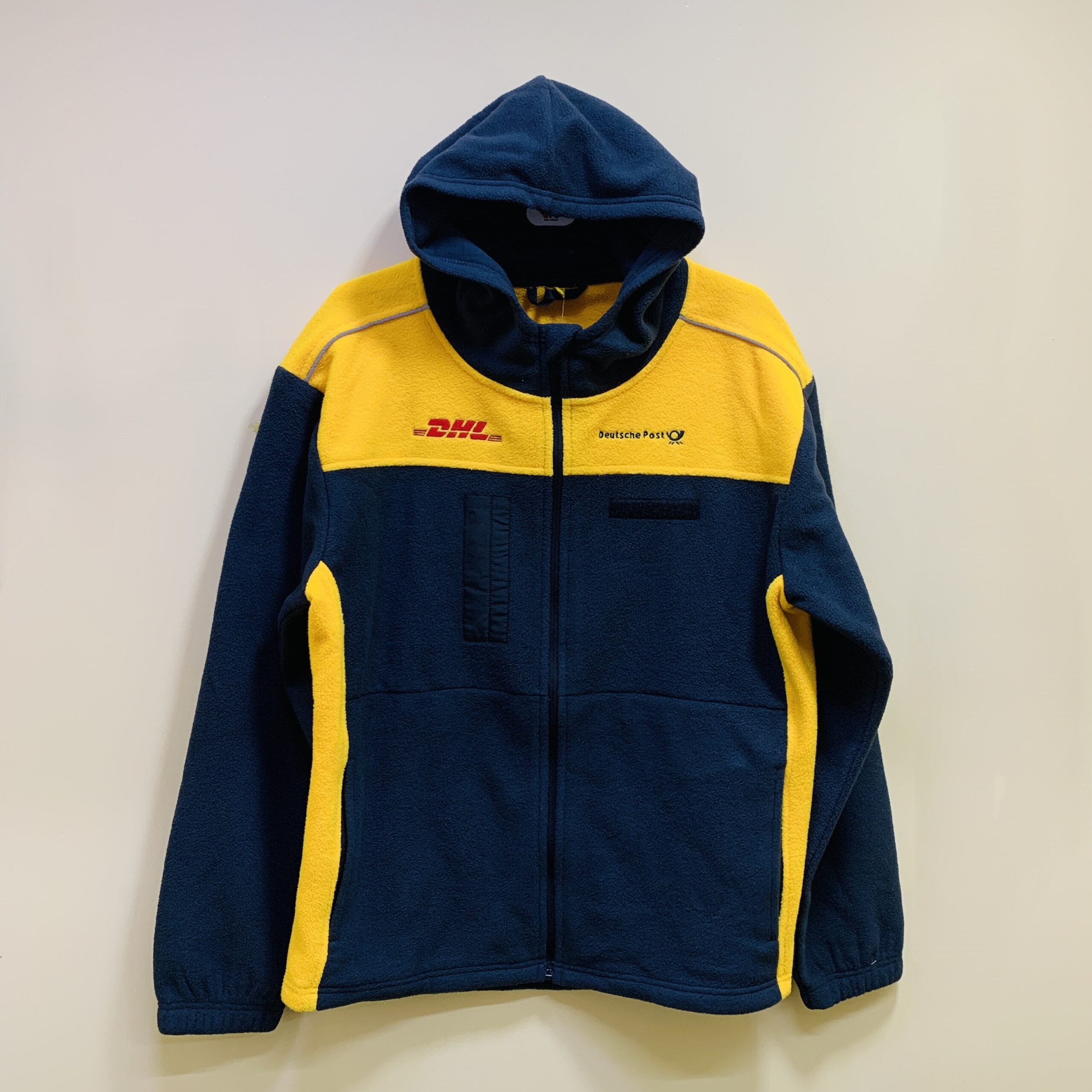
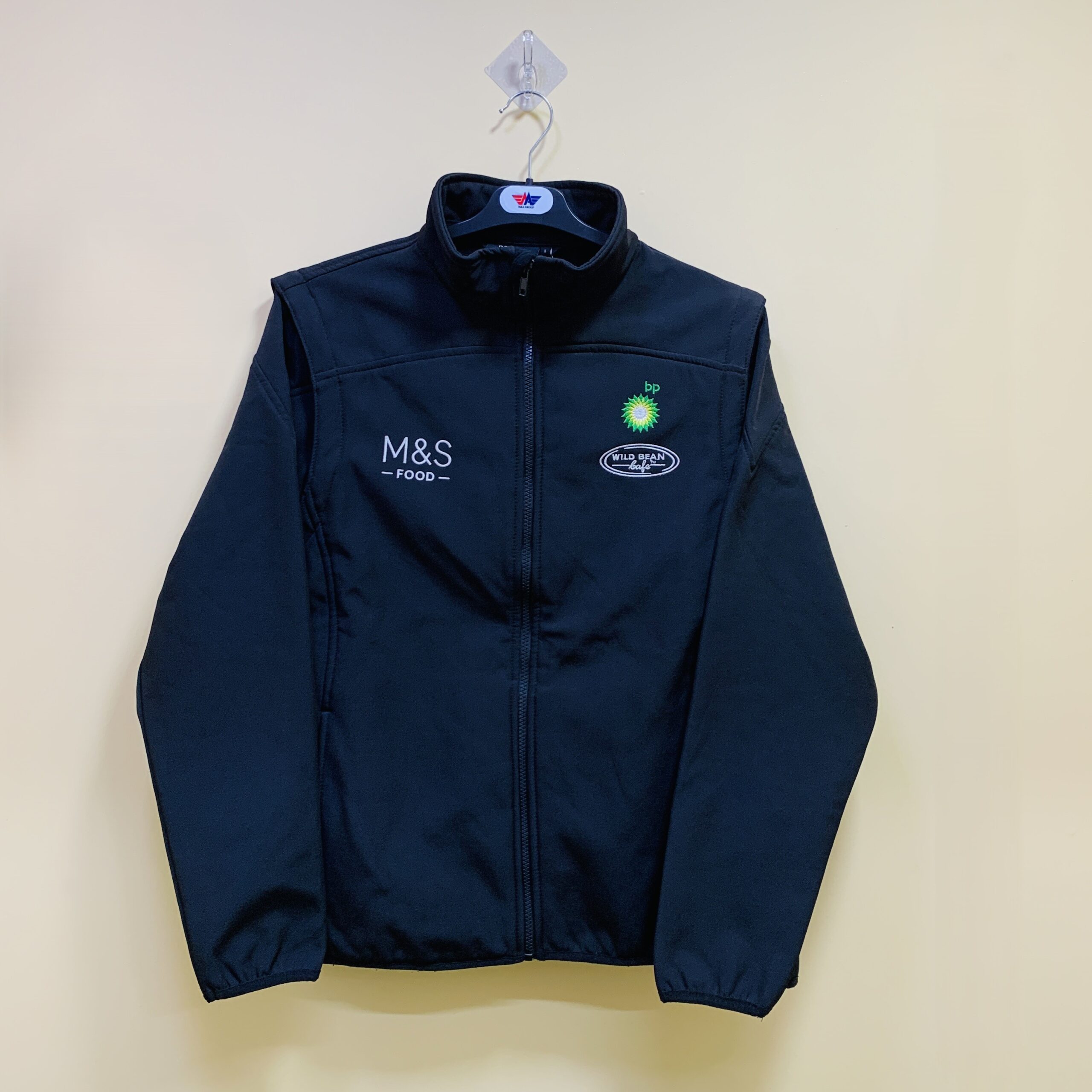
Workwear MOQ should be discussed separately for different garment categories. Polos, cargo trousers, hoodies and softshell jackets do not have identical construction or component lists. A minimum confirmed for one product should not be advertised as applying automatically to every catalogue item.
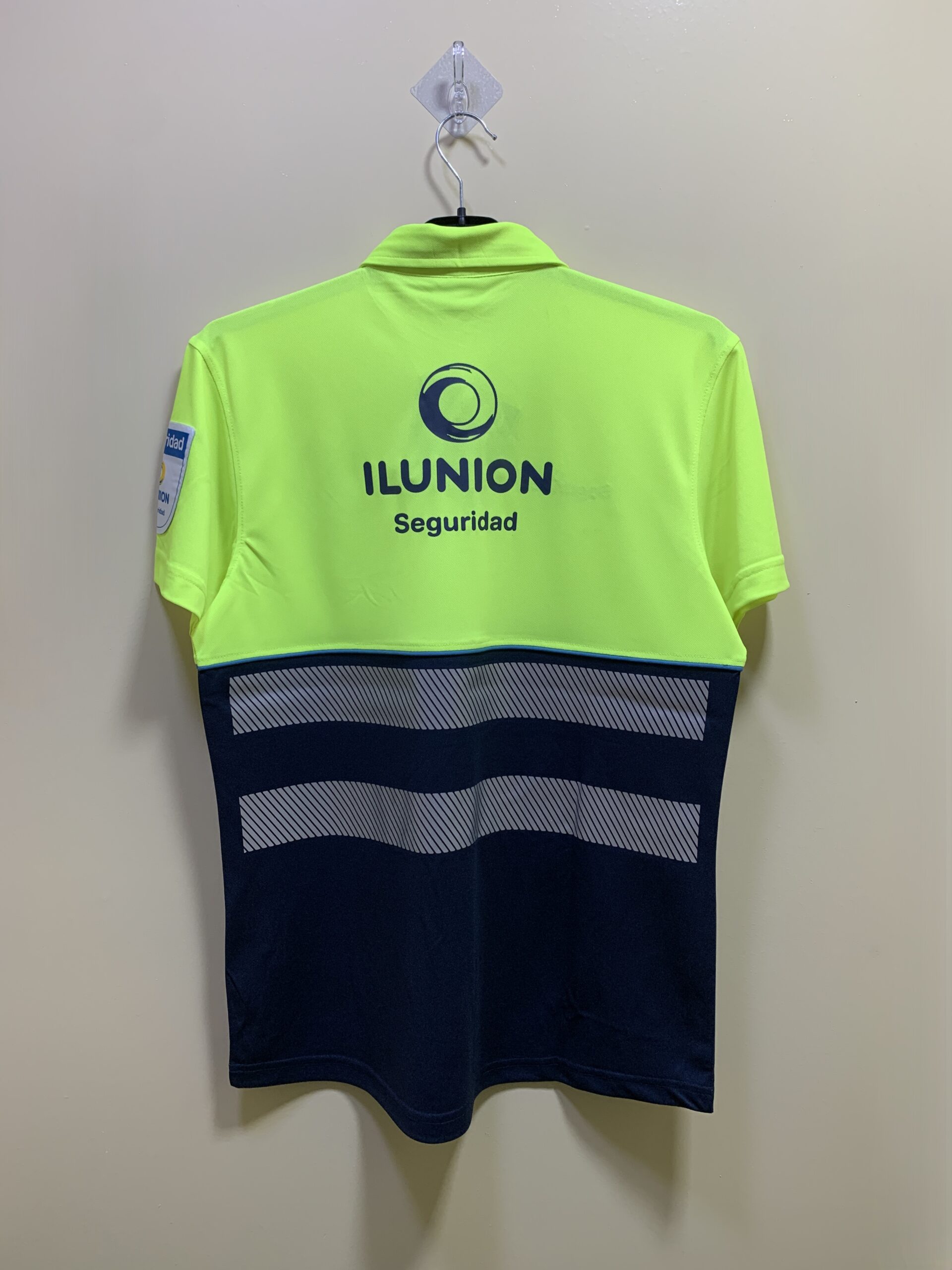
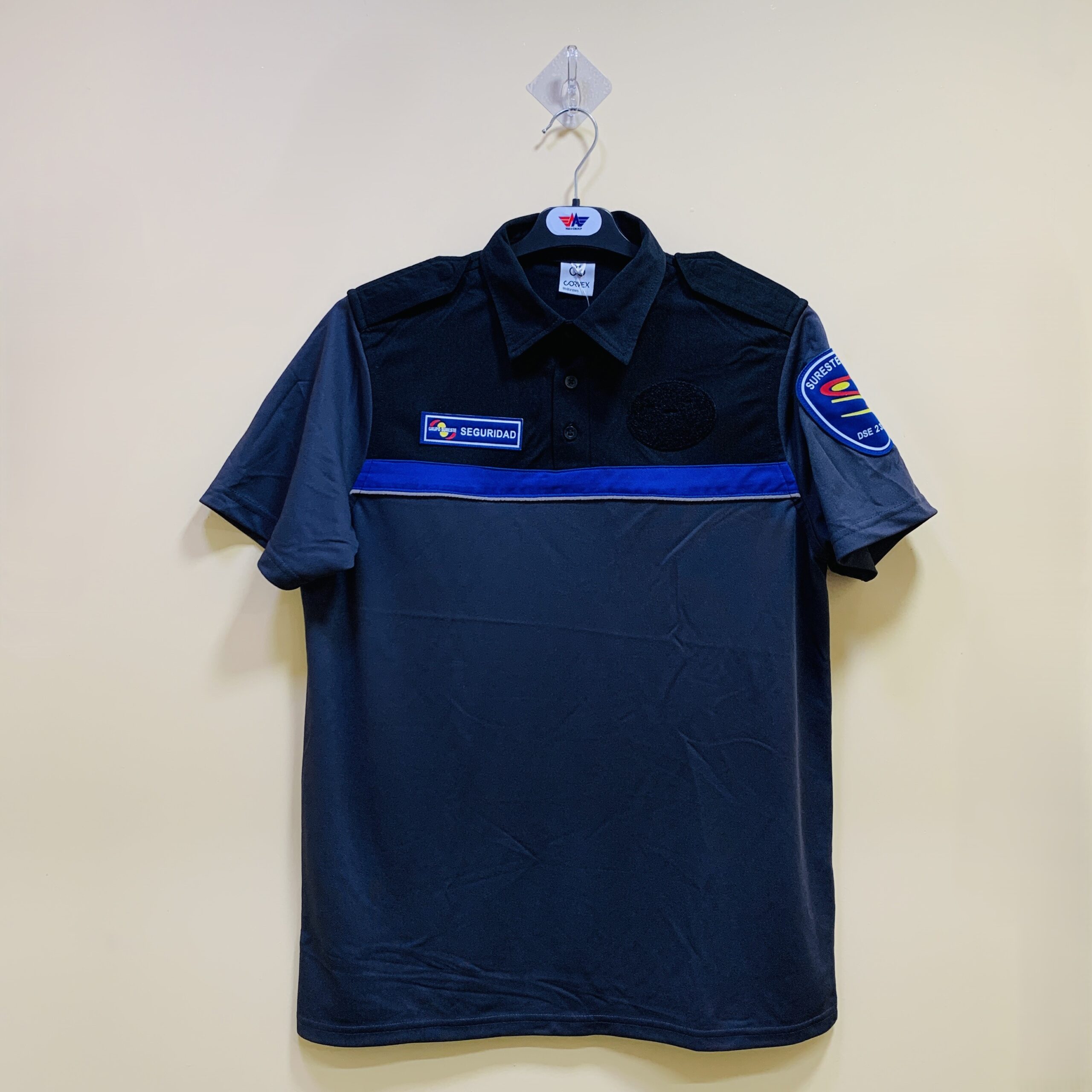
For polos, identify the body fabric, collar, placket, colour and decoration. A standard-looking polo image can hide several unresolved choices. Ask whether the quotation uses the buyer’s proposed specification or a supplier alternative, and retain the identified material and sample references alongside the quantity confirmation.
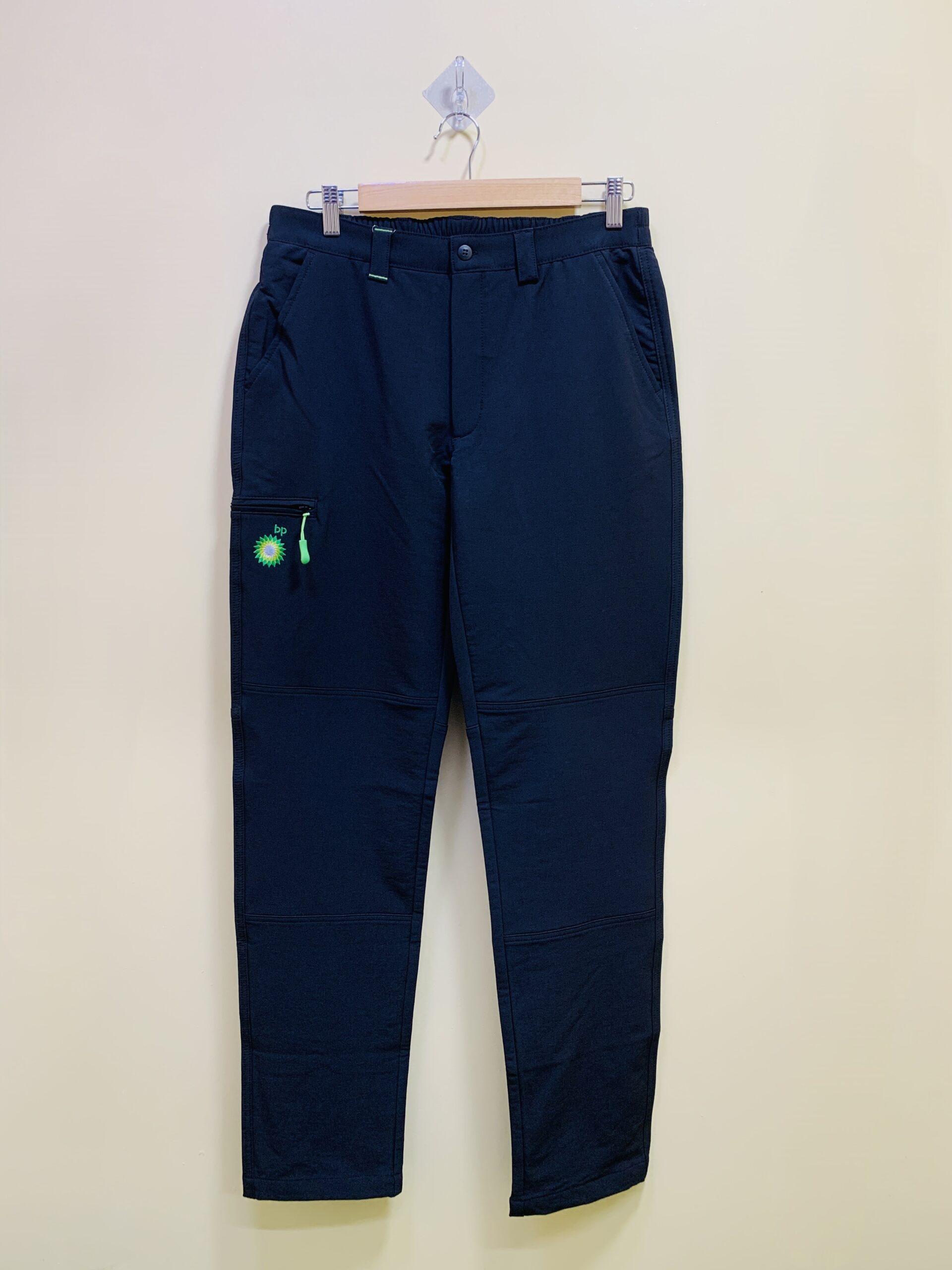
For cargo trousers, specify the waistband, pockets, closures and measurements. A change in pocket layout or trim can change the proposed development route. Keep the requirement measurable rather than assuming that a named style category defines every construction detail needed to evaluate a minimum.
For hoodies and jackets, explain the layering brief and relevant materials. Where shell, lining, filling or special trims are involved, ask which components affect the commercial basis. Photographs can support a style conversation, but they cannot establish material identity, tested performance or current stock.
The real product photographs below link to related catalogue pages. They illustrate the categories being discussed and do not promise that the pictured garment can be supplied at a particular quantity. Ask M&A Sourcing for a proposal tied to your actual style, size matrix, decoration and destination.
7. Review labels, logos and packaging as separate quantity questions
Workwear MOQ can include more than the garment-making discussion. Ask whether custom labels, decorated logos, named wearers or special packaging introduce separate requirements or charges. The buyer needs to know which parts of the programme are included in the offer and which still require confirmation.
Supply the approved artwork, finished dimensions, colours and placement diagram. Identify the proposed decoration method rather than accepting a generic logo charge. A preparation cost, sample charge and application charge can be treated differently in different quotations, so ask what the accepted amount actually covers.
Confirm how labels and packaging components are specified. Record the artwork revision and required information before production. If a component is purchased in a quantity exceeding the first garment order, clarify ownership, storage, future use and any related charges in writing rather than assuming the balance is automatically available for later reorders.
Personalised names and department identifiers require an allocation record as well as a design. Identify who checks spelling and how variable information will be reconciled with packing. Keep personal information limited to what is necessary for the agreed work and avoid circulating it in every commercial document.
Our embroidery vs printing guide provides related decoration questions. A lower garment quantity should not become a reason to skip the decorated sample or accept unapproved labels. Review the actual branding proposal and preserve the school, employer or brand’s authorised identity.
8. Ask which preparation work is included in the quotation
A workwear MOQ conversation becomes more useful when the supplier explains preparation instead of referring only to a minimum. Product interpretation, pattern development, artwork preparation, sample review and production instructions are activities that may form part of the accepted scope. Ask which work is included and what remains chargeable.
Do not assume that paying a preparation charge guarantees acceptance of any desired bulk quantity. It is a proposal to evaluate, not a universal solution. Ask the supplier to confirm both the development scope and the conditions under which production would be considered for the actual garment.
Separate sample feasibility from bulk feasibility. A development sample may be possible through a route that does not represent the final production arrangement. Identify substitute materials, provisional components and open decisions so a positive sample review is not mistaken for a confirmed bulk offer.
Keep preparation files and approval records traceable. If the buyer changes the design, ask whether earlier work can still be used or needs revision. A supplier should be able to explain the effect on scope, cost and schedule without the buyer assuming that every later change is covered by the original discussion.
Review the complete offer rather than only the preparation amount. A lower initial charge can be paired with different unit-price assumptions or exclusions. The technical brief checklist helps reduce avoidable ambiguity by defining the garment before the team evaluates the quantity and development proposal.
9. Discuss a smaller initial order without weakening the specification
If the proposed workwear MOQ is larger than the buyer’s confirmed requirement, ask which changes might make a different route feasible. Possibilities to discuss include fewer optional styles, fewer colours or a different identified material proposal. None should be treated as available until the supplier evaluates the actual revised brief.
Preserve the requirements that define the programme. Do not remove an essential construction detail or accept an unsupported material claim simply to reach a smaller number. Ask the team to separate non-negotiable requirements from optional preferences so commercial alternatives can be assessed without losing the intended function.
Request distinct versions of the proposal. Version A can retain the original specification; version B can describe an agreed alternative. Keep material identity, sample requirements, quantity, price and exclusions visible for each version. This is easier to review than a single changing offer in which no one can identify what was traded away.
A development or trial scope can also be discussed. Define what the buyer wants to learn, which samples or garments are involved and what constitutes an accepted outcome. A trial is not automatically a commitment to future bulk purchases, and the supplier should not be expected to infer a guaranteed repeat volume from an exploratory enquiry.
If no feasible route exists for the required quantity and specification, record that result honestly. A buyer can revise the programme or consider another candidate without describing the supplier as unsuitable for every category. Product-specific feasibility is a better decision basis than an unqualified promise that any quantity can be manufactured.
| Option | Buyer decision | Supplier confirmation |
|---|---|---|
| Fewer optional styles | Which garments can be deferred? | Feasibility of the revised programme |
| Fewer colours | Which colours remain essential? | Revised minimum basis and quotation |
| Alternative material | Which attributes must remain unchanged? | Identified material and sample scope |
| Defined trial | What must the trial demonstrate? | Accepted scope, charges and limits |
| Separate development | Which decisions remain open? | What is required before bulk confirmation |
10. Compare workwear MOQ and price on the same basis
Two workwear MOQ offers cannot be compared meaningfully unless the buyer knows what each covers. Use one current specification, artwork set and allocation matrix for the enquiry. Ask each candidate to identify substitutions and unresolved assumptions rather than choosing a cheaper interpretation without explanation.
Place the scope beside the minimum and unit price. Identify the garment style, material, colours, size range, decoration positions, packaging and delivery basis. If any field differs, request clarification before treating the quoted amounts as equivalent. A lower headline minimum can still describe a materially different product or service.
Ask how optional scenarios are priced and whether a quotation is indicative or confirmed. The buyer should understand what further decisions are required before the offer becomes firm. A number that appears precise can still depend on provisional fabric, artwork or quantity assumptions that have not been approved.
Keep one-time and repeat charges visible where relevant. A first order may involve preparation that is treated differently on replenishment. Ask what must be reconfirmed, which references will be retained and whether any balance components have a defined future-use arrangement. Do not assume the next order inherits every term unchanged.
Our wholesale workwear guide provides related bulk-buying questions. Use a comparison sheet with the same fields for each candidate. Record clarification requests and accepted revisions so the final purchasing decision rests on the current offer rather than an attractive number from an earlier version.
| Field | Offer A | Offer B |
|---|---|---|
| Garment | Identified style and revision | Identified style and revision |
| Materials and colours | Record actual proposal | Record actual proposal |
| Minimum scope | Order/style/colour/component | Order/style/colour/component |
| Size allocation | Same approved matrix | Same approved matrix |
| Branding | Same dimensions and positions | Same dimensions and positions |
| Preparation and packing | Identify included work and exclusions | Identify included work and exclusions |
| Status | Indicative or confirmed, with dependencies | Indicative or confirmed, with dependencies |
11. Use numerical examples to reveal allocation questions
Workwear MOQ examples are useful when they show the arithmetic without pretending to be supplier commitments. Suppose a buyer needs three hundred polos in navy and three hundred in black. The total is six hundred garments, but there are two colour allocations of three hundred. The supplier must confirm whether that allocation meets the proposed minimum basis.
Now suppose a second buyer needs two hundred polos, two hundred cargo trousers and two hundred hoodies. This is also six hundred garments in total, yet it comprises three styles with different materials and components. The matching total does not establish that the same commercial minimum applies to both enquiries.
Size allocation adds another dimension. A single colour of three hundred polos could be divided across five sizes, but the buyer still needs to confirm the units in each size and the approved chart. The calculation does not tell the supplier whether a special fit version or additional garment construction is required.
An illustrative component example can reveal a different question. If a proposal involves more custom labels than garments in the first order, ask what happens to the balance. Do not convert that component balance into a promise of future finished goods. Ownership, storage, availability and later use need their own agreed commercial treatment.
Every number in these examples is fictional planning data, not an M&A Sourcing minimum, stock statement or quotation. Replace it with the buyer’s actual matrix and the supplier’s written response. The purpose is to make the scope understandable before anyone decides whether to proceed.
12. Separate purchasing needs from an unconfirmed future forecast
Workwear MOQ can encourage a buyer to discuss future demand, but a forecast should be labelled accurately. Distinguish the confirmed order from a possible programme and identify which quantities are provisional. The supplier needs to know whether it is evaluating a purchase commitment or an option that may change.
Do not use an unsupported repeat-volume promise to make the first enquiry appear larger. A clear explanation of the current requirement and expected review points is more useful. If the programme may expand, describe the conditions under which the buyer would consider another order without presenting that possibility as guaranteed.
For an employer programme, discuss replacement needs, new starters and size exchanges through the buyer’s actual records. For a distributor, use confirmed customer requirements or an identified planning assumption. This article does not prescribe inventory levels or a universal size ratio; the buyer should use information appropriate to its programme.
Ask what repeat quantities would require a new feasibility review. An earlier material proposal may no longer be available, and a changed size or colour allocation can affect the route. Retaining an approved garment sample supports consistency, but it does not guarantee that every future commercial assumption remains unchanged.
Keep demand planning separate from the approval record. A forecast revision should not silently authorise additional production or material purchases. Identify who can issue a confirmed order and what written instruction is required so the supplier does not interpret a discussion of future needs as an immediate release.
13. Keep sampling and quality review in the quantity plan
A smaller workwear MOQ does not remove the need to define the garment. Agree what the sample should demonstrate, which materials it uses and which decisions remain open. A development sample using substitute components should have a limited, clearly recorded approval scope rather than being treated as a final production reference.
Connect comments to the sample identity and current technical brief. Record the location, observation, requested action and decision owner. Resolve conflicting buyer instructions before sending the revision to the supplier. A consolidated comment sheet is easier to follow than several conversations that point to different versions.
Separate fit, material, colour and decoration decisions where needed. Approving one area does not automatically close all others. Ask what additional evidence or sample is required before the final specification is released, particularly when the quantity proposal relies on a different material route from the original enquiry.
Agree the quality-review scope for the actual order. A visual inspection cannot establish every material or performance attribute, and a sample photograph does not prove the quality of an entire shipment. Record what will be checked, which approved references will be used and who decides how findings are closed.
See the sample approval guide and workwear order checklist for related records. The aim is a feasible quantity with a controlled specification, not a smaller order achieved by leaving essential product decisions unresolved.
14. Connect quantity confirmation with materials and schedule
Workwear MOQ and lead time should be confirmed as related but separate fields. A supplier’s willingness to consider a quantity does not establish a fixed completion date. Identify the material, sample and buyer approvals needed before each production milestone can be confirmed.
Ask whether a proposed alternative affects development or availability. A different material route may change the work needed before release. Do not assume that a smaller garment quantity always produces a shorter schedule or that a larger quantity automatically guarantees priority. Request the actual dependencies behind the proposal.
Keep planned events distinct from delivery promises. Material confirmation, sample closure, production release, packing and transport handover are different milestones. The buyer’s required receiving date should be discussed alongside these steps rather than inferred from a single quoted production period.
When a quantity changes, request a review of its effect on price, materials and timing before authorising the revision. A change that appears minor in a spreadsheet can still alter the supplier’s assumptions. Retain the revised matrix and accepted response with the order file so the team works from the same instruction.
Use the illustrative progress stages in this article to organise questions, not as live order tracking. They describe decisions a buyer may need to close. Confirm the actual milestone plan and responsible parties for the programme rather than treating a generic percentage bar as evidence that production is underway.
15. Reconfirm workwear MOQ for repeat orders and shared materials
A repeat workwear MOQ should be confirmed rather than assumed. Retain the earlier style, material, colour, measurement chart and artwork references, then ask the supplier which assumptions still apply. A familiar garment photograph does not establish current material availability or unchanged commercial terms.
If the first order left unused custom components, refer to the agreed balance record. Ask what remains available, how it has been identified and whether the proposed repeat can use it. Do not assume that an early discussion of storage created an indefinite commitment or guaranteed an unchanged supply route.
Review substitutions before production. A new fabric, trim, decoration system or colour reference should have an identifiable approval path. The buyer may decide that the alternative is acceptable, but it should not be presented as identical without review. Keep the accepted revision connected to the original programme history.
Use receiving and wearer feedback to improve the next brief. Identify the style and size concerned and distinguish an issue against the specification from a preference for a future version. A controlled revision is more useful than informally changing several features while asking for the same order again.
Ask how the supplier will quote a replenishment programme and which fields must be reconfirmed each time. MOQ, price, preparation charges and schedule can have different review needs. A clear repeat-order record helps both parties plan without suggesting that one accepted purchase permanently fixes every future condition.
| Reference | Question | Retain |
|---|---|---|
| Garment specification | Has any construction changed? | Accepted revision and sample identity |
| Material and colour | Is the original proposal available? | Current confirmation and approved alternatives |
| Unused components | What balance is actually identified? | Agreed ownership and future-use terms |
| Quantity matrix | Does the proposed repeat match the minimum basis? | Confirmed style/colour/size allocation |
| Commercial conditions | What must be requoted or reconfirmed? | Accepted minimum, scope, price and dependencies |
16. Send a workwear MOQ enquiry that can be answered
A useful workwear MOQ enquiry begins with an identified garment and an honest quantity requirement. Send the style reference, technical brief, material proposal, colour allocation, size chart, artwork and destination. If some decisions are still open, identify them and request the supplier’s proposed assumptions.
Ask the same core questions of each candidate: what does the minimum apply to, which specification does the offer use, what charges are included and what must be confirmed before production can proceed? Request the answer in a form that can remain with the accepted quotation rather than relying on a brief verbal assurance.
Keep alternatives separate. If fewer colours or a different material may be acceptable, explain the option and ask for a distinct proposal. This allows the buyer to compare the effect without losing track of the original requirement. Do not leave incompatible versions mixed within one apparently final specification.
For Bangladesh industry background, BGMEA’s garment-industry overview provides context. It does not establish any individual supplier’s MOQ, current capacity or commercial offer. Company-specific terms need a direct, product-specific discussion with the candidate.
Send M&A Sourcing your enquiry and request a written feasibility review, minimum basis and sample plan. Explore the workwear product range and sourcing partner evaluation guide to prepare the conversation. No quantity or timing is guaranteed by this article.
Illustrative workwear MOQ enquiry progress
The stages below show decisions to organise before placing an order. They are not live production tracking, a factory completion rate or a guaranteed delivery timeline.
1. Garment brief identified
2. Quantity matrix prepared
3. Minimum scope clarified
4. Alternatives reviewed
5. Sample plan agreed
6. Quotation confirmed
7. Order release recorded
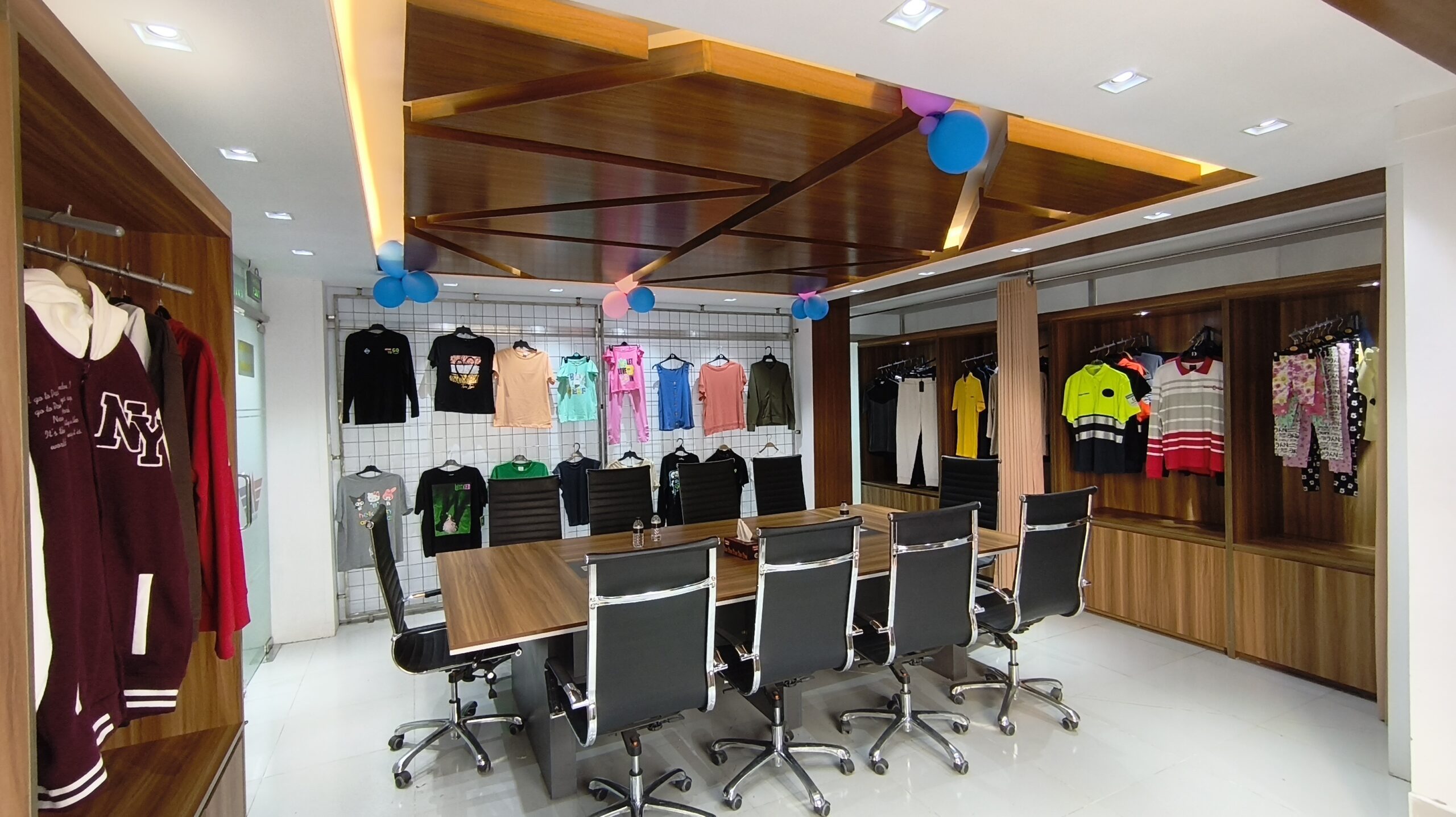
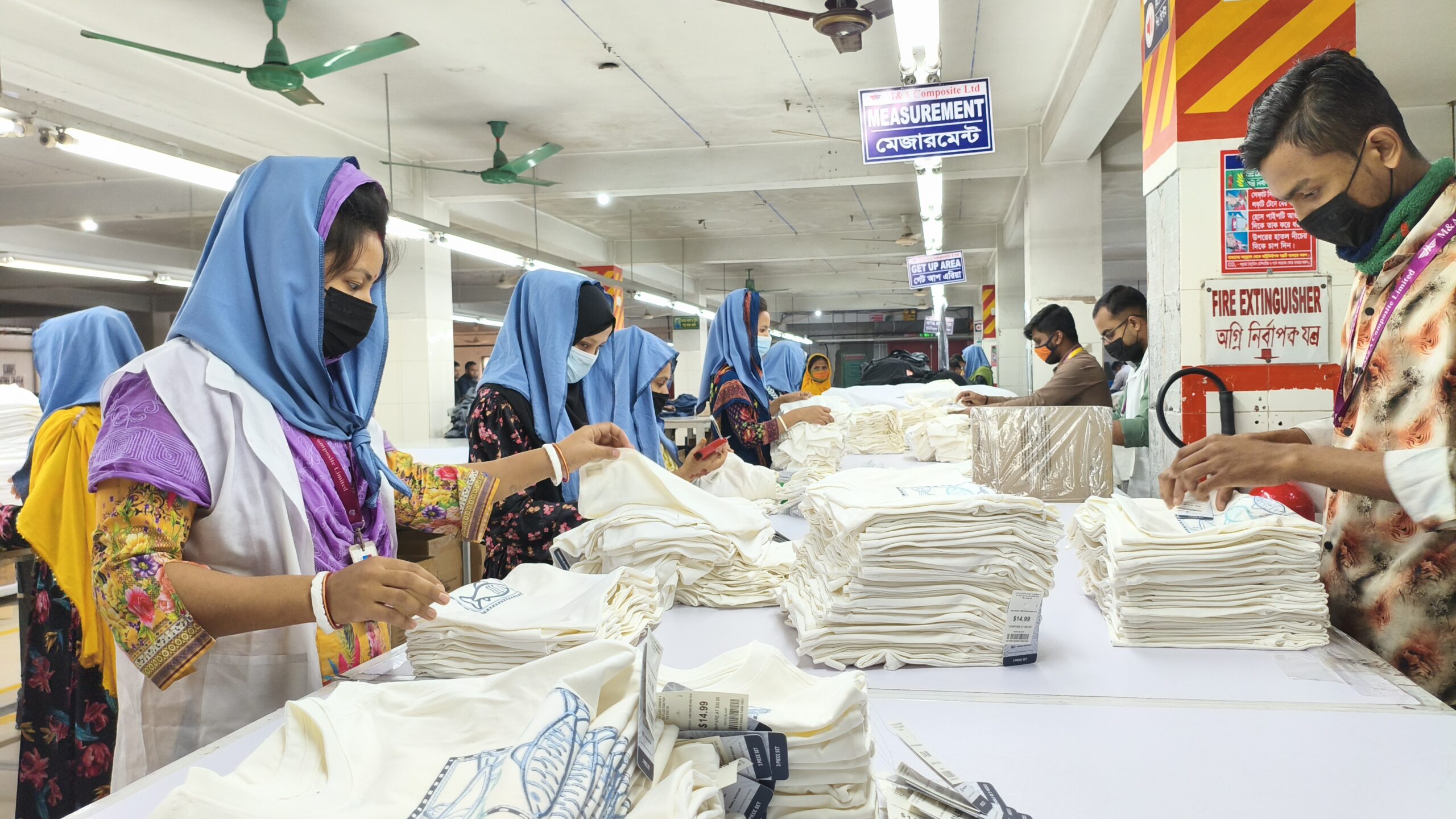
Real company images: enquiry and garment coordination
Final buyer review before confirming the order
Read the minimum scope, specification, matrix and commercial proposal together. Check that the garment shown in the sample record is the garment being quoted and that any alternative material is identified. A useful workwear MOQ confirmation should make the remaining questions visible rather than hiding them behind a single number.
Ask the decision owner to confirm which document controls if a message, spreadsheet and quotation differ. Resolve the conflict before production release. Keep the accepted version accessible to the people who prepare materials, samples and packing, and retain a record of what changed. This reduces the chance that an earlier discussion is mistaken for the final instruction.
For a new relationship, use the first programme to assess the usefulness of the process as well as the garment. Clear answers, identified assumptions, controlled sample comments and consistent records provide information a buyer can actually review. They are more useful than an unsupported promise that every future quantity will be possible.
Before repeating the programme, review what the first enquiry taught you. Record any missing technical fields, unclear quantity allocations or unconfirmed component arrangements. Use those observations to prepare a better next brief. Repeat purchasing should build on an identifiable approval history while still allowing the supplier to confirm current availability and terms.
Workwear MOQ: Frequently Asked Questions
What does workwear MOQ mean?
It means the minimum order quantity proposed for a defined workwear order. Ask whether it applies to the total purchase, one style, one colour, a material route or a particular component. A number without this scope is not enough to plan an order or compare quotations.
Does M&A Sourcing have one fixed minimum for every garment?
This guide does not publish a universal company minimum. Request confirmation for the actual garment, material, colours, decoration and size allocation. A quantity discussed for a polo should not automatically be applied to trousers, hoodies or jackets with a different specification.
Can different workwear styles be combined to meet a minimum?
Ask the supplier to evaluate the actual programme. A shared total does not prove that separate styles meet the same minimum basis. Materials and components may differ, so request written clarification of what can be combined and which requirements remain separate.
Can sizes be mixed within a workwear MOQ?
Request confirmation for the proposed size range and allocation. Provide an approved chart and quantity matrix rather than assuming a total permits every possible size combination. Identify special fit versions or additional construction requirements before accepting the quotation.
Why can a new colour affect the proposed quantity?
Ask how the actual material and colour route is being proposed. Do not assume that an available reference and a new development have identical terms. Keep the accepted shade, material identity and quantity basis connected so the buyer understands what the offer covers.
Will using an available fabric always reduce the minimum?
No universal result is promised. An identified available material can be discussed as an alternative, but feasibility and suitability must be confirmed. Review any difference from the original specification, sample requirements and current availability before treating the alternative as accepted.
Can a small initial order be used as a trial?
Discuss a defined development or trial scope with the supplier. Identify what the buyer wants to assess, which garments or samples are involved and what constitutes an accepted outcome. A trial is not automatically feasible for every route or a guarantee of future bulk purchases.
Does paying a setup charge remove every quantity requirement?
Do not assume that it does. Ask what the charge covers and whether the proposed production quantity is accepted on that basis. Preparation, material purchasing and garment production can involve different decisions that need their own confirmation in the written offer.
Are the numerical examples in this article company quotations?
No. They are fictional planning examples used to explain totals, allocations and component questions. They do not represent M&A Sourcing minimums, prices, stock or capacity. Replace them with the actual buyer matrix and supplier response before making a purchasing decision.
Should sample approval be skipped for a smaller order?
The product still needs a clear specification and agreed approval scope. Identify the sample, materials, open decisions and relevant quality review. A lower quantity should not be achieved by leaving fit, material identity, artwork or other essential product questions unresolved.
Does a repeat order automatically keep the first order’s minimum?
Reconfirm current terms. Retain the approved style, materials, colours and artwork, then ask which earlier assumptions still apply. Availability, substitutions and allocation may need review. A retained sample supports consistency but does not guarantee unchanged commercial conditions indefinitely.
What should I send to request a workwear MOQ quotation?
Send product references, the technical brief, material requirements, colour and size quantities, artwork, packaging, destination and receiving expectations. Mark provisional decisions clearly and ask what the minimum applies to. Request an identified proposal with assumptions, exclusions and the sample plan in writing.