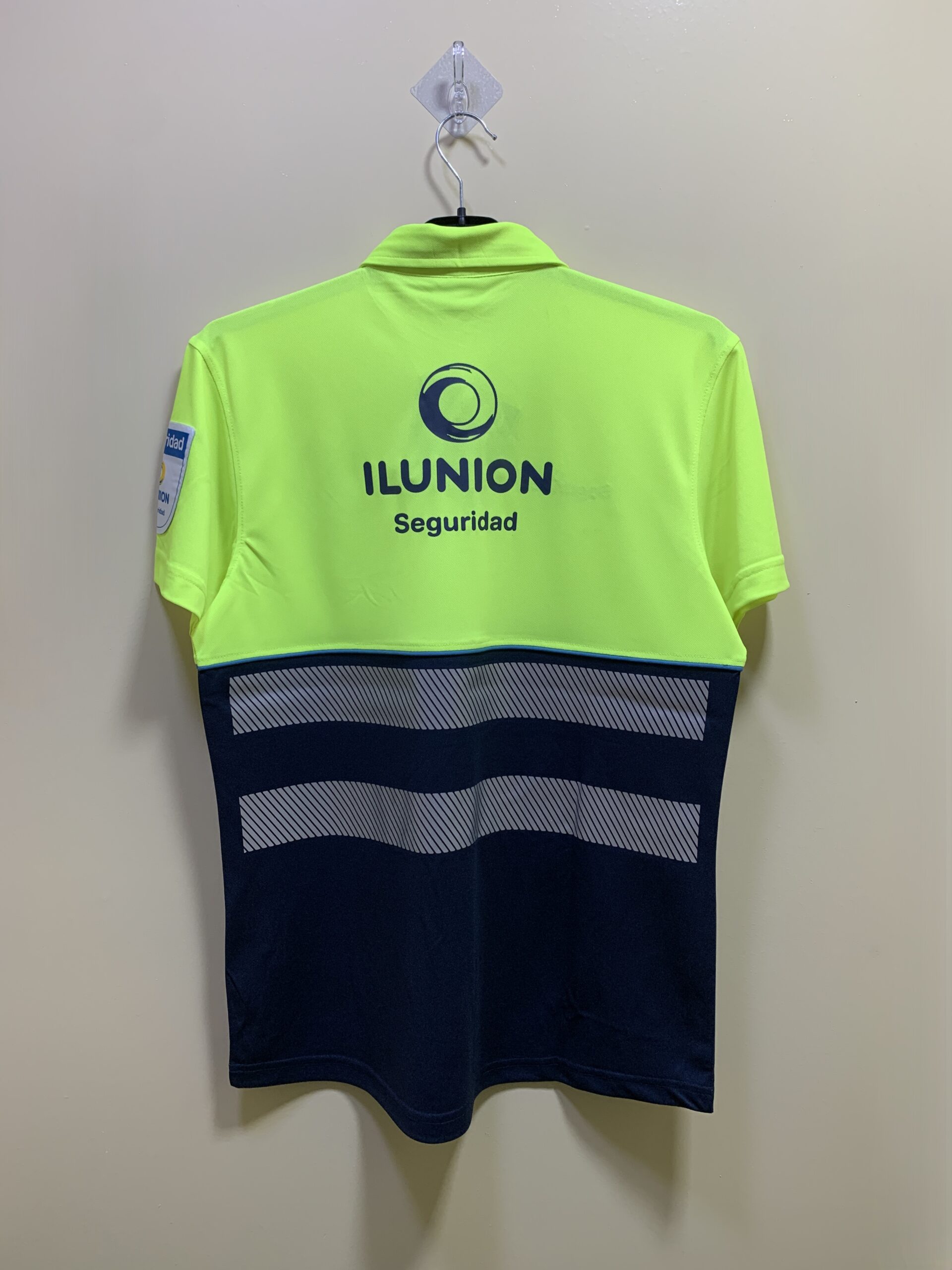
Garments Factory in Bangladesh: 10 Essential Buyer Checks
Published by M&A Sourcing Ltd. | Updated: 7 October 2026
Looking for a garments factory in Bangladesh? Evaluate the production site, relevant product experience, sample approvals, quality-control records and commercial terms before placing an order. This guide provides a practical framework for international apparel buyers.
Explore real company photographs, product and inspection tables, a visual production roadmap and questions to discuss with M&A Sourcing Ltd. Commercial terms and documentation must be confirmed for the proposed programme.
Discuss Your Garment Manufacturing Project →
Working with a garments factory in Bangladesh
Choosing a garments factory in Bangladesh involves more than checking a product list. Buyers need a production arrangement suited to their garment construction, materials, quantities, quality requirements and delivery plan. A factory capable of sewing one product category is not automatically the right choice for every apparel programme.
Start by identifying who will manufacture the goods, who coordinates the order and who is responsible for inspection. A direct factory relationship and a sourcing arrangement can both be useful, but the responsibilities should be clear. Ask which operations are performed at the allocated site and which are handled elsewhere.
M&A Sourcing Ltd. describes apparel sourcing, merchandising, manufacturing and quality-control services on its company background page. Confirm the entity, site and service scope that will apply to your project before placing an order.
For current industry background, consult the Bangladesh Garment Manufacturers and Exporters Association. This guide avoids an unverified export ranking, blanket factory certification claim or promise of guaranteed delivery.
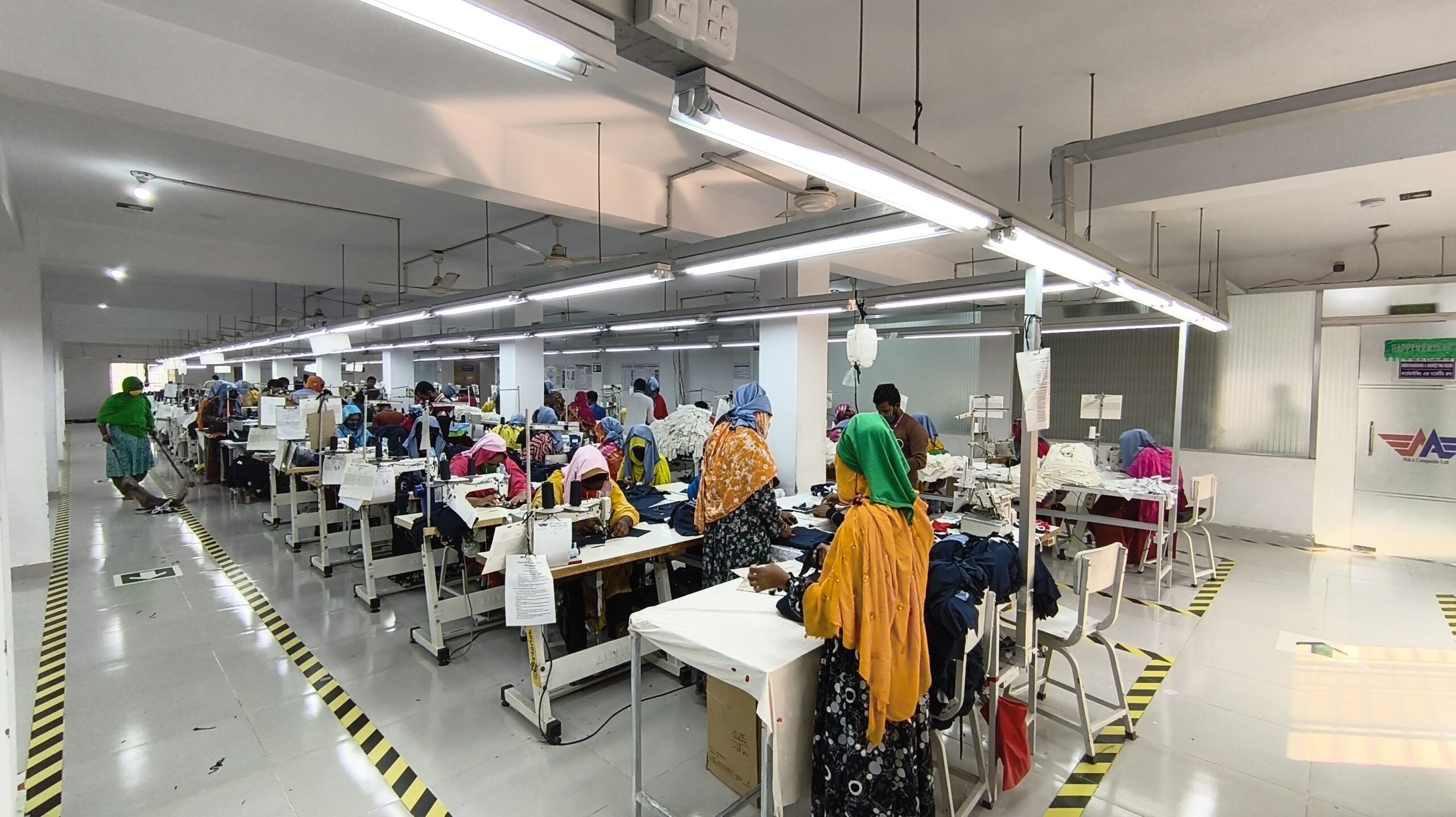
Real company photographs: workers and production activity
The images below are existing company-supplied photographs from M&A Sourcing’s media library. They show sewing-floor activity and garment handling. No new factory scene has been generated for this article.
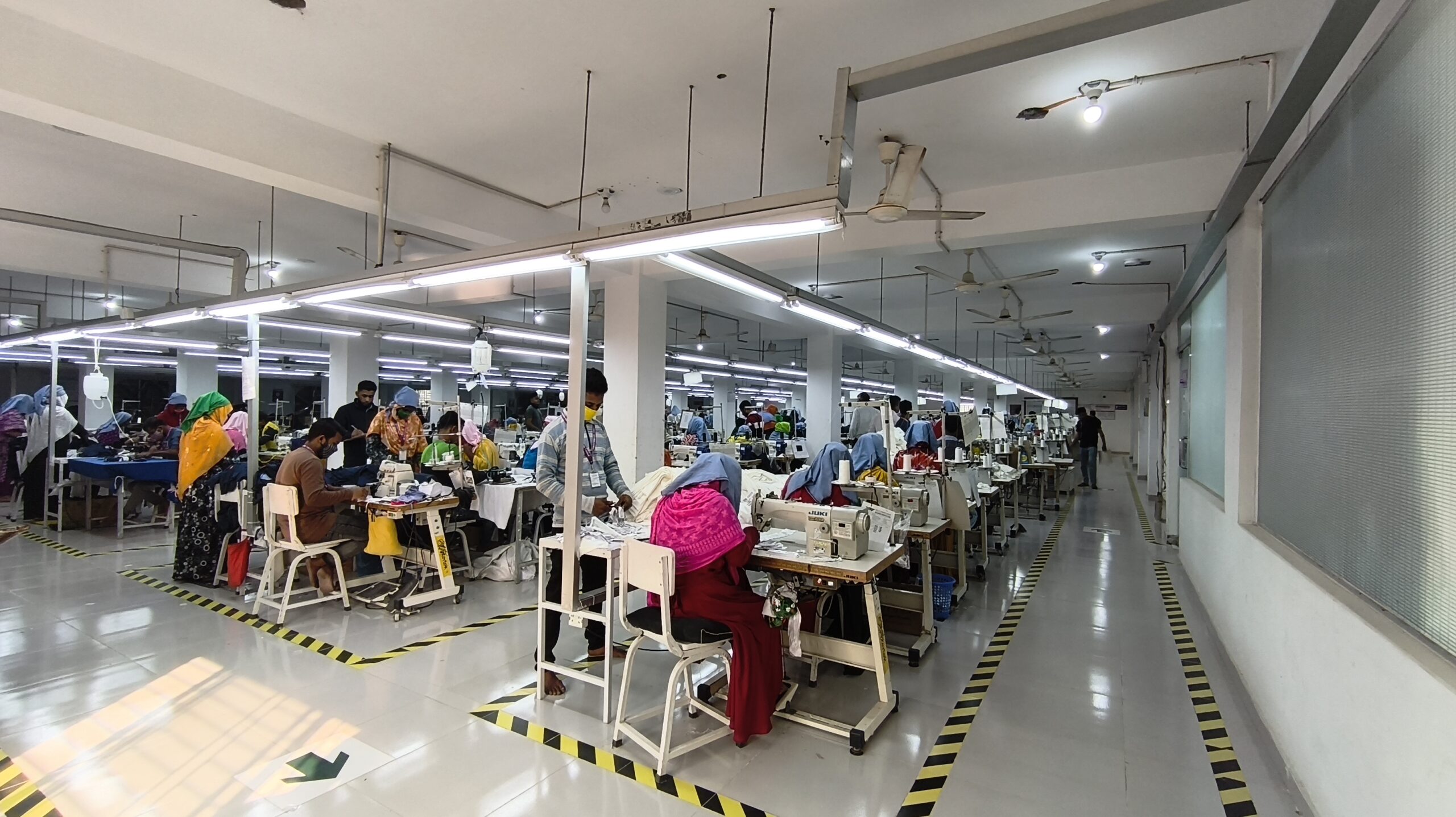
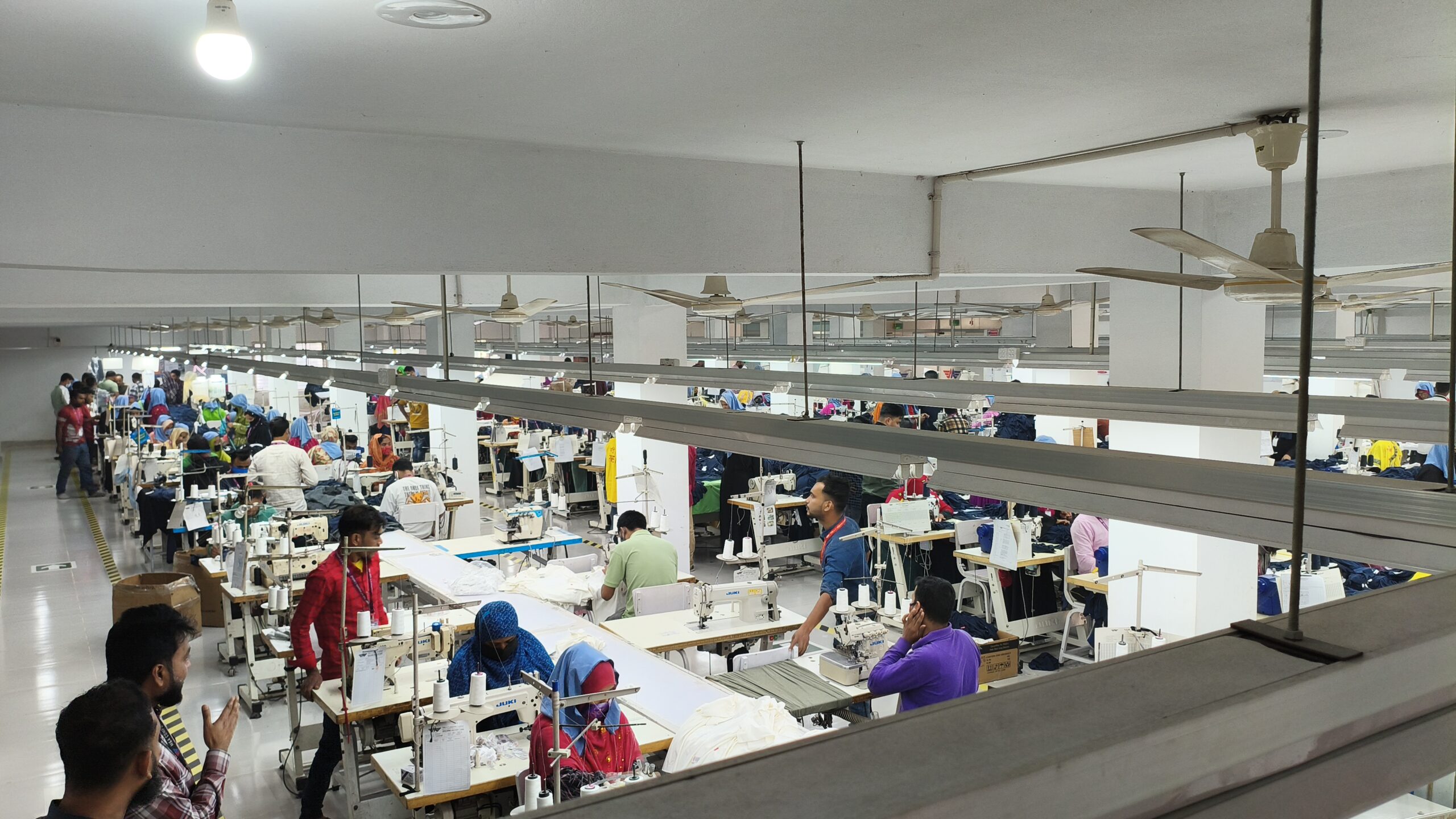
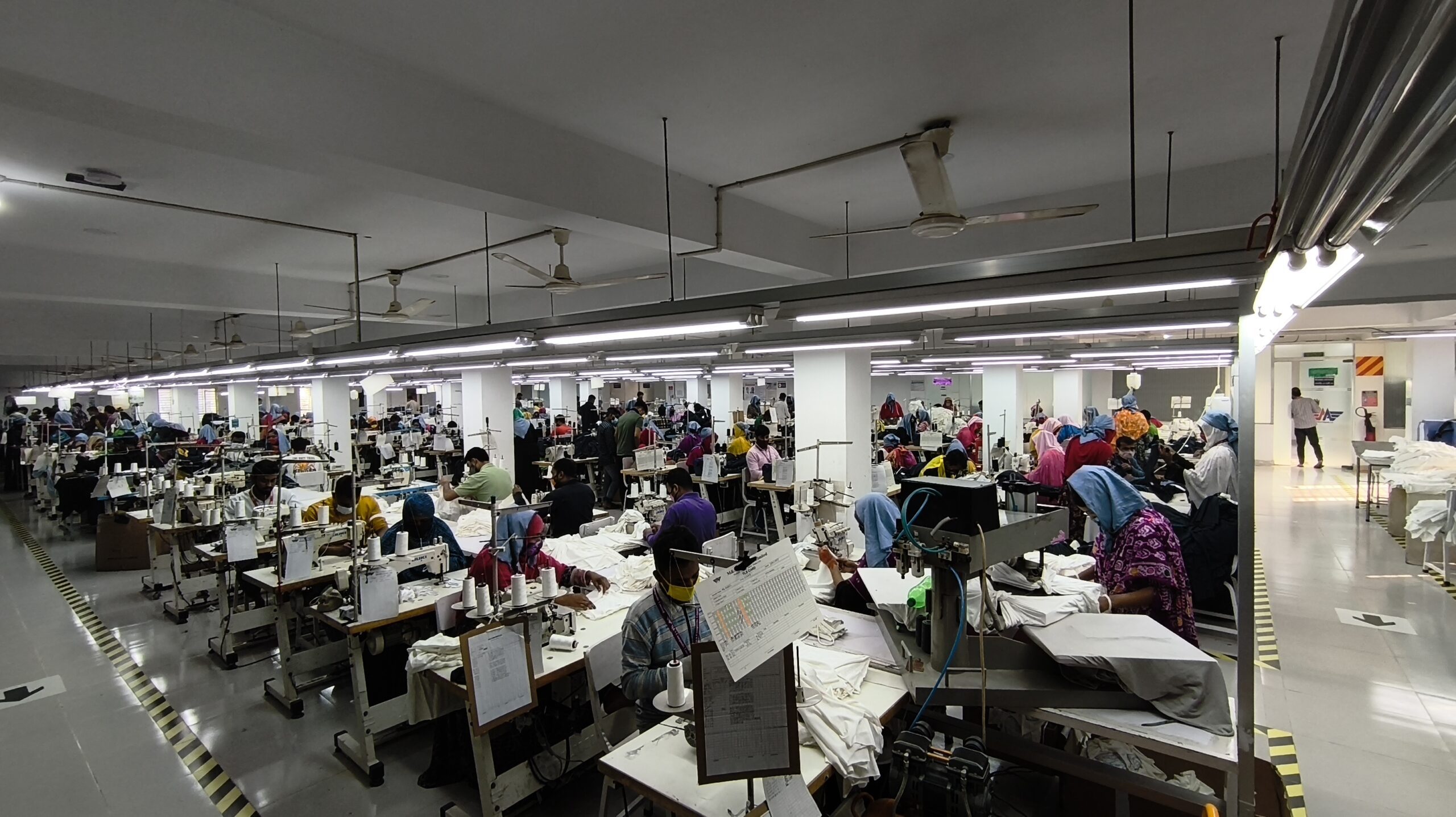
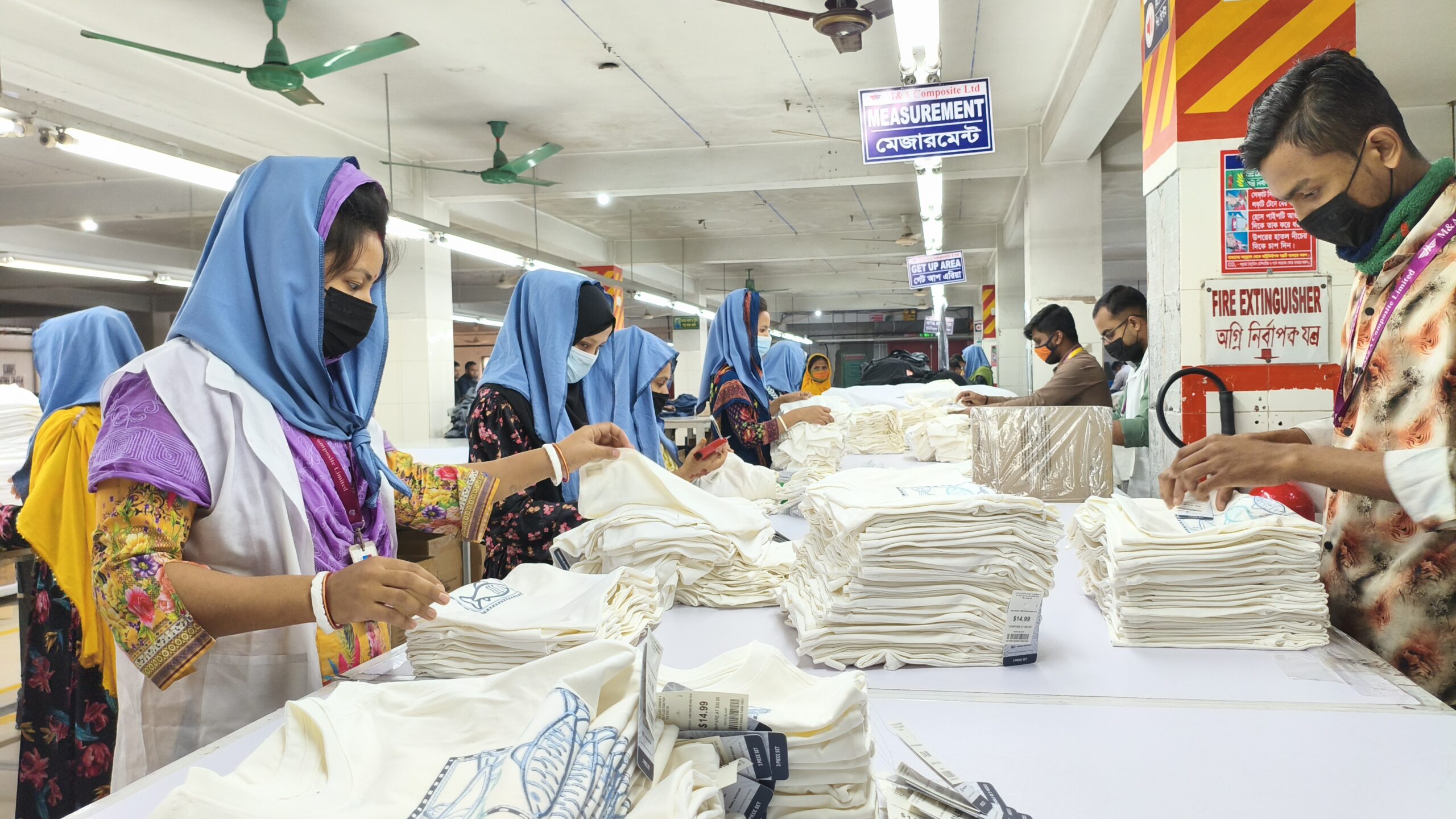
Use these photographs to begin a discussion about the production site proposed for your order. Ask about the relevant machinery, technical staff, production responsibilities and any subcontracted operations. A photograph introduces the working environment; it does not establish capacity, audit status or the results of a particular customer order.
For a workwear-specific assessment, see the 2026 workwear manufacturer buyer guide. This article focuses on factory evaluation and the production records an apparel buyer should request.
10 essential checks before choosing a garments factory in Bangladesh
- Product experience: review samples similar to the proposed style, including construction, finishing and decoration requirements.
- Production site: identify the actual manufacturing location and confirm who is responsible for each operation.
- Technical resources: ask who reviews the tech pack, pattern, size chart and sample comments.
- Material approval: confirm fabric, colours, trims and the evidence required before bulk purchasing.
- Sampling plan: agree the samples needed for fit, construction, branding and production reference approval.
- Quality system: establish measurable acceptance criteria, inspection checkpoints and corrective-action responsibilities.
- Documentation: review relevant audit or certification evidence for the correct entity, site and product.
- Commercial terms: confirm quantity minimums, price assumptions, payment stages and what is excluded.
- Production schedule: connect material and sample approvals with manufacturing and shipment milestones.
- Communication: agree who approves revisions and how updates, issues and changes are recorded.
Compare suppliers using the same specification. A cheaper offer with different fabric, packing or inspection arrangements is an alternative proposal, not a like-for-like price. Ask for assumptions to be written clearly before selecting a supplier.
The checks above are a buyer framework, not a factory ranking. Ask the proposed garments factory in Bangladesh to support relevant claims with samples, records and order-specific evidence.
Garment categories and production requirements
| Category | Examples | What to verify |
|---|---|---|
| Knitwear | T-shirts, polos and knitted tops | Fabric construction, neck or collar recovery, seam methods and decoration |
| Woven garments | Shirts, trousers and uniforms | Pattern accuracy, seam construction, closures and pressing |
| Workwear | Cargo trousers, coveralls and work jackets | Functional details, intended care routine and required performance |
| Outerwear | Jackets, padded garments and layered styles | Material compatibility, lining, insulation details and finishing |
Ask whether the factory has relevant experience with the proposed construction and volume. Review a physical sample, not just a catalogue image. Discuss the material and machinery requirements of the style and how specialised operations will be managed.
Browse M&A Sourcing’s apparel sourcing range, workwear products, shirts and outerwear to prepare relevant product references for an enquiry.
If the design contains protective features, define the required performance and documentation separately. Ordinary apparel production capability does not by itself establish suitability for a certified protective garment.
Fabric, trims and measurable specifications
A usable production brief defines composition, construction, weight, colour, finishing, dimensions and tolerances. GSM measures weight per square metre; it should not be used alone as proof of fabric quality. Garment behaviour also depends on yarn, weave or knit, finishing and construction.
Approve actual swatches and relevant colour references before bulk production. If a development sample uses substitute materials, identify what will change when the proposed bulk materials become available. Agree which approvals must be repeated.
| Item | Buyer requirement | Approval evidence |
|---|---|---|
| Fabric | Composition, construction, target weight and finish | Approved swatch and relevant reports |
| Colour | Reference and agreed comparison method | Approved colour sample or lab dip where applicable |
| Trims | Closures, labels, thread and accessories | Approved trim card or samples |
| Measurements | Size chart, tolerances and measuring instructions | Reviewed samples and current size chart |
| Care and appearance | Agreed laundering and appearance expectations | Defined evaluation method and accepted results |
Define wash checks and acceptance criteria in advance. An informal wash review may inform product development, but it should not be presented as an accredited test report. When test evidence is required, agree the applicable methods and reporting expectations with the supplier.
For decorated knitwear, the T-shirt sourcing guide explains additional sampling and fabric considerations.
Sampling, fit and pre-production approval
A factory order should have one shared production reference. A development sample explores the design, while fit and decorated samples answer different questions. Agree the required sample stages according to the product rather than assuming every programme follows one fixed sequence.
Review sample comments against the tech pack. Check which dimensions, construction details, colours and trims have been accepted and which remain open. If a comment requires a change, update the relevant drawing or specification so the instruction is clear.
Before bulk cutting, identify the approved reference and document version. Confirm whether outstanding materials or approvals prevent production from starting. Keep the reference sample and associated comments available to both the buyer and production team.
For an illustrative example, a jacket programme may use an early sample to approve fit while the final zipper is still being sourced. Fit approval does not automatically approve that zipper or authorise bulk manufacture. Record the remaining trim decision and review the complete reference before release. This is a planning example, not a claim about a completed customer order.
Factory production progress: 7 approval milestones
The bars below show milestone positions in an illustrative production process. They do not represent live order status, measured completion percentages or guaranteed delivery times.
Stage 1 of 7 — Order brief and technical specifications confirmed
Stage 2 of 7 — Materials and colours approved
Stage 3 of 7 — Samples and production reference approved
Stage 4 of 7 — Bulk cutting and sewing monitored
Stage 5 of 7 — Decoration and finishing checked
Stage 6 of 7 — Final inspection and packing verified
Stage 7 of 7 — Shipment documents and release confirmed
Production schedules should connect each approval with the next activity. Separate material sourcing, sample revisions, bulk manufacturing and transit. Ask which approval starts the production clock and how a late change affects the plan.
The sequence of decoration or washing may differ by garment and process. Confirm the factory’s actual route for the proposed style rather than treating this roadmap as a universal technical instruction.
Inline and final quality-control records
Quality requirements need measurable criteria. Define tolerances, appearance expectations, relevant tests and inspection arrangements before production. “Flawless quality” or “international standard” is not a sufficient acceptance instruction on its own.
| Checkpoint | Review focus | Record to request |
|---|---|---|
| Incoming materials | Fabric appearance, colours, trims and specified characteristics | Material approval and inspection findings |
| First production pieces | Construction and measurements against the approved reference | Initial findings and corrections |
| Inline production | Recurring sewing, assembly or decoration issues | Inline reports and corrective actions |
| Final inspection | Measurements, appearance and agreed sampling checks | Final report connected to order and style |
| Packing check | Quantities, labels, size assortments and carton markings | Verified packing list and dispatch records |
If sampling inspection is used, agree the sampling plan and defect categories. Sampling does not establish that every garment has been inspected. Reports should identify the order, style, date and inspected quantity, with clear findings and actions for any failures.
Request evidence that recurring issues were corrected before shipment release. Keep inspection records alongside the approved order file so later programmes can use the same references and learn from earlier findings.
Audit reports and certification: check what each document means
Factory audit records, material certificates and finished-product reports answer different questions. Verify the entity, site, scope and relevant dates before relying on a document. A list of logos does not establish that every site or garment is covered.
Sedex describes SMETA as a social auditing methodology used to assess working conditions and related practices. It is not a certification. Review the relevant report and corrective-action information rather than treating membership or an audit label as a blanket product guarantee.
OEKO-TEX STANDARD 100 addresses textiles tested for harmful substances. Check the scope and validity of a presented certificate using the issuing organisation’s resources. It should not be substituted for a factory social audit or evidence of protective performance.
This article does not certify M&A Sourcing Ltd., every production partner or all products shown. Ask which documents apply to the proposed order and obtain clarification before making a certification or sustainability claim.
Related real images: sourcing staff, samples and production
A garment order connects technical review, sampling, material coordination and factory operations. These existing company photographs show office staff, a sample-display area and sewing-floor activity.
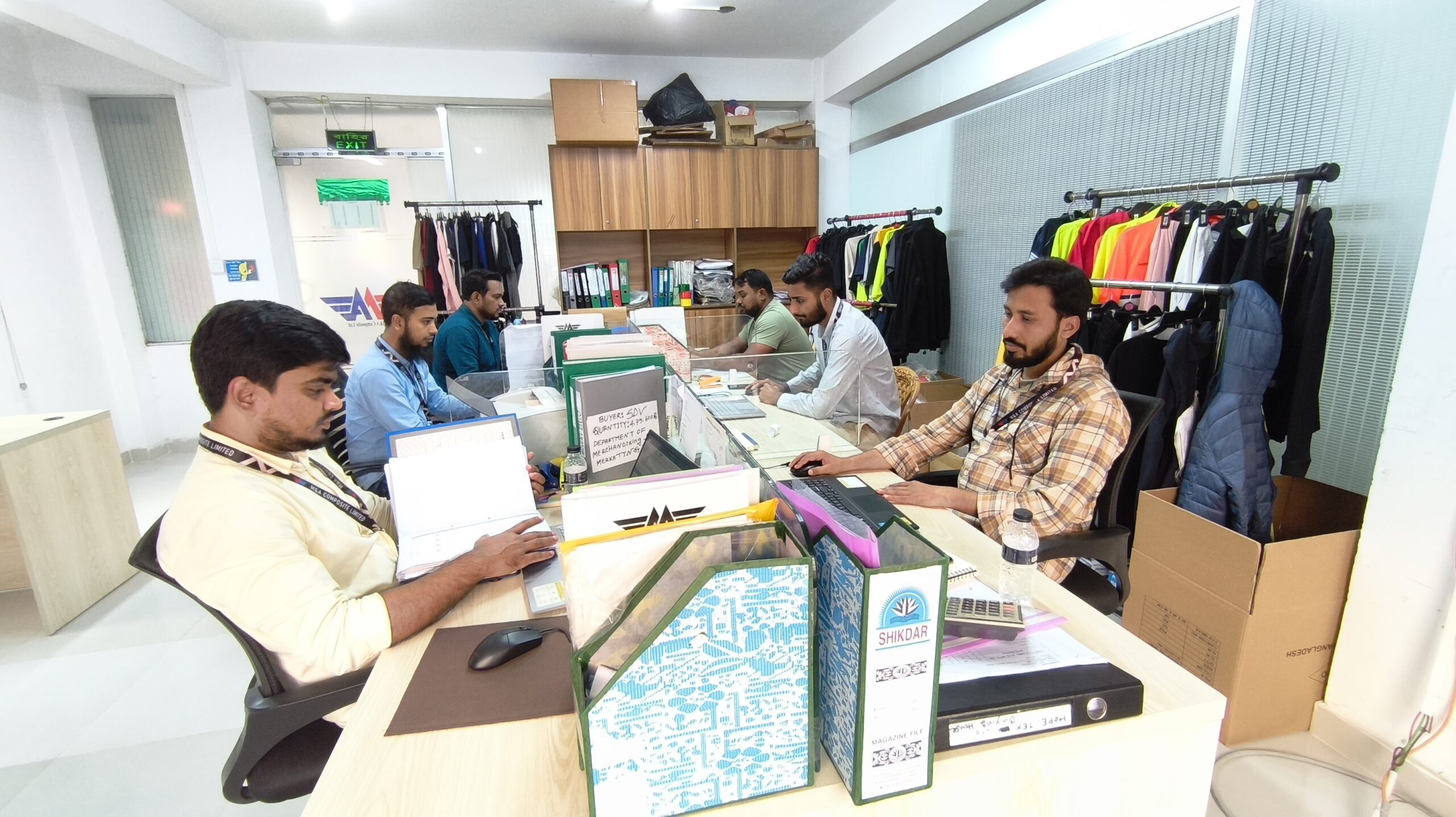
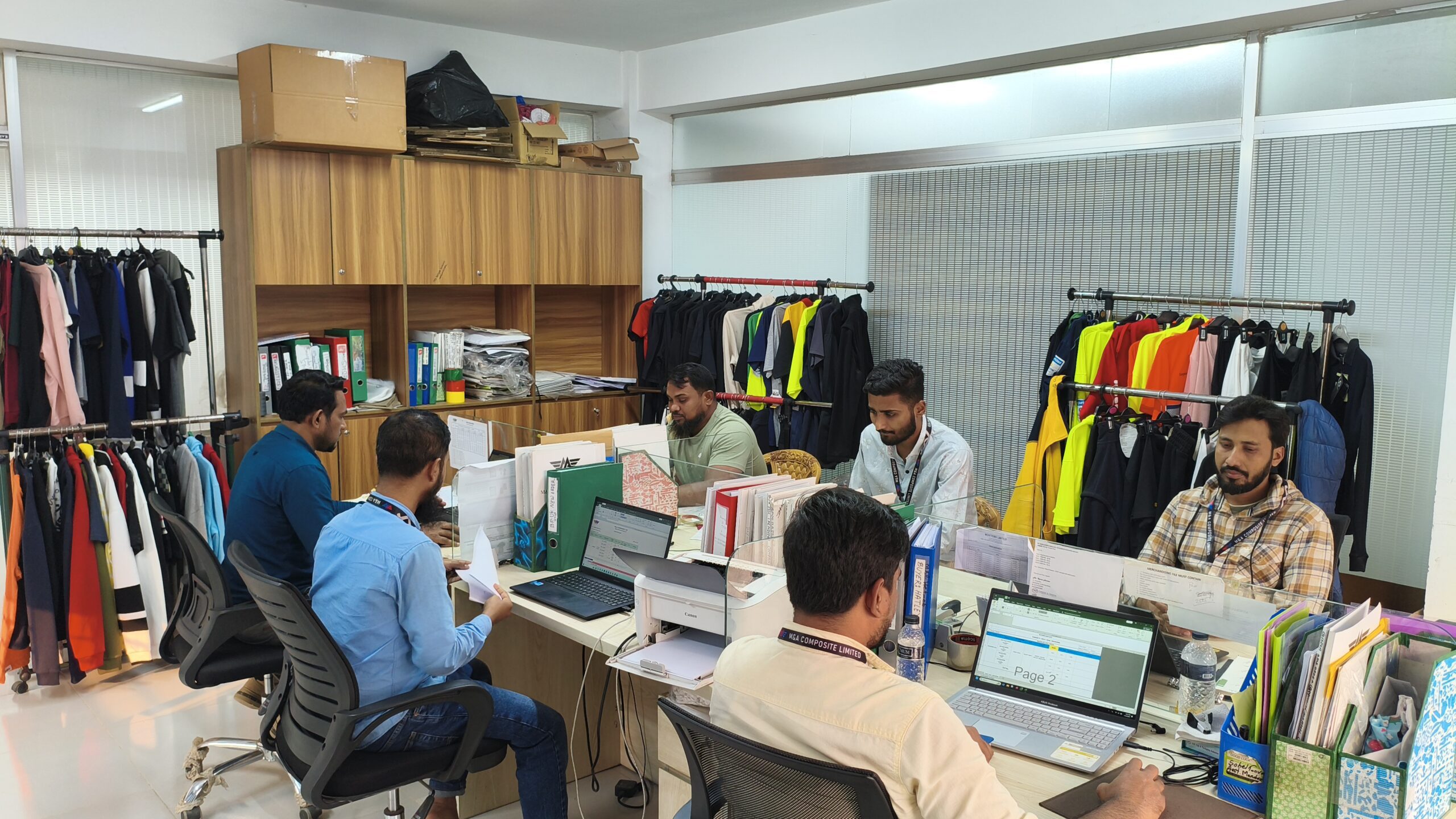
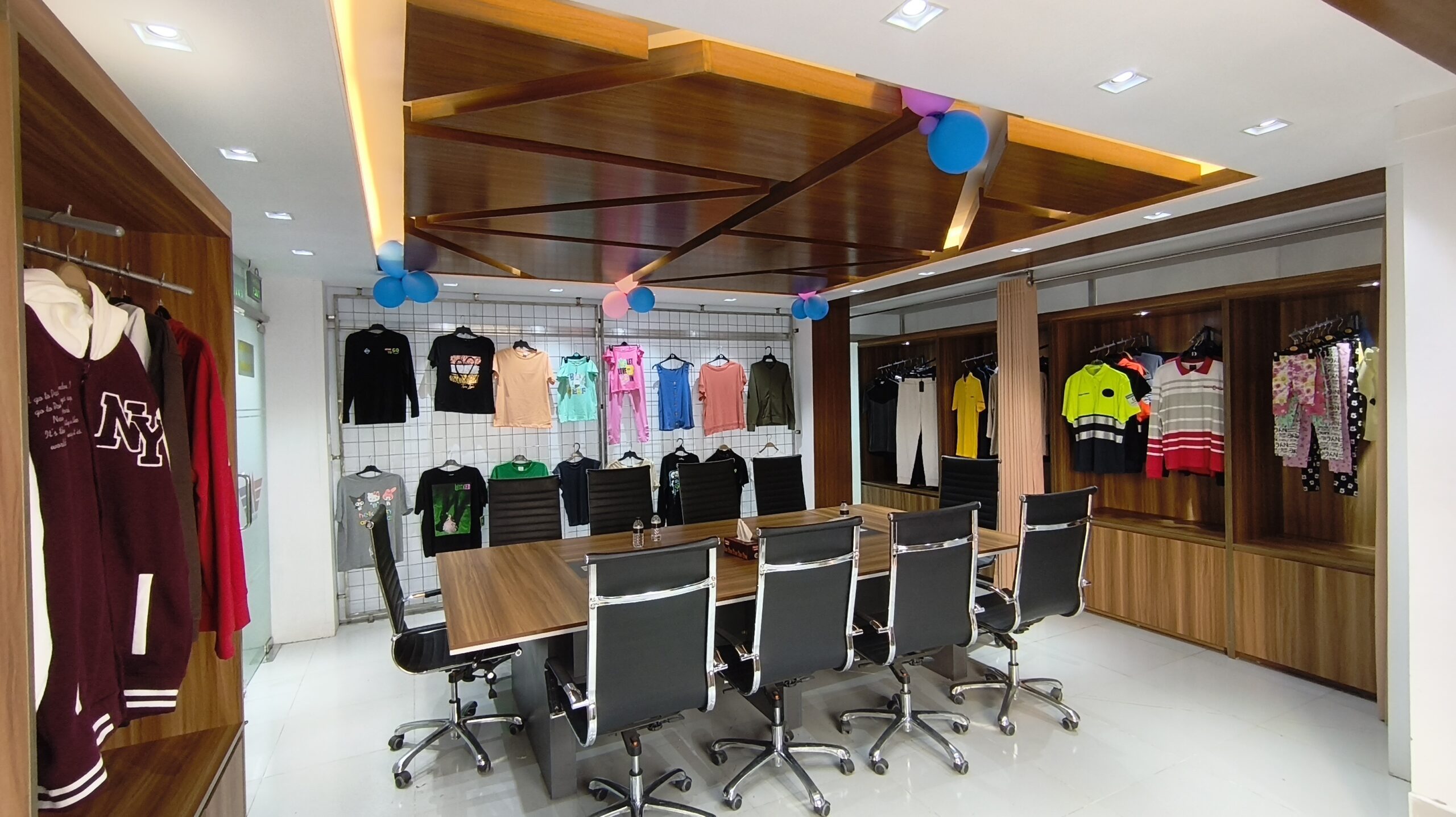
Ask how technical comments reach the factory, who signs off revisions and how buyers receive updates. Photographs introduce the people and environments involved; the approved brief and order-specific records define what will be manufactured.
Related M&A Sourcing products and guides
MOQ, price and lead time: prepare a comparable enquiry
MOQ depends on the product, material purchasing, colour quantities, decoration and custom trims. Request a written minimum for the proposed programme. This guide does not publish an unconfirmed unit price, capacity figure, minimum quantity or delivery commitment.
| Enquiry item | Details to provide |
|---|---|
| Style | Tech pack, reference samples, construction and size chart |
| Materials | Composition, weight, colour reference, finish and trims |
| Quantities | Breakdown by style, colour and size |
| Decoration | Authorised artwork, labels and placement details |
| Quality | Acceptance criteria, inspections and required documentation |
| Delivery | Destination, requested dates, proposed terms and packing requirements |
Compare the complete quotation scope. Confirm currency, validity, payment stages, inspection, packaging and delivery assumptions. If a supplier proposes a different material or construction to meet a budget, record the change clearly before approving it.
Ask for separate sampling, material sourcing, manufacturing and transit milestones. Review the requested delivery date against approvals and availability; a buyer’s preferred date is not a confirmed supplier commitment.
Request a garment manufacturing quotation or discuss samples with M&A Sourcing’s team using the information above.
Change control, shipment checks and repeat orders
Keep one current order file containing the tech pack, bill of materials, artwork, quotation, sample comments and approval log. Name the version and approver for every decision. Scattered messages should not become competing production instructions.
If material, trim or construction changes are proposed, ask how the change affects appearance, function, price and timing. Decide whether new sampling or testing is needed, then approve the revision before it reaches bulk manufacture.
For repeat programmes, confirm which fabric, colour and trim references can be maintained. A reorder may still require reapproval if the material source or design changes. Keep current size charts and artwork accessible to the factory and merchandising team.
At shipment release, reconcile the packing list with the approved size and colour breakdown. Confirm required labels, carton markings and documents. Save inspection findings and unresolved issue notes with the programme so the next enquiry starts with clear evidence rather than memory.
Frequently asked questions
How do I choose a garments factory in Bangladesh?
Compare relevant samples, production responsibilities, technical resources, material approval, quality evidence, documentation and commercial terms. Confirm the site and scope proposed for your own order.
Does every factory make both knit and woven garments?
No. Product experience, machinery and technical resources vary. Ask whether the proposed factory has relevant experience with the construction, material and quantities in your programme.
What services can I discuss with M&A Sourcing Ltd.?
The company describes apparel sourcing, merchandising, manufacturing and quality-control services. Confirm availability and responsibilities for your specific garment, sampling and shipment requirements.
Are the factory and office images real company photographs?
The galleries use existing media-library photographs identified by M&A Sourcing as its real images. They show garment workers, production activity, office staff and sample displays.
What is the MOQ for garment production?
MOQ depends on product, fabric, colour quantities, decoration and trims. Request a written minimum for the actual programme; no universal MOQ is confirmed in this guide.
How long does a garment order take?
Material availability, sample revisions, quantity, capacity and transit affect timing. Confirm separate approval, production and shipment milestones with the supplier.
How should I approve samples?
Review fit, construction, materials, colour, decoration and care expectations. Close comments and identify the production reference and document version approved before bulk manufacture.
Does a SMETA audit mean a factory is certified?
No. Sedex describes SMETA as a social auditing methodology rather than a certification. Review the applicable report, site scope and corrective-action information.
How can I check quality before shipment?
Agree acceptance criteria and inspection arrangements in advance. Review production findings, corrective actions, final inspection and packing records before release.
How do I request a quotation?
Contact M&A Sourcing with your tech pack, material preferences, size and colour quantities, artwork, quality requirements and delivery destination. Ask for a proposal with clear assumptions.
Discuss your garments factory in Bangladesh requirements
Prepare your specifications, quantity breakdown and delivery requirements, then discuss an order-specific proposal and sample plan with M&A Sourcing Ltd.
Request a Garment Manufacturing Quotation | Discuss Samples on WhatsApp
Email: info@mnasourcing.com
Office: House 06, Road 12, Sector 09, Uttara, Dhaka 1230, Bangladesh.