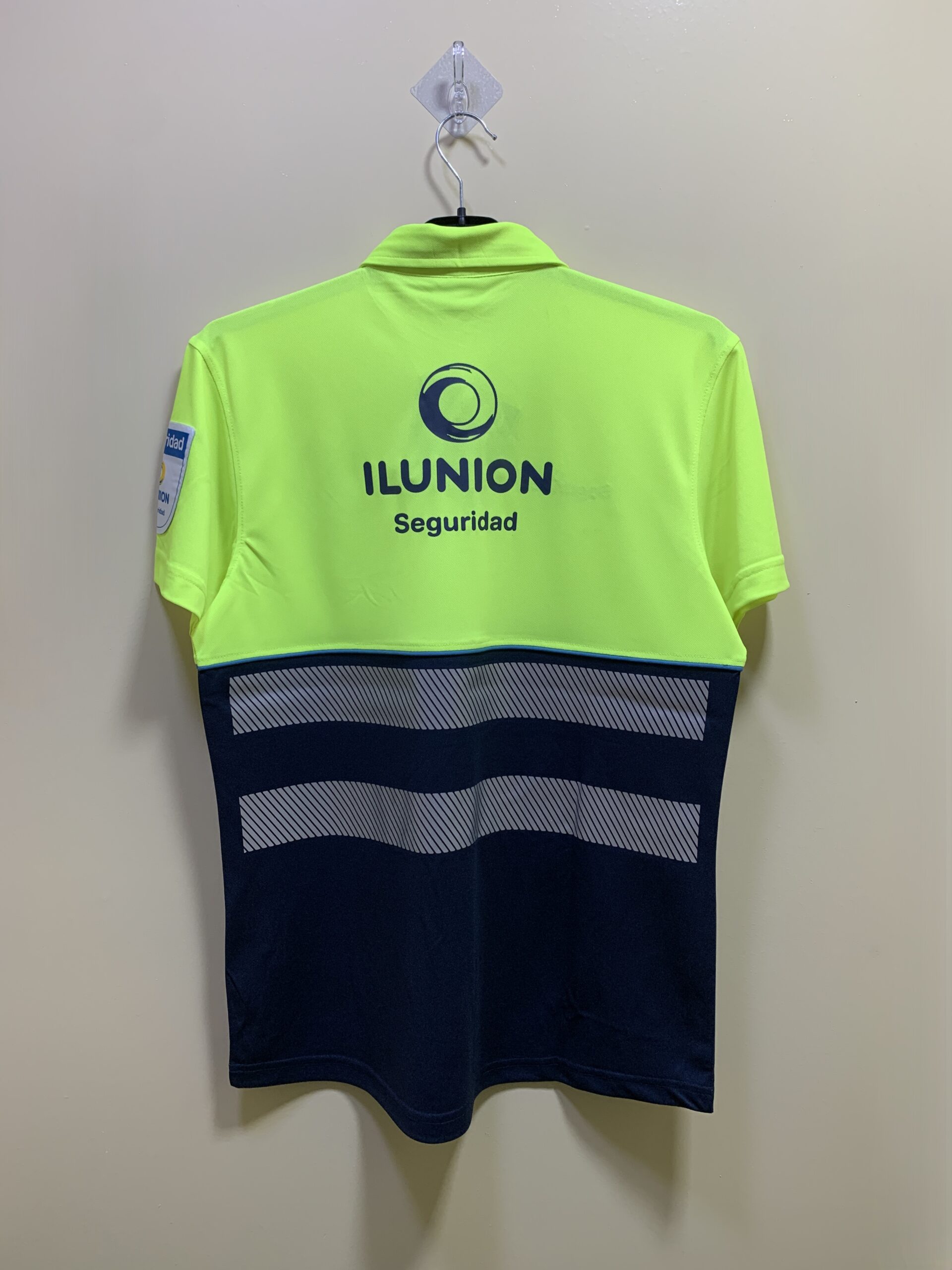
Garments Sourcing and Exporter in Bangladesh: 10 Essential Buyer Checks
Published by M&A Sourcing Ltd. | Updated: 7 October 2026
Looking for garments sourcing and exporter in Bangladesh services? Review the product, production arrangement, commercial parties, quality records and shipment responsibilities before committing to an apparel order. This guide helps international buyers prepare sourcing and export enquiries with M&A Sourcing Ltd.
Explore real company photographs, buyer comparison tables, a seven-stage roadmap and practical FAQ answers covering sourcing-to-shipment coordination.
Discuss Your Apparel Sourcing and Export Enquiry →
Garments sourcing and exporter in Bangladesh: clarify the complete order
Searching for garments sourcing and exporter in Bangladesh services involves two connected questions: how will the apparel be developed and produced, and who will coordinate its commercial and shipment requirements? Both need clear answers before a buyer places an order.
M&A Sourcing Ltd. offers apparel sourcing and export-related coordination for workwear, uniforms and other garment enquiries. Confirm the manufacturing entity, seller, exporter and agreed service scope for the proposed programme. These roles should be identified in the commercial arrangement rather than inferred from a marketing description.
This guide focuses on the handover from sourcing decisions to shipment readiness. It includes practical buyer checks, real company images, document-review questions and a visual milestone sequence. No fixed MOQ, delivery time or blanket certification is offered here.
For the development workflow, read our garments sourcing guide. For published industry context, consult the Bangladesh Garment Manufacturers and Exporters Association.
Sourcing partner, manufacturer, seller and exporter: identify each role
A buyer may communicate mainly with one sourcing contact, while several entities perform the production and shipment activities. Ask who signs the order, manufactures the goods, issues the commercial documents and coordinates transport.
| Role | Question for the buyer | Written reference |
|---|---|---|
| Sourcing partner | Which development, merchandising and monitoring services are included? | Agreed service scope |
| Manufacturer | Which site makes the garments and what is subcontracted? | Named factory and operations |
| Contracting seller | Who accepts the purchase order and commercial obligations? | Contract or accepted order |
| Exporter | Which entity is responsible for the export arrangement? | Named entity and agreed responsibilities |
| Inspection provider | Who performs checks and reports findings? | Inspection scope and acceptance plan |
| Transport coordinator | Who arranges booking and communicates dispatch details? | Commercial terms and logistics instructions |
Clarify payment recipient details through the agreed commercial process before paying. If an entity or instruction changes, resolve the discrepancy through verified contacts. Keep the accepted parties and responsibilities with the purchase order.
Use the sourcing house evaluation guide to assess coordination services separately from the manufacturing and export arrangement.
Real company photographs: staff, samples and coordination
These existing company-supplied photographs show office staff, sample-related meeting space and production activity. They introduce the working environment behind the apparel sourcing discussion.
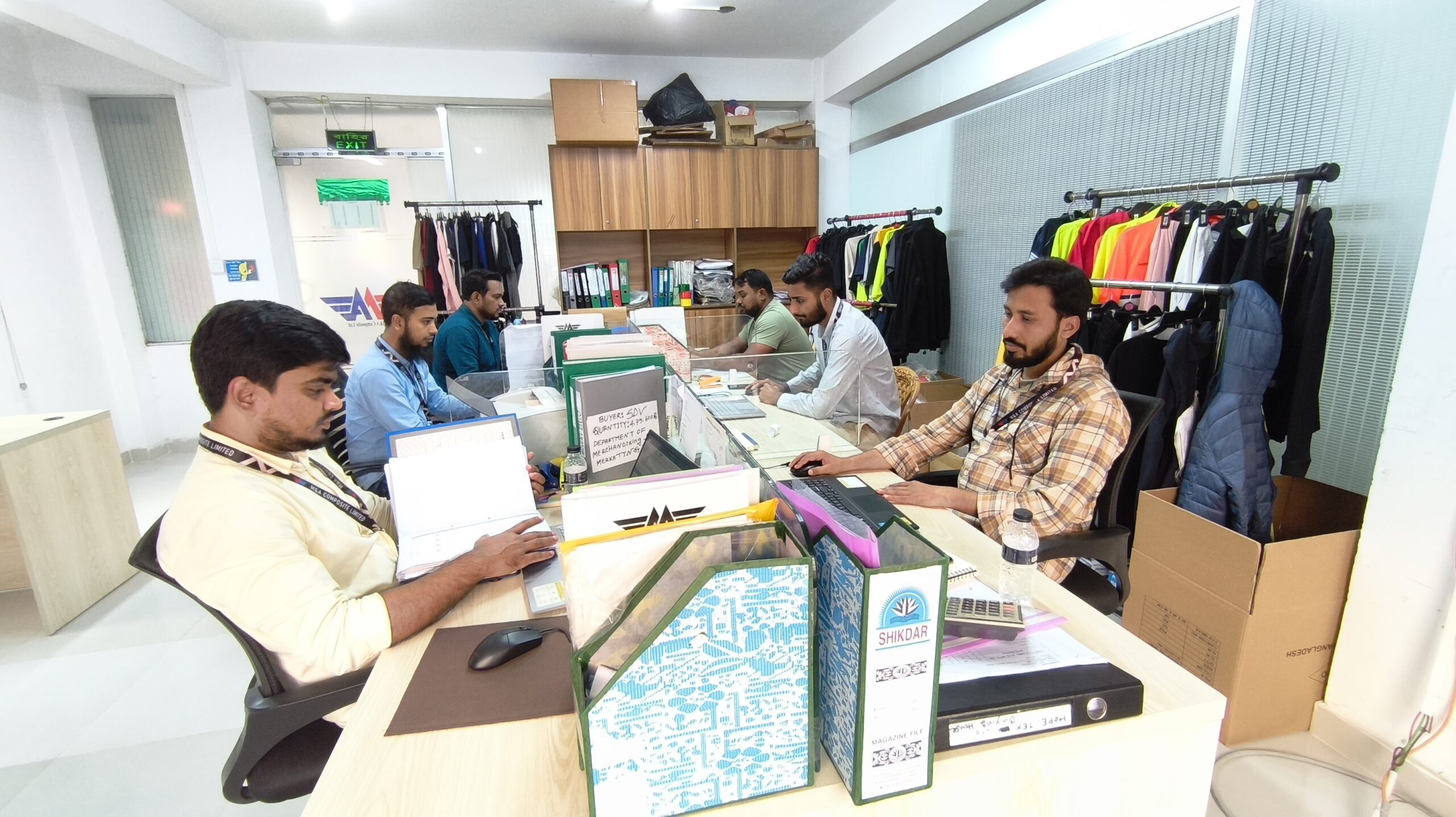
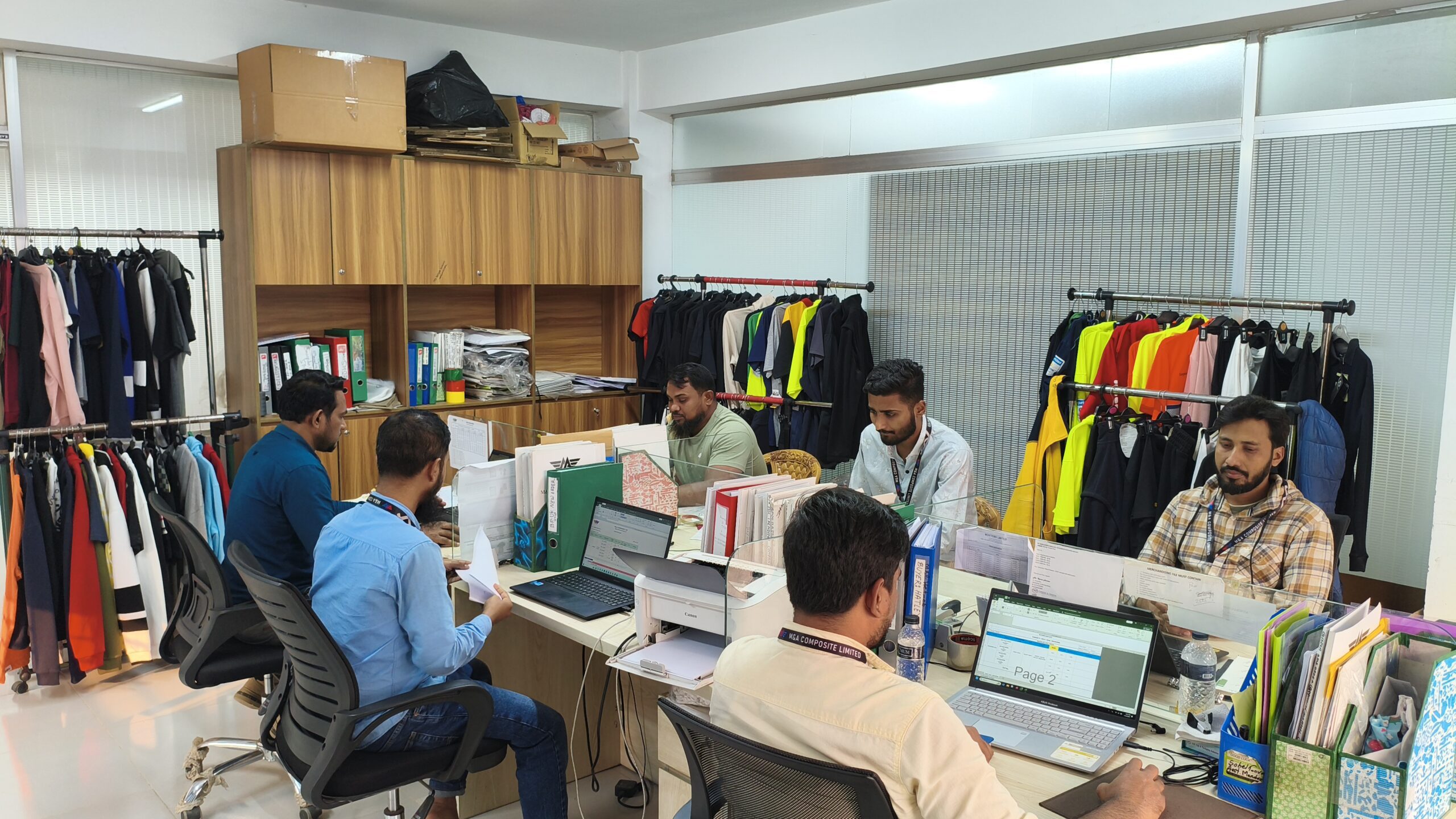
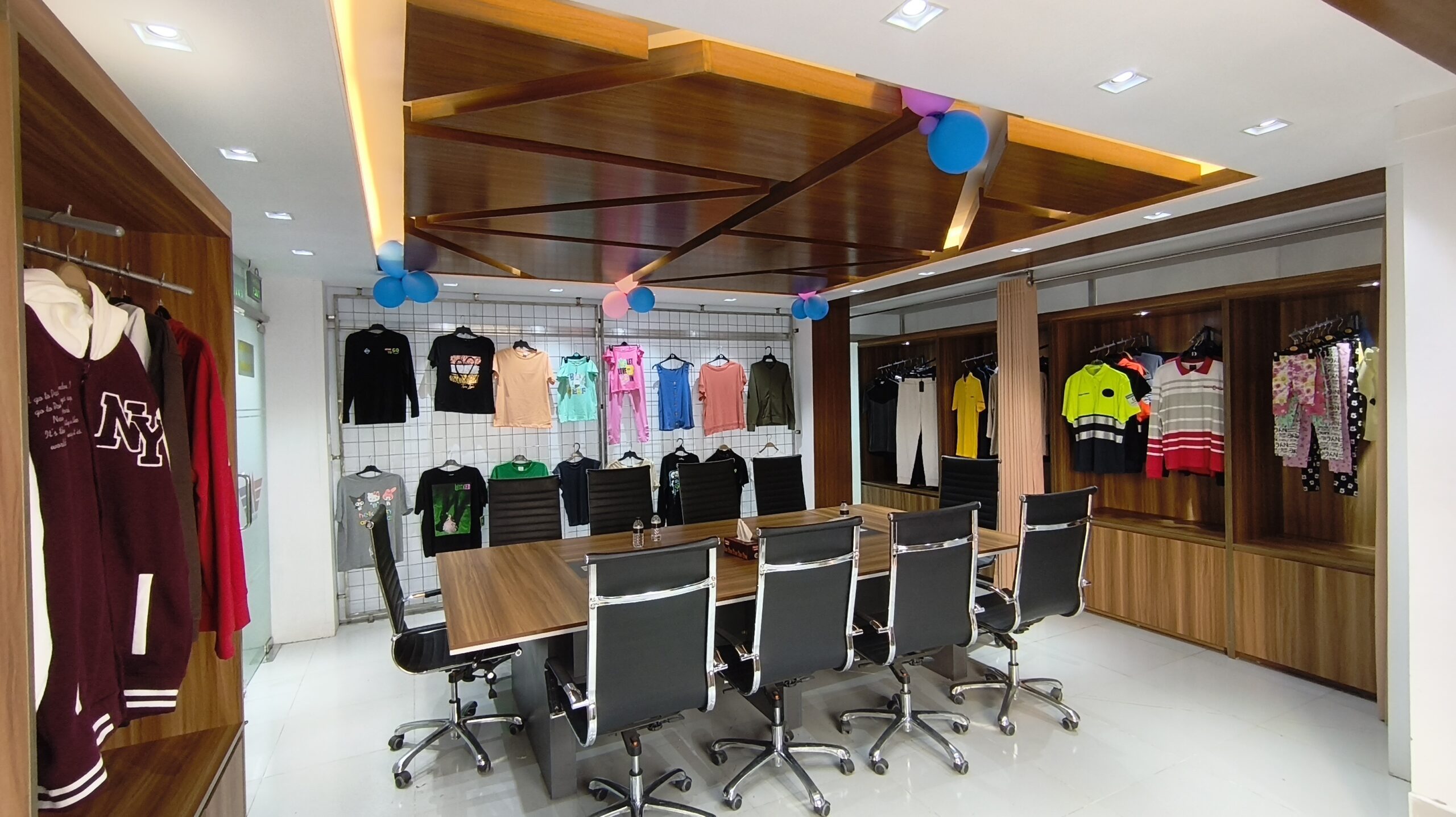
Ask who will own the sample log, order tracker and shipment-document review for your programme. A named contact and escalation route help connect development decisions with the commercial and production teams. The photographs provide context; current records support specific capability claims.
10 essential buyer checks for sourcing and export coordination
- Product brief: confirm the tech pack, material requirements and intended use.
- Order allocation: record quantities by style, colour and size.
- Commercial parties: identify the seller, manufacturer and export entity.
- Factory suitability: review comparable samples and the proposed operations.
- Approvals: identify the accepted materials, fit, artwork and packing references.
- Quotation scope: confirm inclusions, exclusions and the agreed delivery basis.
- Quality evidence: define inspection requirements and corrective-action decisions.
- Documentation: agree the required document list and review responsibilities.
- Shipment planning: connect production readiness with booking and dispatch milestones.
- Change control: approve revisions to specification, price, quantity or dates in writing.
Apply these checks to the actual order. General export experience does not replace confirmation of the destination, product requirements, transport arrangement and document instructions for your shipment.
For a factory-specific checklist, see the garments factory buyer guide. Separate product acceptance from shipment coordination so an unresolved quality issue remains visible.
Product coverage: workwear, uniforms and other apparel
| Programme | Development focus | Shipment preparation focus |
|---|---|---|
| Workwear and coveralls | Construction, fit, pockets, reinforcement and care requirements | Size allocation, garment identification and agreed evidence |
| Corporate and institutional uniforms | Colour consistency, branding and fit | Sets or separate garments, labels and packing allocation |
| T-shirts and polos | Fabric construction, dimensions and decoration | Style-colour-size matrix and retail or bulk packing |
| Work jackets and outerwear | Shell, lining, closures and layering allowance | Packing approach, carton details and accepted references |
Choose the production arrangement according to the product rather than assuming one factory can handle every category. Review a physical sample or relevant technical evidence, and identify specialised operations before accepting the proposal.
Explore the workwear manufacturer guide, custom workwear guide and T-shirt buyer guide for category-specific development questions.
If the product needs protective performance, define its requirements and supporting evidence separately. An industrial appearance or reflective detail does not by itself establish certified protection.
Prepare an export-ready buying brief and quotation comparison
Send the sourcing partner a dated specification, material requirements, quantity matrix, branding and packing instructions. Include the destination, intended delivery information and any document instructions already supplied by your buyer or appointed provider.
Ask the quotation to identify assumptions, open requirements and the revision it uses. Compare offers on the same product, quantity and delivery basis. Different fabrics, packing or inspection inclusions can make apparently similar prices represent different programmes.
Confirm minimums by style, colour, fabric and trim. Agree sample costs, additional evaluations, inspection charges where applicable and the validity of the offer. Request an order-specific schedule identifying material, approval and payment dependencies.
For example, a distributor ordering several colours may need separate fabric allocations and retail garment identification. An employer ordering uniform sets may have a different packing plan. These are planning examples; ask for terms matching the actual programme.
For bulk assortment and repeat-order questions, read our wholesale workwear guide.
Trade terms and transport responsibilities: agree the named place
Record the agreed delivery basis clearly, including the named place and applicable version where relevant. Compare quotations consistently and ask which transport-related activities and costs are included in each offer.
The International Chamber of Commerce’s official Incoterms guidance explains that these rules clarify tasks, costs and risks involved in delivering goods between sellers and buyers. Use the official rules and the agreed contract when deciding the arrangement for your shipment.
Confirm who handles booking, cargo handover, document preparation and communication with the appointed transport provider. Discuss which dates are production targets, booking milestones or estimated transport dates rather than treating them as interchangeable.
If transport or delivery instructions change, request the cost and schedule impact before acceptance. Keep revised instructions with the order record and share them with the responsible parties.
Sampling, material approval and pre-production release
Agree the sample stages needed to resolve fit, construction, colour, trims and branding. A development sample and an approved production reference serve different purposes. Record what each sample establishes and what remains open.
Check whether development uses the proposed bulk materials. If there are substitutes, identify the differences and any further approvals required. Review labels and packing references as part of the order rather than assuming they are covered by garment approval.
Before production release, consolidate the accepted sample, tech pack, measurement chart, artwork, material references and packing instructions. Confirm who authorises release and which revision controls the factory.
When a detail changes, record the affected component and review its product, cost and timing impact. Precise changes are easier to implement than broad comments such as “improve the quality.” Keep accepted details separate from outstanding revisions.
Sourcing-to-export progress: 7 approval milestones
These progress bars illustrate the sourcing-to-shipment sequence. They are not a live order status, completion percentage or delivery guarantee.
Identify specifications, quantities, destination and commercial parties.
Confirm the production arrangement, service scope and delivery basis.
Close fit, construction, colour, trims and branding comments.
Confirm the reference pack, production schedule and inspection plan.
Review findings, corrections and the accepted quantity allocation.
Resolve discrepancies against the order and logistics instructions.
Record agreed handover details and preserve final order references.
For an actual order, maintain a dated tracker with an owner, planned date, actual date, open issue and next action. Update dependent production and shipment milestones when an approval or material changes.
Quality records and shipment-release decisions
Define measurable acceptance criteria and inspection responsibilities before bulk production. Agree the required sample, material, inline, final and packing reviews. Identify what evidence reaches the buyer and who accepts corrective actions.
| Record | What to review | Decision supported |
|---|---|---|
| Approved production reference | Current sample, specification, materials and artwork | Whether production follows accepted instructions |
| Inline findings | Issue, affected style, action and follow-up | Whether production corrections are resolved |
| Final inspection | Results against the agreed inspection plan | Acceptance, rework or further review |
| Packing verification | Labels, marks, carton quantities and allocation | Whether packing matches buyer instructions |
| Outstanding-issue log | Unresolved product, packing or document points | Whether release conditions have been satisfied |
If acceptance sampling is used, agree the method, levels and defect categories. An AQL reference alone does not define the whole plan or mean every garment has been checked.
Keep production completion, inspection acceptance and shipment release as identified decisions. If a report contains unresolved findings, record the agreed response rather than treating the existence of a report as automatic approval.
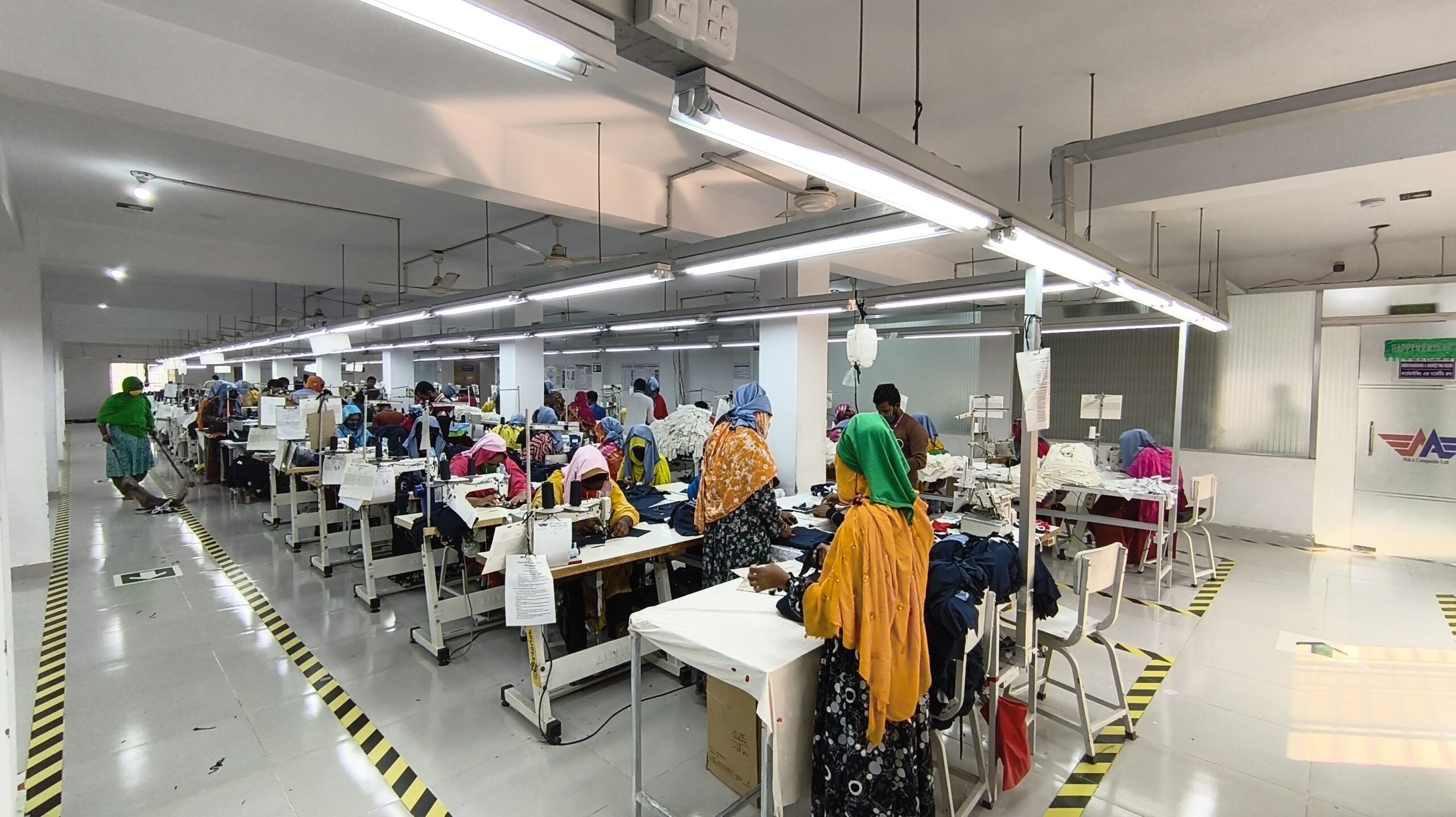
Related real images: workers, sewing lines and garment handling
These company photographs show sewing-floor activity and garment handling. Discuss the production site proposed for your programme and request current project-specific updates when needed.
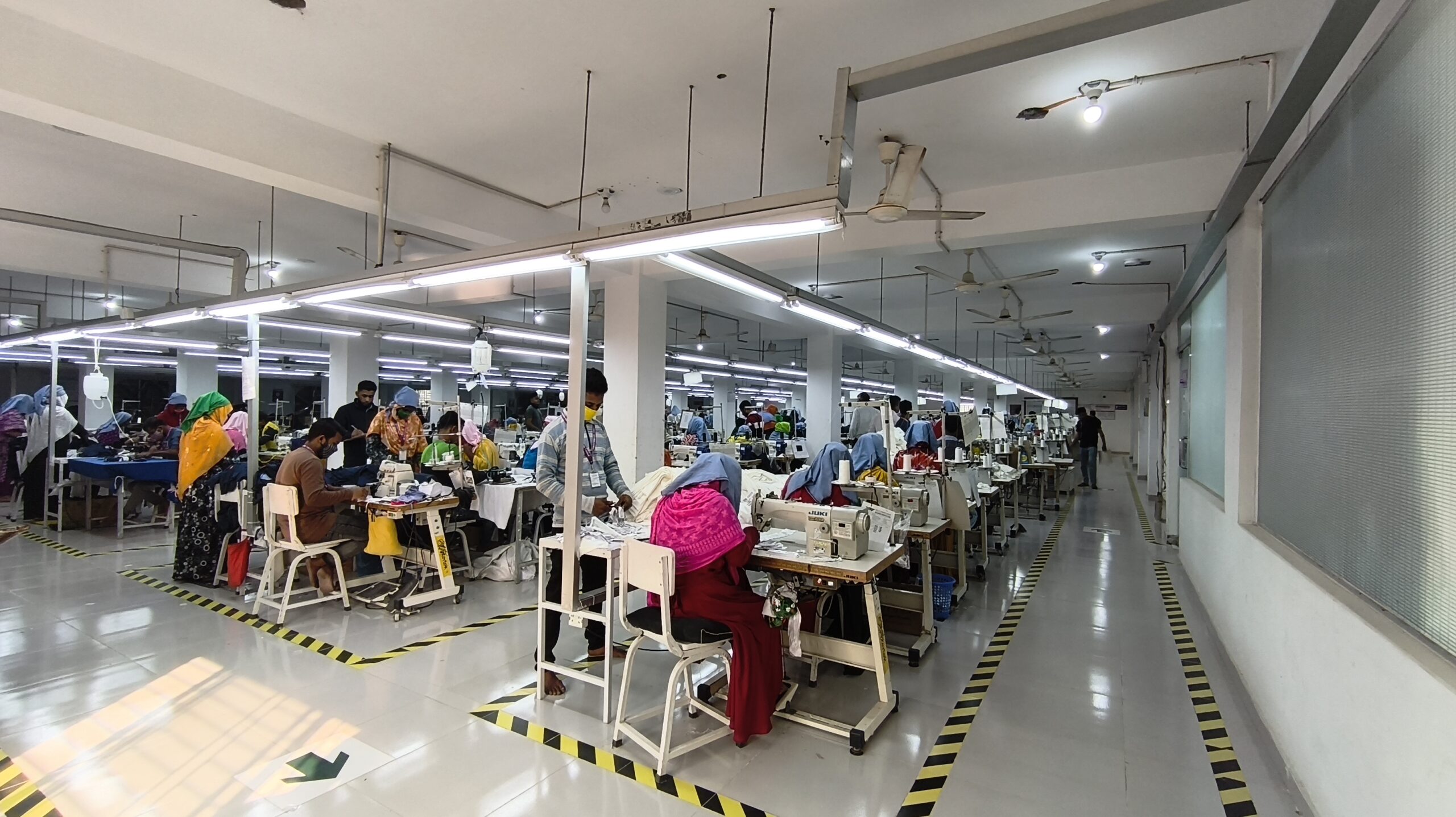
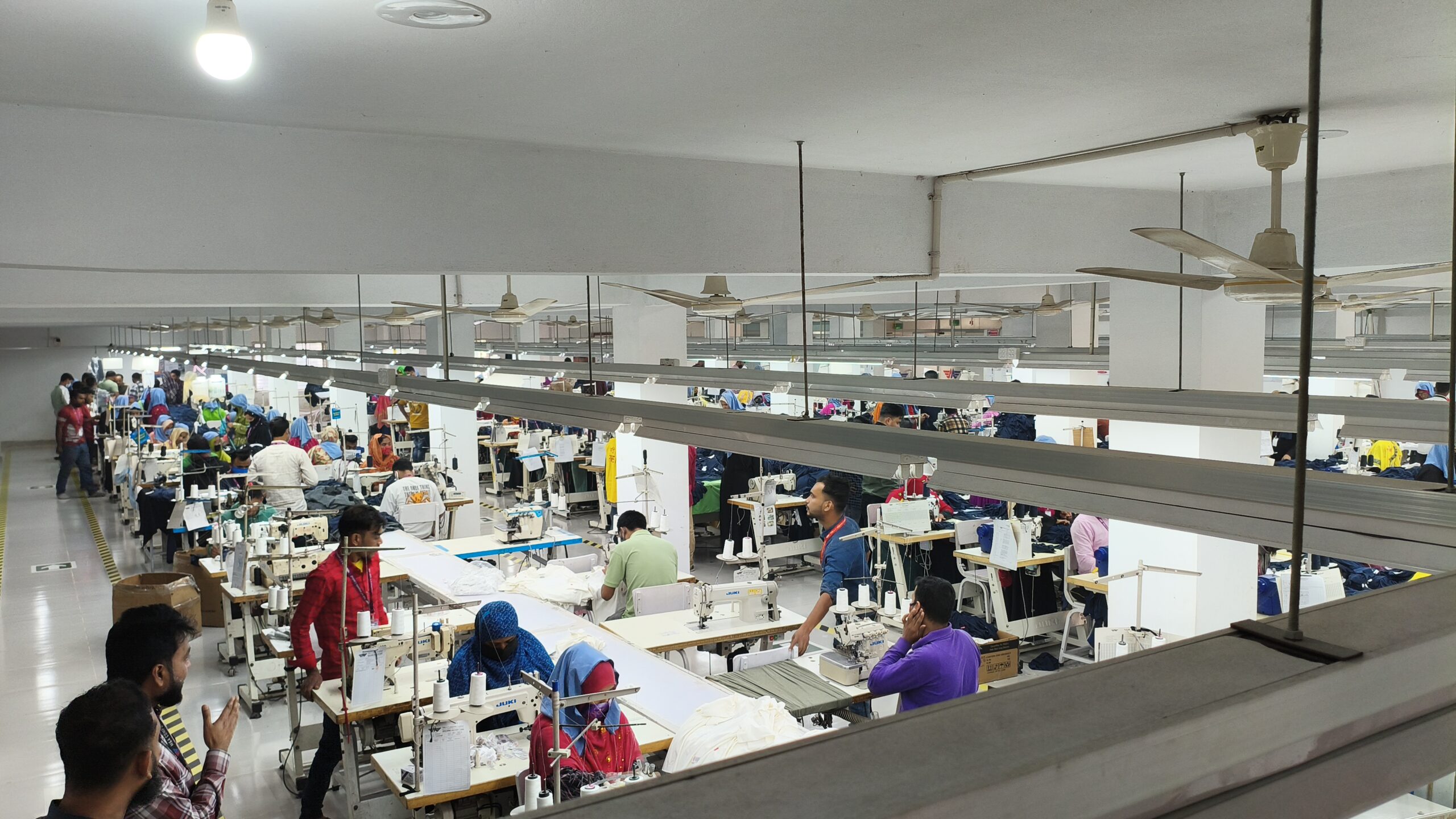
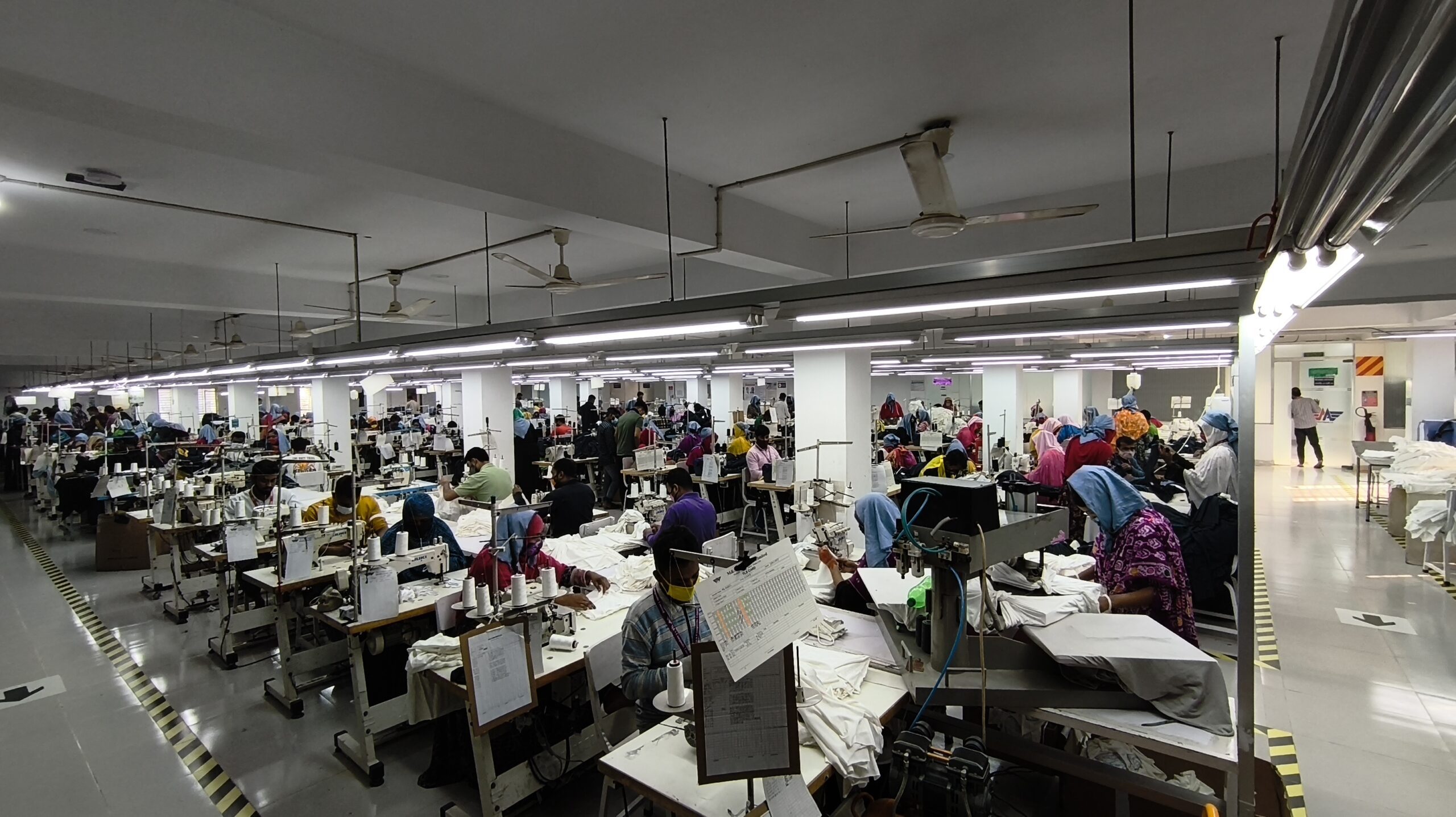
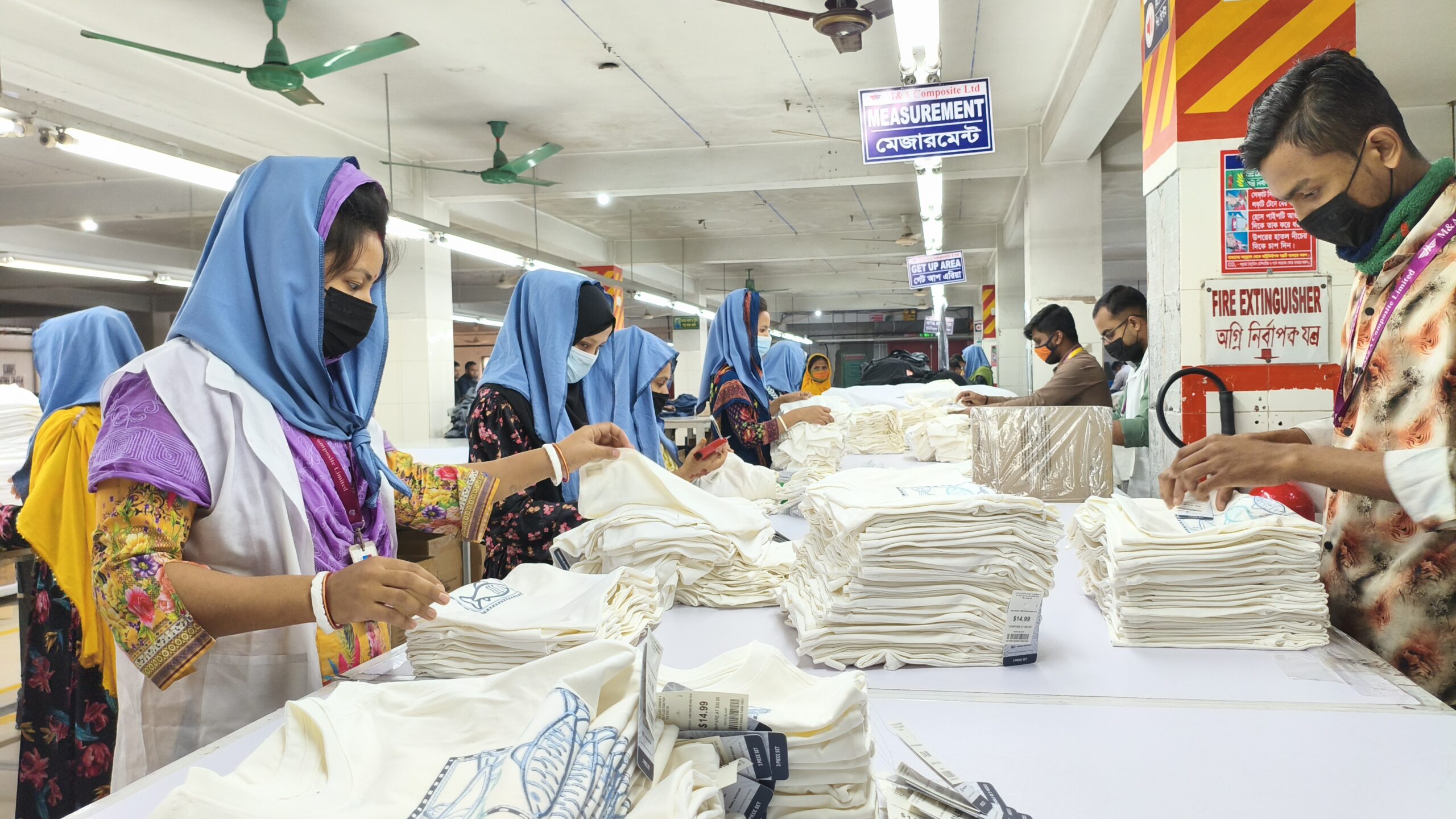
The pictures introduce the working environment. They do not establish a specific customer shipment’s status, current capacity or factory audit result. Connect production updates with dated records and the approved inspection scope.
Shipment-document review: agree the list for the actual shipment
Agree a document checklist with the buyer and the appointed providers before dispatch. The required list depends on the product, destination, transaction and transport arrangement. The table below is a review framework, not a universal customs-document requirement.
| Category | Review question | Responsibility to confirm |
|---|---|---|
| Commercial invoice | Do descriptions, parties, quantities and values match accepted instructions? | Who prepares, reviews and approves the invoice? |
| Packing list | Do garment allocation, carton counts and recorded weights match the shipment? | Who verifies the physical packing information? |
| Transport document | Are parties and shipment details consistent with the booking instructions? | Who coordinates review with the carrier or forwarder? |
| Origin-related evidence, where required | Has the relevant requirement and supporting information been confirmed? | Who arranges and reviews the applicable evidence? |
| Product or inspection evidence, where required | Does the scope relate to the agreed product and shipment? | Who supplies and checks the relevant reports? |
Resolve inconsistencies before final release. If a style description, quantity or consignee instruction changes, identify which documents and packing references also need updating. Keep the final approved versions in the order record.
Ask the appointed providers to confirm current destination-specific requirements for the actual shipment. Avoid copying a previous shipment’s document pack without reviewing whether the product, parties or arrangement has changed.
Responsible sourcing and product evidence
Check documents for the actual manufacturing entity and allocated site. Review scope, dates, findings and corrective actions. A document from another factory in a network does not establish the selected site’s status.
Sedex’s SMETA guidance describes a social audit methodology rather than certification. Review site-specific findings and improvement actions instead of treating a scheme name as blanket approval.
OEKO-TEX STANDARD 100 concerns textiles tested for harmful substances. Confirm the certificate’s relevant scope; it does not by itself establish every performance characteristic of a finished garment.
Ask which evidence is available for your proposed programme and what must be arranged separately. Keep social audits, product tests and management-system documents clearly identified because they answer different questions.
After dispatch: preserve references and manage repeat orders
Keep final specifications, material references, artwork, packing instructions, inspection results and shipment records together. These help the buyer and sourcing team understand what was accepted and delivered.
For a repeat order, reconfirm quantities, materials, trims, factory allocation and current commercial terms. Discuss any proposed substitution and whether new sampling or evidence is needed. Reusing the style name should not conceal a changed product.
Record buyer feedback by style, batch, size and specific issue. Use it to improve future programmes through an approved revision. Keep any change separate from instructions for goods already in production.
If the buyer’s distribution or delivery arrangement changes, review the packing and document requirements again. Repeat supply benefits from preserved records, but each new order still needs current approvals.
Frequently asked questions
What should I check when choosing garments sourcing and exporter in Bangladesh services?
Confirm the product brief, manufacturing site, contracting seller, export entity, service scope, commercial terms, sample approvals, quality checks and shipment responsibilities for the actual order.
Are the sourcing company and exporter always the same entity?
Do not assume so. Ask which entity performs each role and record the seller, manufacturer, exporter and transport responsibilities in the agreed arrangement.
Can I discuss workwear and uniform export enquiries with M&A Sourcing?
Yes. Share the specification, materials, branding, quantity breakdown and destination. Confirm feasibility, service scope and commercial terms in an order-specific proposal.
What information is needed for a quotation?
Provide product references or a tech pack, material requirements, measurements, quantities by style, colour and size, branding, packing, destination and target delivery information.
Is there a fixed MOQ or shipment timeline?
No universal MOQ or timeline is offered here. Ask for terms based on your materials, quantities, approvals and production arrangement, with schedule dependencies identified.
How do I compare delivery terms?
Compare offers on the same agreed delivery basis and named place. Confirm tasks, costs and transport responsibilities using the accepted contract and applicable official trade rules.
Which shipment documents are required?
Agree the list for the actual product, destination and transaction with the buyer and appointed providers. The document table in this guide is a review framework rather than a universal required list.
Do the progress bars show actual shipment progress?
No. They illustrate seven sourcing-to-export milestones. An actual order should have a dated tracker with responsible people, open issues and next actions.
What supports a shipment-release decision?
Review accepted product references, agreed inspection results, corrective actions, packing verification and document consistency. Resolve outstanding conditions according to the order agreement.
How do I contact M&A Sourcing?
Use the contact page, email info@mnasourcing.com or WhatsApp +8801993672513. Include your product brief, quantity breakdown, packing and destination information.
Garments Sourcing and Exporter in Bangladesh: Related Guides
Garments Sourcing and Exporter in Bangladesh: Enquiry Planning
Send M&A Sourcing Ltd. your product brief, materials, branding, quantity allocation, packing and destination. Request a proposal identifying the production arrangement, commercial parties, approval milestones and shipment responsibilities.