Hi-Visibility Workwear Exporter and Manufacturer in Bangladesh: 10 Buyer Checks
Published by M&A Sourcing Ltd. | Updated: 7 October 2026
Looking for a hi-visibility workwear exporter and manufacturer in Bangladesh? Compare product requirements, materials, design references, evidence and commercial responsibilities before ordering. This guide supports buyer enquiries with M&A Sourcing Ltd.
Discuss Your Hi-Visibility Workwear Programme →
Hi-visibility workwear exporter and manufacturer in Bangladesh: start with evidence
Choosing a hi-visibility workwear exporter and manufacturer in Bangladesh requires a clear product brief and evidence review. Define the garment, intended requirements, size range, materials, design references and documentation expected before accepting a quotation.
M&A Sourcing Ltd. offers workwear sourcing and manufacturing services for buyer enquiries. Confirm the proposed production arrangement, sample stages, product feasibility and export responsibilities for your programme. Certification or performance claims should relate to the actual product and supporting documents.
This guide helps buyers organise those questions. It does not claim that every reflective garment in the catalogue has the same approval or that colour and tape appearance establish protective performance.
For broader supplier evaluation, read our workwear manufacturer guide.
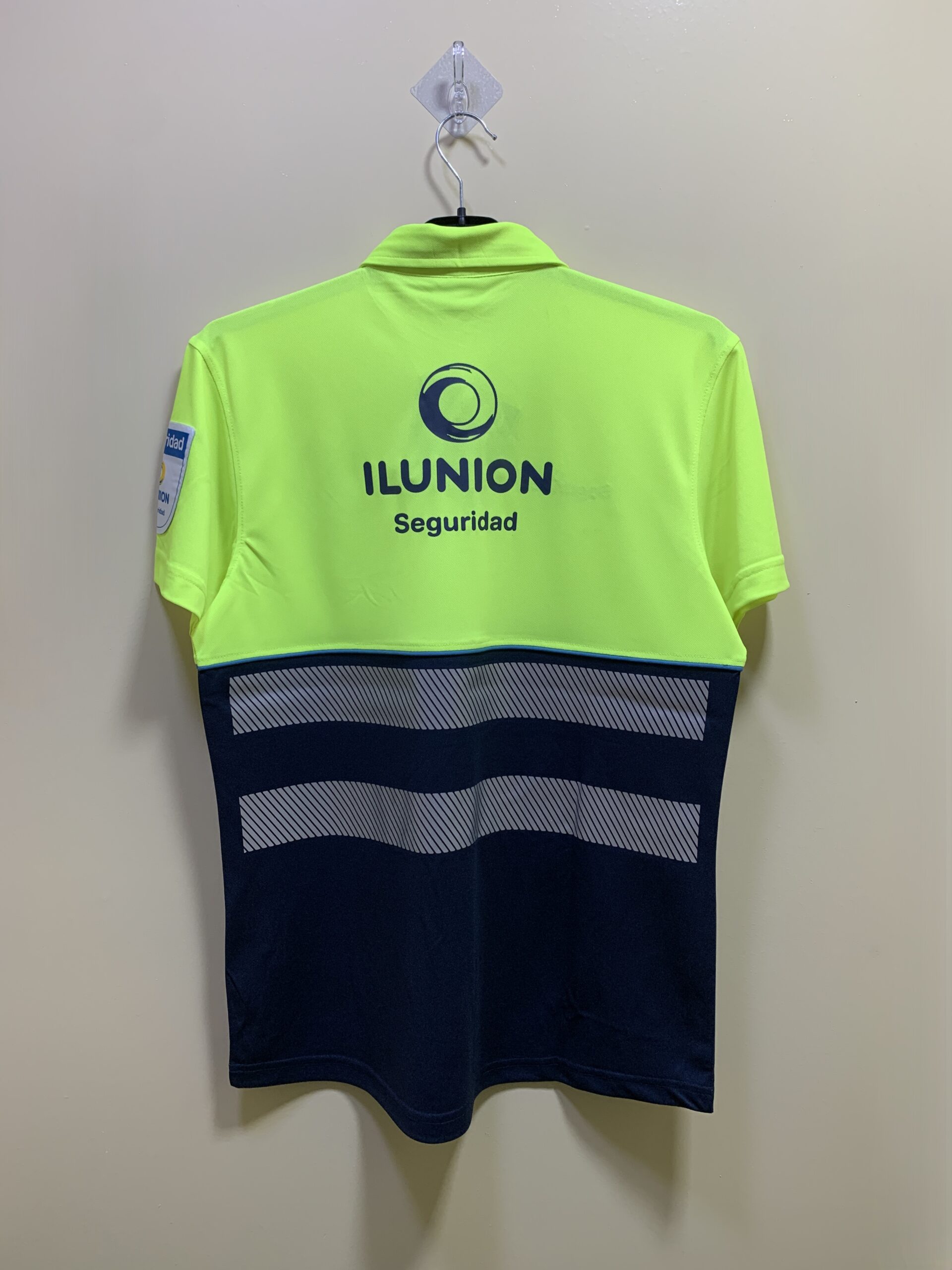
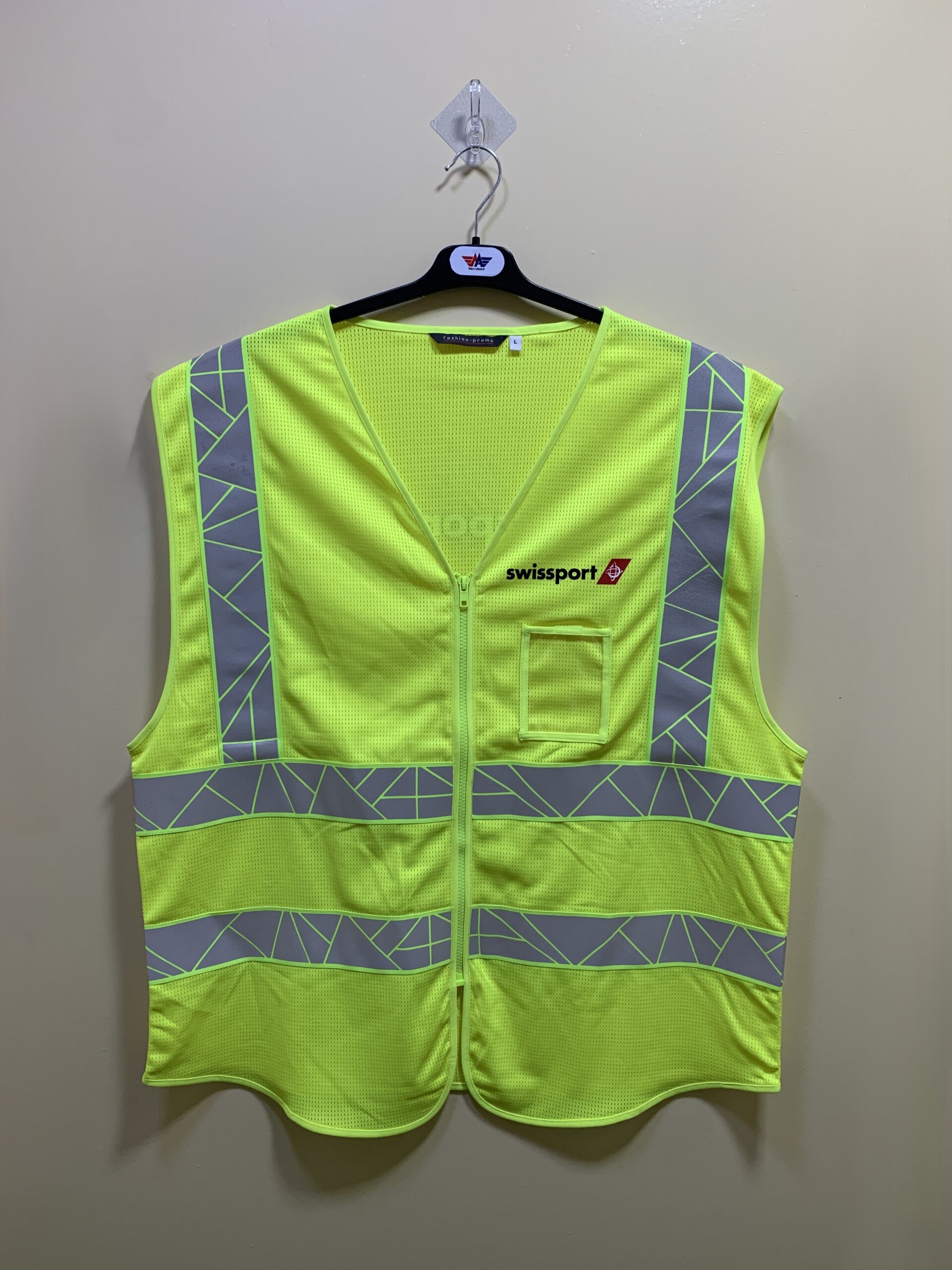
Real hi-visibility and related workwear product images
These existing catalogue photographs provide starting references for your enquiry. Each image and button opens its product category page. The related trousers are shown for range planning, not as a certified hi-visibility product.
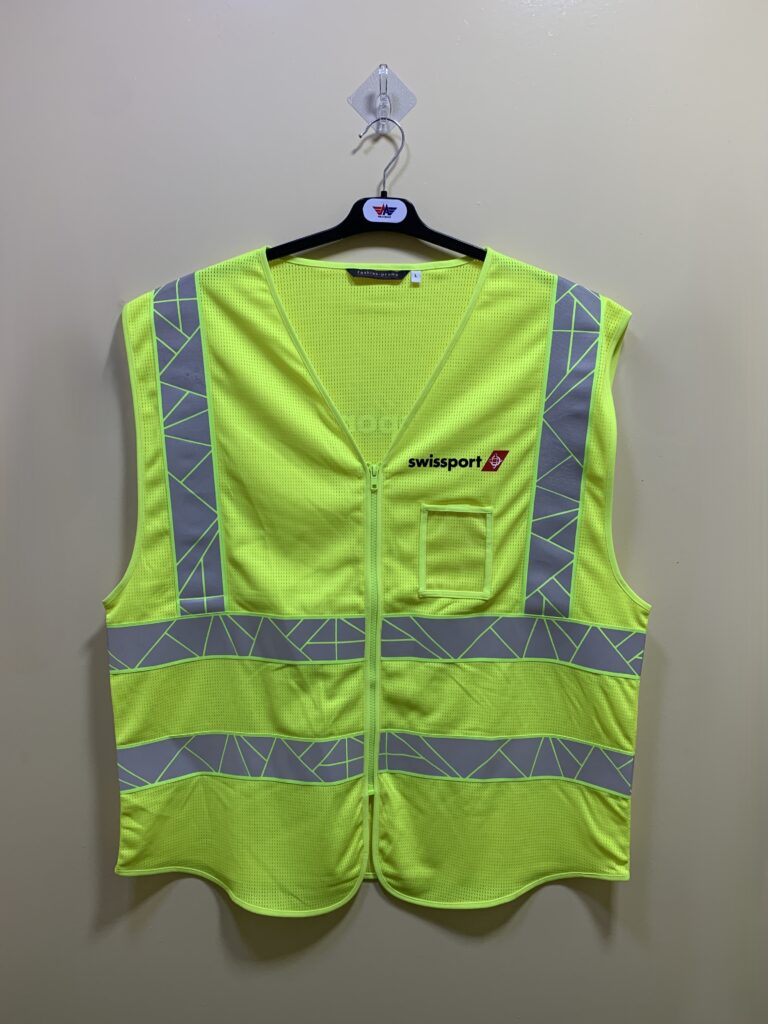
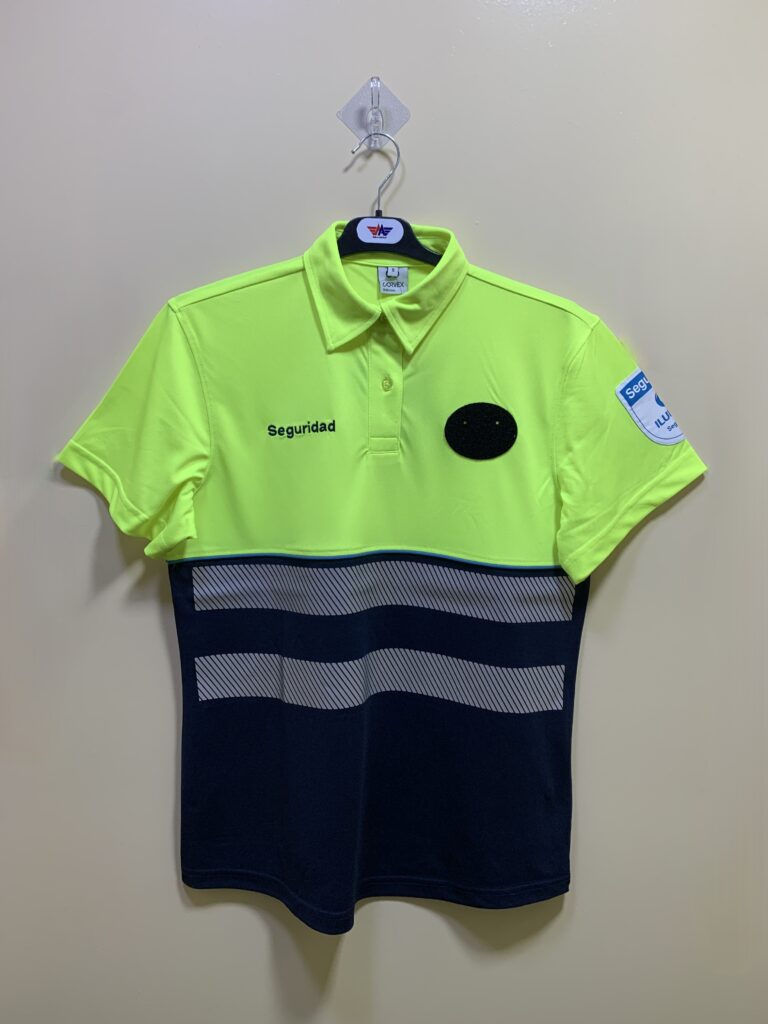
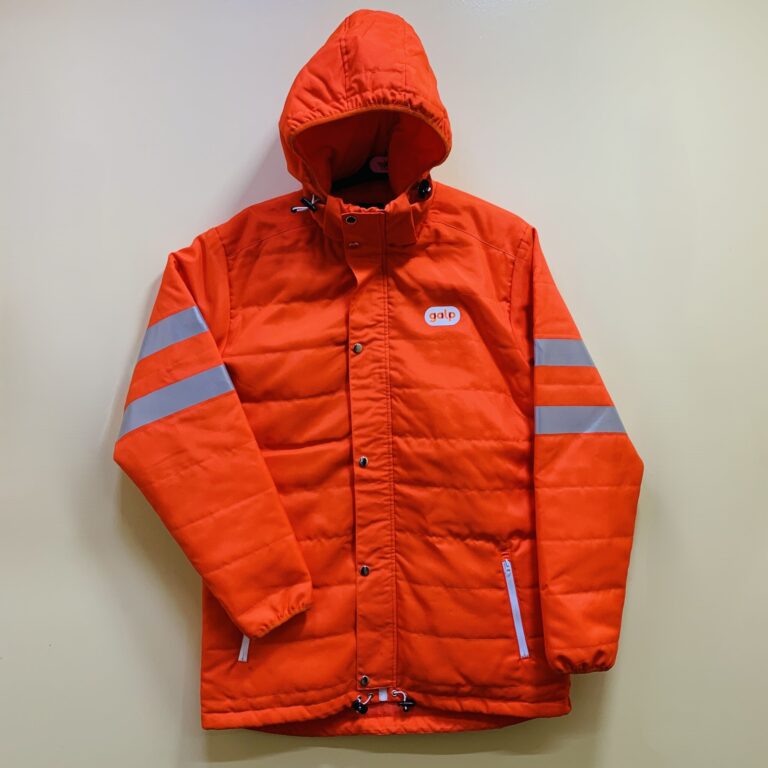
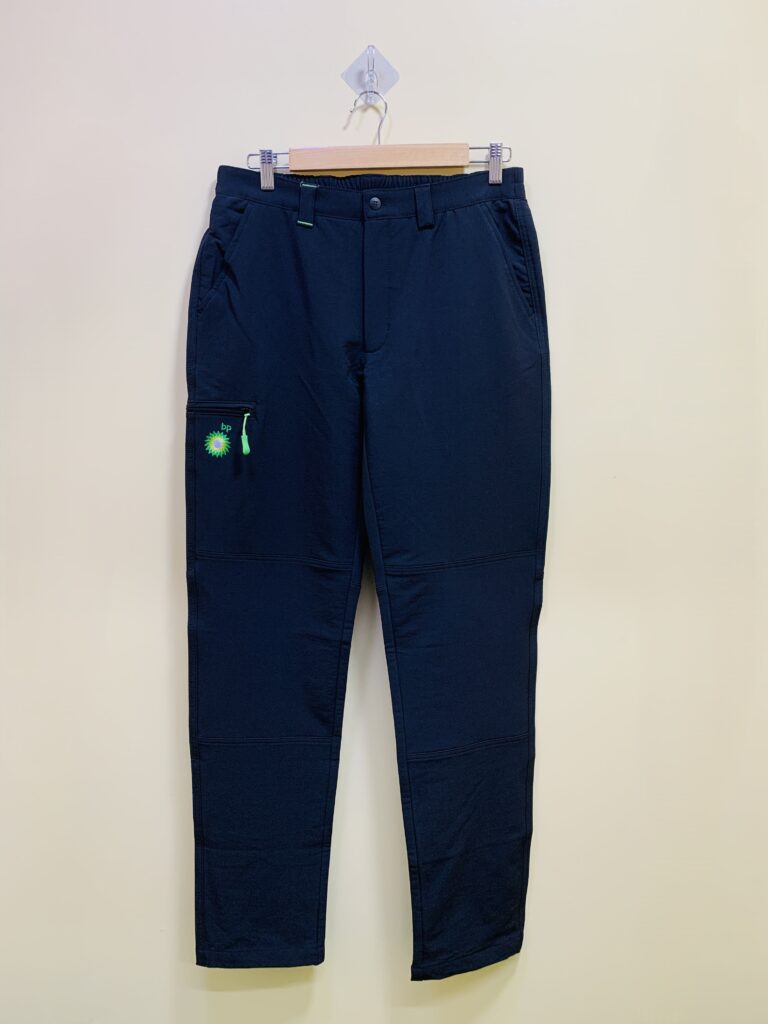
Explore the High Visible Wear range, softshell jackets and complete workwear catalogue. Confirm the approved design and evidence for the particular product you intend to order.
10 essential hi-visibility workwear buyer checks
- Requirements: identify the intended product requirements through the buyer’s responsible technical team.
- Garment reference: specify the design, size range and revision.
- Material traceability: identify background fabric, reflective components and other materials.
- Design review: agree who reviews material layout and proposed modifications.
- Evidence scope: check which product, components and sizes the documents cover.
- Care instructions: connect care information with the accepted references.
- Branding: review logo position and any effect on the approved design.
- Quality plan: define production checks and corrective-action responsibilities.
- Commercial parties: identify manufacturing, contracting and export responsibilities.
- Change control: review substitutions before production or repeat orders.
Use one dated brief when comparing offers. A lower-priced material or changed layout should be identified as an alternative and assessed before acceptance.
ISO 20471 and product-specific documentation
The official ISO 20471 page describes requirements concerning colour, retroreflection, material areas and placement in high-visibility clothing. The buyer should identify the applicable requirements and evidence expected for the intended programme.
Ask documents to identify the relevant garment or component, design reference, scope and limitations. A reflective-material report and a finished-garment assessment answer different questions. Do not treat component evidence as approval for every garment containing that component.
| Evidence | What to check | Buyer decision |
|---|---|---|
| Material documentation | Component reference and scope | Does it relate to the specified material? |
| Garment documentation | Design, sizes and stated coverage | Does it support the proposed product claim? |
| Care information | Instructions linked to the accepted product | Is it consistent with the supporting references? |
| Design revision | Changes to materials, layout or branding | Does the evidence need reassessment? |
This article does not assign a performance class or claim conformity for the whole M&A Sourcing catalogue. Resolve those points for the actual product with the responsible technical parties before ordering.
Materials, garment layout and care references
Record fabric composition, construction, colour and finish alongside reflective-component references. Define closure, pocket, sleeve and other design details through drawings and samples.
| Item | Define | Approval reference |
|---|---|---|
| Background material | Material identity, colour and finish | Accepted swatch and relevant evidence |
| Reflective component | Reference, dimensions and application | Accepted component and design record |
| Garment layout | Drawings, details and size range | Reviewed design and sample |
| Care | Required information and evaluation scope | Accepted instructions and evidence |
| Labelling | Product identification and approved information | Final artwork and approval |
GSM describes material weight and does not establish high-visibility performance. Review the complete product requirement rather than selecting a fabric solely by weight.
Where samples use substitutes, record the difference and approvals still required. Keep bulk materials connected to the accepted reference. Review any substitution before it is introduced.
Fit, sizing and branding changes
Use an agreed measurement chart, measuring instructions and tolerances. Confirm which sizes require sample review and how sizing relates to the product documentation.
Define intended layering and review functional details during development. Record changes precisely by measurement, component or position and update the controlling reference.
Supply current logo artwork, dimensions and placement instructions. Have branding and design modifications reviewed against the programme’s requirements before approval. A logo file alone does not establish that its application is acceptable on the proposed garment.
For wider decoration decisions, see the custom workwear guide. For related buyer questions, read the construction workwear guide.
Real company images: sourcing staff and sample review
These existing company photographs show staff, samples and production-related activity. Discuss who will maintain technical references, sample comments and evidence records.
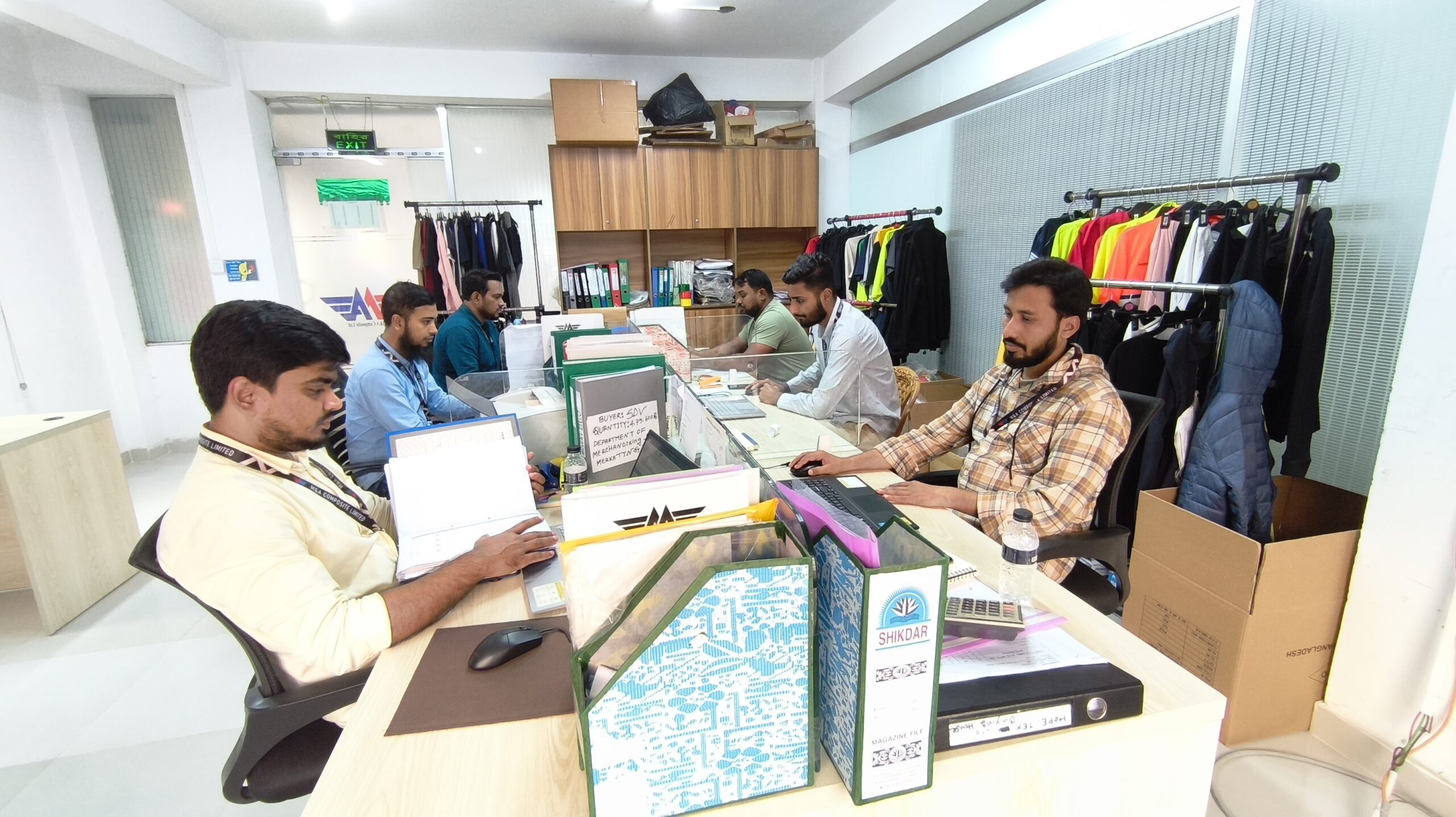
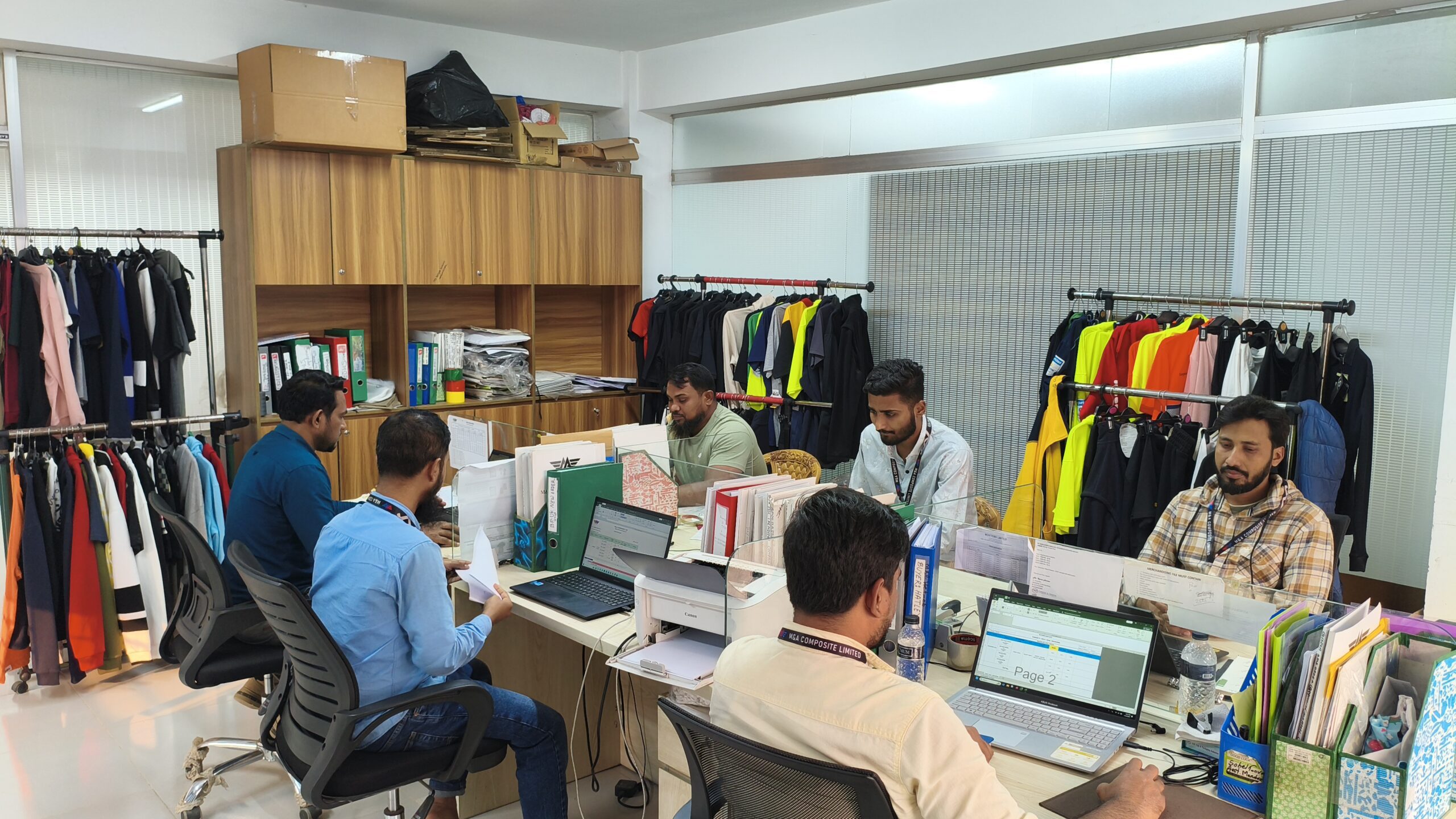
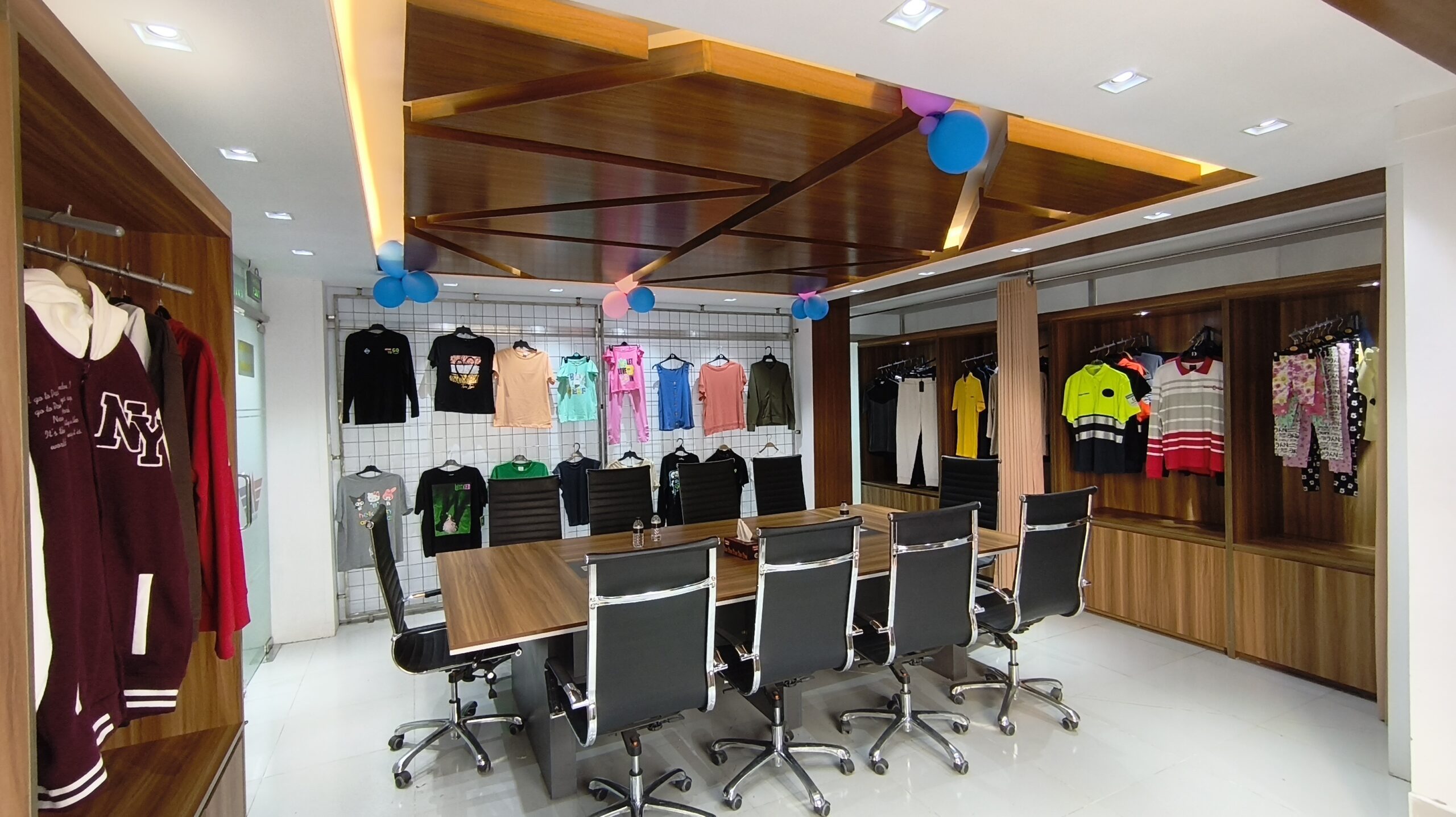
Agree a named contact and escalation route. Photographs introduce the environment; programme-specific documents support product claims.
Sampling and pre-production release
Agree the development, fit, decoration and pre-production references needed for the programme. Identify what each stage resolves and what remains provisional.
Maintain a dated sample log showing the product reference, specification revision, comments and approval status. Connect changes with drawings, charts and materials rather than leaving instructions only in messages.
Before release, consolidate the approved garment, materials, design, branding, labels, packing and supporting evidence. Confirm who authorises production and which revision controls manufacturing.
Review late changes for their product, evidence, cost and schedule impact before acceptance.
Hi-visibility order progress: 7 approval milestones
These bars illustrate the order sequence. They are not live completion percentages, protective-performance ratings or delivery guarantees.
Record the brief, size range and required evidence.
Confirm the site, parties, scope and assumptions.
Connect components and layout with the required evidence.
Close fit, branding, labels and reference-pack decisions.
Track dated findings, substitutions and corrections.
Review acceptance conditions and garment identification.
Coordinate dispatch and preserve approved references.
For a real order, use a dated tracker with responsible people, open issues and next actions.
Quality checks and change control
| Checkpoint | Evidence | Decision |
|---|---|---|
| Incoming materials | Identity against approved references | Release or resolve differences |
| Sample approval | Design, fit, labels and comments | Approve or revise |
| Inline checks | Dated findings and corrective actions | Confirm correction and follow-up |
| Final review | Results against the agreed inspection plan | Accept, rework or further review |
| Packing | Product identity, quantities and allocation | Confirm readiness or correct packing |
Agree measurable criteria and the inspection scope before production. If acceptance sampling is used, define the method, levels and defect categories. An AQL reference alone does not describe the whole plan or mean every garment has been checked.
Keep ordinary manufacturing inspection distinct from the technical evidence supporting a performance claim. Resolve outstanding product, document or packing conditions before shipment release under the agreement.
Related real images: production workers and garment handling
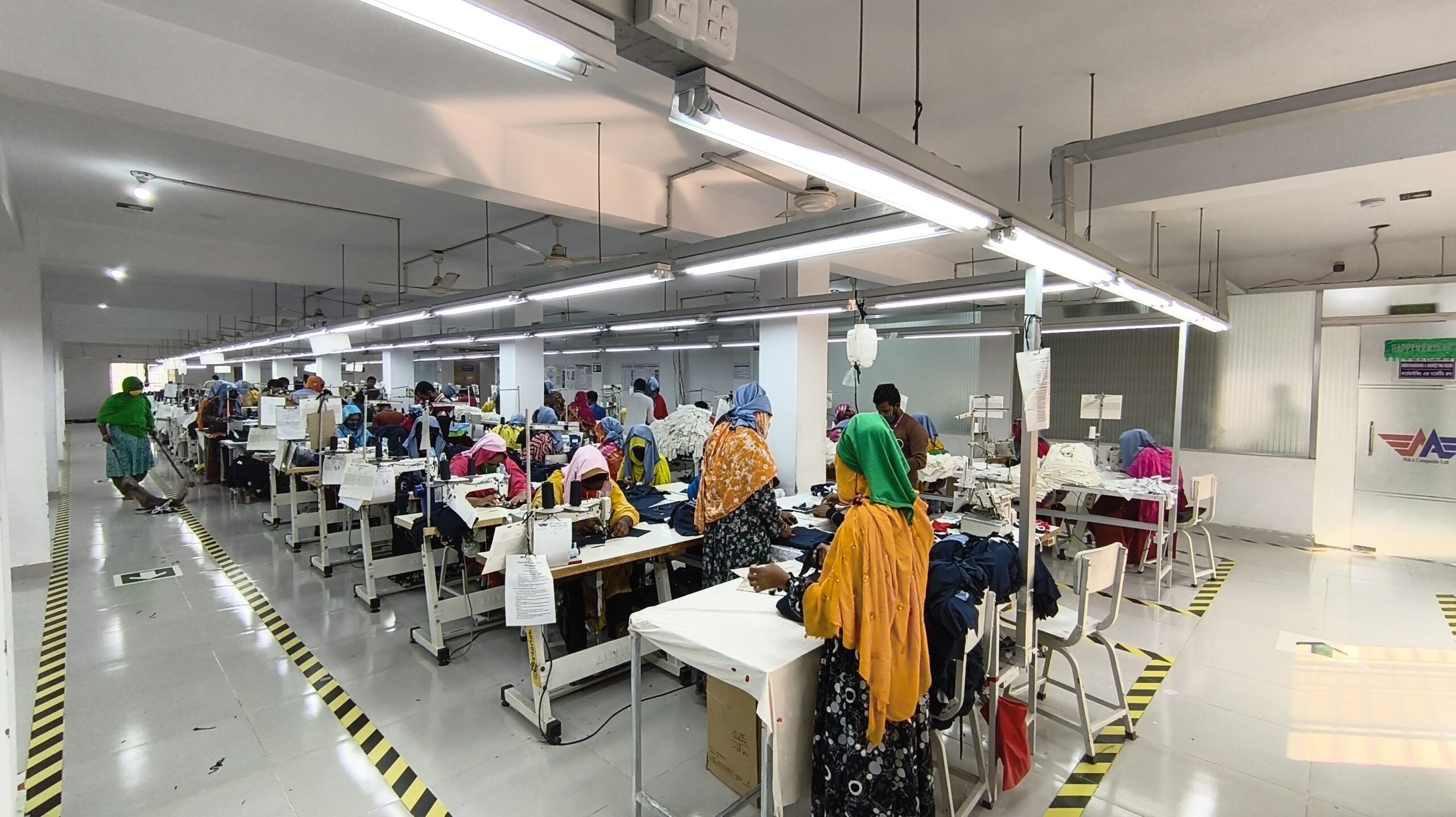
These company photographs show sewing-floor activity and garment handling. Discuss the allocated site and any operations performed elsewhere.
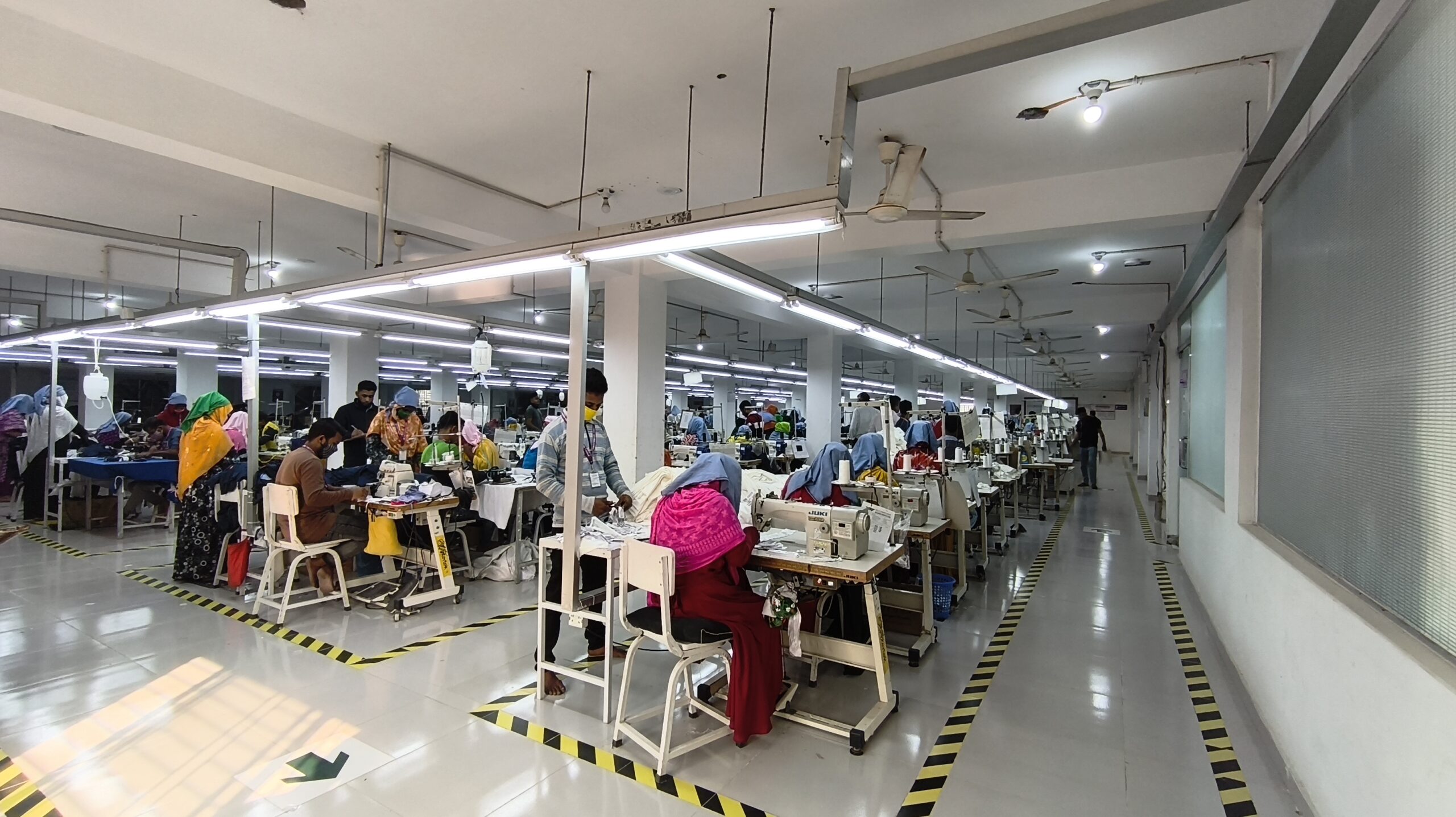
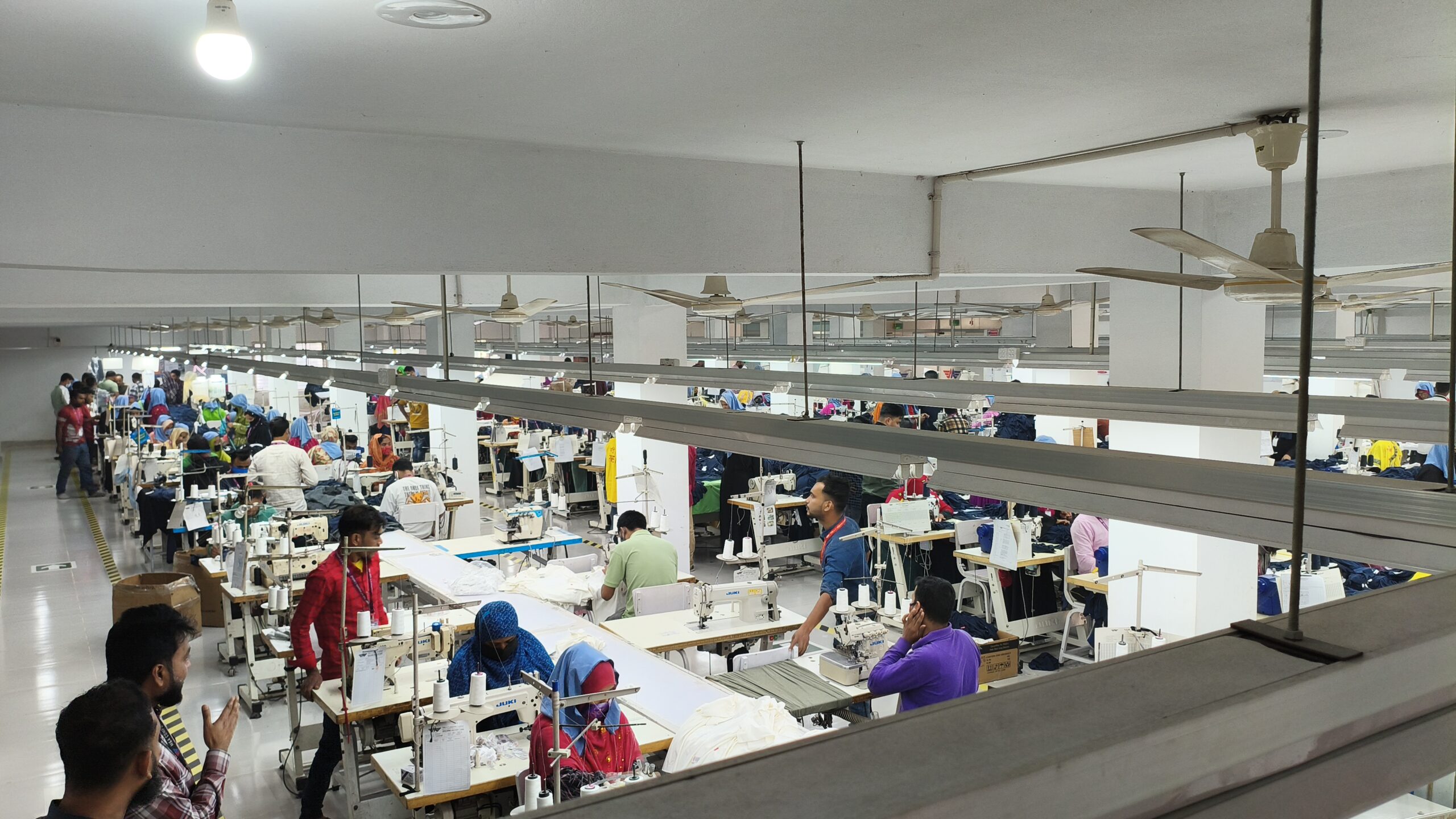
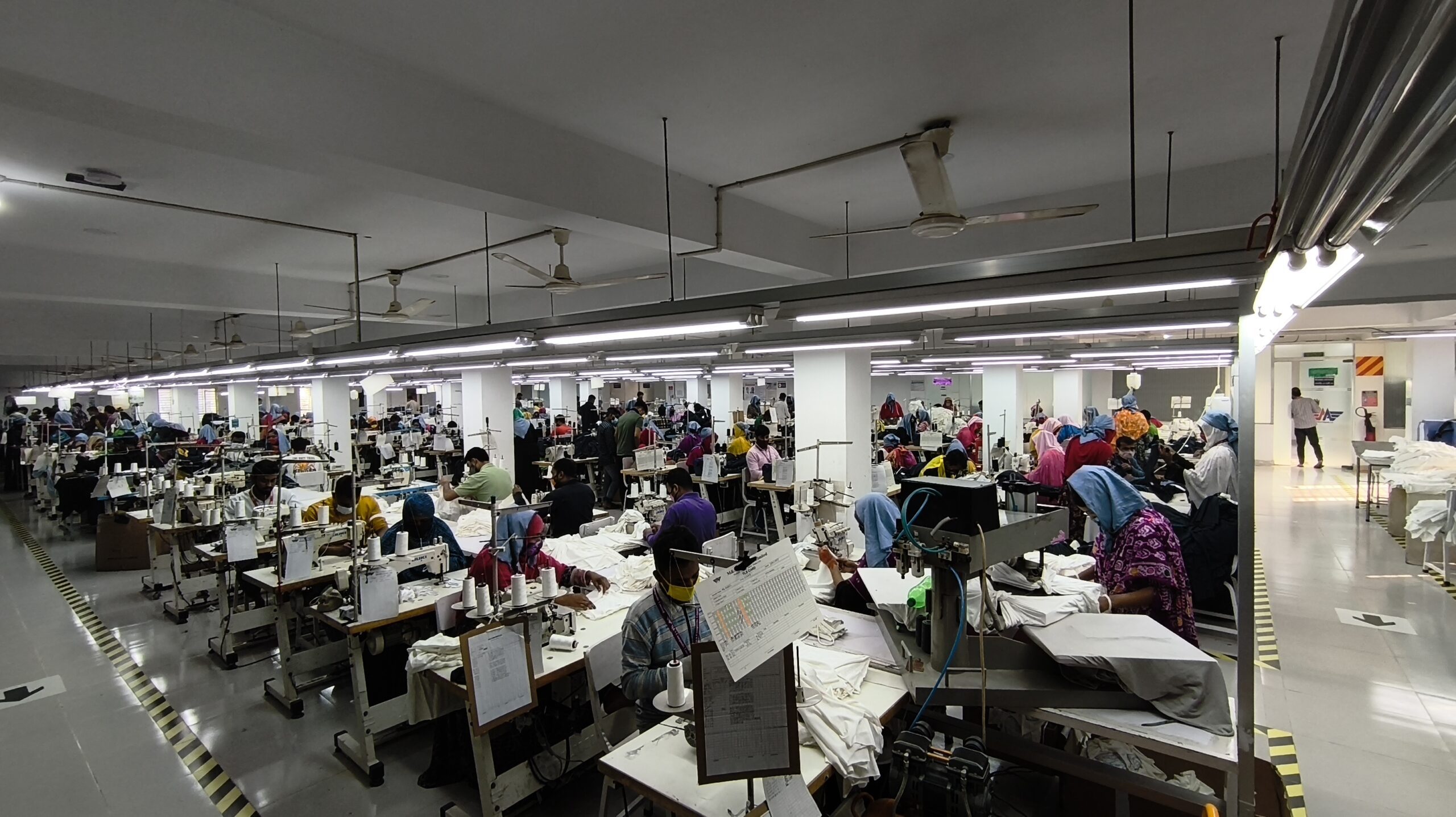
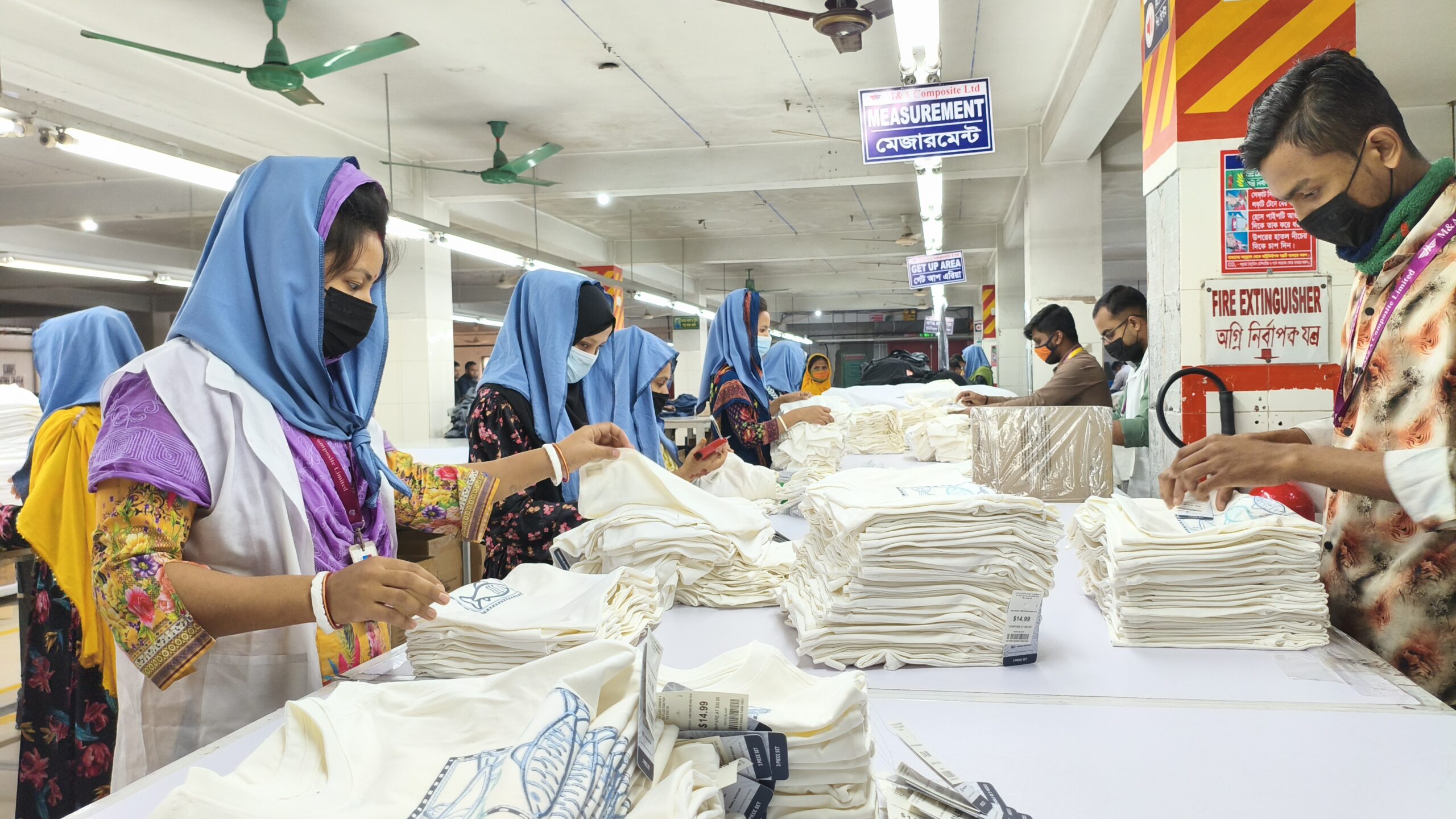
The images do not prove a particular product’s certification, current order status or factory audit result. Request relevant current records for the actual programme.
Commercial terms, export coordination and repeat orders
No universal MOQ, unit price or timeline is offered here. Request terms for the actual materials, design, quantities, evidence requirements and delivery arrangement.
| Question | Confirm in writing | Purpose |
|---|---|---|
| What minimums apply? | Style, colour, material and component restrictions | Checks feasibility |
| What is included? | Product revision, branding, packing and services | Makes offers comparable |
| What is separate? | Samples, technical evaluations or inspections where applicable | Clarifies additional work |
| What starts the schedule? | Material, approval and payment dependencies | Connects dates to milestones |
| Who coordinates export? | Seller, exporter, transport and document responsibilities | Defines the arrangement |
| How are repeats reviewed? | Materials, design, evidence and current terms | Controls substitutions |
Retain accepted samples, materials, drawings, labels, evidence and inspection records. Review changes before replenishment; the previous style name alone should not establish the new order’s reference.
For shipment questions, see our sourcing and export guide. For allocation planning, read the wholesale workwear guide.
Responsible sourcing: review site-specific audit evidence
Check documents for the actual manufacturing entity and site, including scope, dates, findings and corrective actions. A document from another factory does not establish the selected site’s status.
Sedex’s SMETA guidance describes a social audit methodology rather than certification. Site audit evidence and garment performance evidence serve different purposes and should remain clearly identified.
Hi-visibility workwear: build a traceable order file
A hi-visibility workwear enquiry should connect the proposed garment with a clear decision record. Give each style a stable reference, identify the buyer contact who can approve changes and agree where the current specification will be kept. Drawings, material proposals, measurement charts and decoration files should carry matching revision details. When the team receives a new file, record which earlier file it replaces. This reduces the chance that sampling and production follow different instructions.
Begin the order file with a short scope statement. Identify the intended garment category, wearer group, destination, quantity breakdown and the questions that remain open. Separate confirmed requirements from proposals that need review. An unconfirmed fabric or trim should stay visibly provisional until the buyer has assessed the evidence and recorded a decision. Do not convert a preliminary conversation into an implied production approval.
Hi-visibility workwear: record the exact sample being reviewed
Use a sample identification sheet that names the style, revision, size and material reference. Note any substitute components and explain what the sample can demonstrate. A sample made for a fit discussion may not establish the final material or layout. The reviewer should be able to identify these limits before making comments. Keep photographs as supporting references and retain the written observations alongside them.
Make each sample comment actionable. Identify the location, describe the observation, state the requested action and name the person responsible for confirming closure. If two reviewers disagree, resolve the instruction before forwarding it to the development team. A consolidated comment sheet helps the supplier respond to one current set of decisions. Preserve the earlier comments so the reason for a revision remains understandable.
Hi-visibility workwear: review changes before repeating an order
A repeat enquiry should refer to the approved original order file. Reconfirm material availability, garment construction, artwork and quantity allocation. Ask the proposed supplier to identify any intended substitution before treating the repeat as identical. A new colour, trim, decoration position or construction detail may require further review. Relevant product evidence must be assessed for the actual proposal by the people responsible for that decision.
Use a change log with the date, requested change, reason, affected styles and approval status. Link the change to a revised drawing or specification rather than relying on a message such as “use the new version.” Confirm any effect on price, sampling and schedule in writing. A clear change record also helps the buyer explain the final specification to receiving staff and future purchasing teams.
Hi-visibility workwear: connect observations with corrective action
Agree how inspection observations will be reported before the order reaches the final preparation stage. The record should identify what was checked, the reference used, the observed issue and the affected scope. A photograph can illustrate an observation but should not replace the description. Distinguish a confirmed finding from a question that still needs investigation, and identify who is authorised to decide the next step.
For each agreed correction, record the action taken and the evidence used to review it. If a sample is reworked, identify it clearly and preserve its relationship to the original finding. A general statement that a problem has been fixed is less useful than a dated recheck record. The final release decision should refer to the agreed requirements and outstanding issues rather than a broad assurance about quality.
Hi-visibility workwear: prepare a usable receiving record
Before packing, agree the style, colour and size allocation and the method of identifying cartons. Keep the final packing instructions connected to the accepted order matrix. When the contents change, update the relevant records before handover. A receiving team needs to reconcile the physical goods with the shipment information without guessing which early estimate remains valid. Identify partial or balance cartons clearly within the agreed system.
Discuss how the buyer wants exceptions communicated. A short quantity, a revised assortment or a carton that has been reopened should have an identifiable record. Confirm the person who reviews the exception and how the final instruction is distributed. This operational record does not replace any required shipment documentation; it helps the parties understand what was actually prepared and which decisions were made.
Hi-visibility workwear: compare service scope, not presentation alone
Ask each candidate to explain who develops samples, coordinates production, reports findings and follows up unresolved questions. Identify the contracting party and the production facility separately. A sourcing company may coordinate several activities, so the buyer should confirm the agreed responsibilities instead of assuming one party performs every task. Record included services, exclusions and the basis of any additional charge in the accepted proposal.
Use the same enquiry pack for each candidate so the responses can be compared fairly. Keep assumptions and exclusions visible beside the price. If one proposal uses a different construction or material, request clarification before treating the quoted amounts as equivalent. A practical comparison records both the proposed garment and the service scope, giving the buyer a stronger basis for the next discussion.
Hi-visibility workwear: retain buyer feedback for the next brief
After receiving the order, collect specific observations about fit, identification, packing and the usefulness of the records supplied. Separate a personal preference from an issue against the agreed specification. Identify the garment and size concerned so the development team can investigate. Use the findings to improve the next brief rather than changing several requirements informally during a repeat enquiry.
Keep the approved reference available to both purchasing and quality staff. Confirm who owns the current master files and how future revisions will be issued. These routine controls make the order history easier to follow when personnel change or a programme is replenished later. Discuss the actual garment and evidence requirements with M&A Sourcing before confirming any production or shipment commitment.
Frequently asked questions
How do I choose a hi-visibility workwear exporter and manufacturer in Bangladesh?
Compare the actual product requirements, garment references, materials, evidence scope, production site, quality plan and commercial responsibilities.
Can I discuss hi-visibility workwear with M&A Sourcing?
Yes. Share the product brief, requirements, sizes, quantities, branding and destination. Confirm feasibility, evidence and commercial scope for the proposed programme.
Where can I see actual product examples?
Use the linked product cards and High Visible Wear category in this guide. Photos provide references and do not by themselves prove certification.
Does reflective tape evidence approve the whole garment?
Do not assume so. Check how component evidence relates to the actual garment design, size range and required claim.
What does ISO 20471 address?
ISO’s official overview describes requirements concerning colour, retroreflection, material areas and placement in high-visibility clothing. Confirm the applicable requirements and evidence for your programme.
Can we add branding?
Discuss artwork and placement, then review any design modification against the programme’s requirements before approval.
Is there a fixed MOQ or lead time?
No universal MOQ or timeline is stated here. Request terms based on materials, design, quantity allocation, evidence and approvals.
Do the progress bars show live order status?
No. They illustrate seven approval milestones. A real order needs a dated tracker with owners, issues and next actions.
How should repeat orders be reviewed?
Retain approved references and evidence. Review material, design, branding or other changes before replenishment.
How can I contact M&A Sourcing?
Use the contact page, email info@mnasourcing.com or WhatsApp +8801993672513. Include your product brief, quantities and destination.
Related workwear guides
Start your hi-visibility workwear enquiry
Send your product requirements, references, evidence needs, artwork, quantities and destination. Request an order-specific proposal covering the production arrangement, approvals, quality checks and export responsibilities.